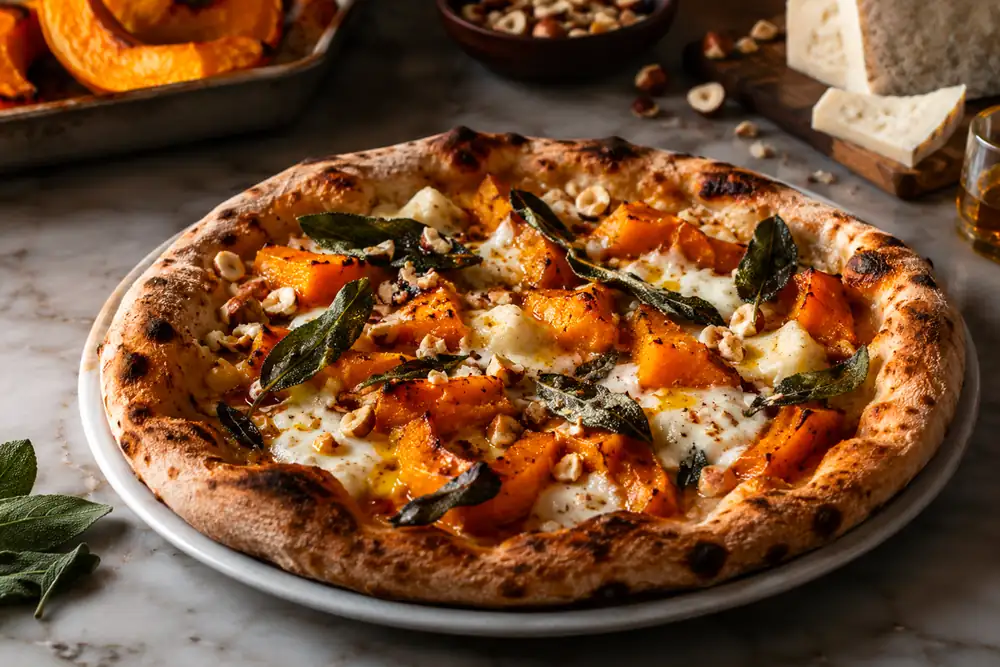
Roasted pumpkin, Taleggio cheese, sage, and hazelnut: when autumn finds its balance
Pumpkin on pizza can be surprisingly good.
Pumpkin on pizza can be surprisingly good. But it can also easily become too sweet, too soft, too rich. The key, then, isn't just to find ingredients that pair well with pumpkin. It's to create a bite in which each element has a specific function. In this pizza, the roasted pumpkin brings sweetness and caramelized notes, the Taleggio adds savory, fattiness, and intensity, the sage introduces an aromatic component, the hazelnut adds toasted notes and crunch. Then comes a seemingly small but decisive detail: a few drops of apple cider vinegar or acidified cooked must. It's this acidic component that changes the overall experience. It shouldn't feel like an added ingredient at the end, but rather work in the background to make the bite more dynamic.
The pumpkin goes into the oven first
The first mistake would be to treat pumpkin as a simple vegetable to add to pizza. For this combination, roasting is essential. It reduces water content, concentrates sugars, and develops a more complex flavor, with sweet, toasted, and slightly caramelized notes. It's also a matter of texture. A pumpkin that's too moist can compromise the dough's cooking and make the topping heavy. A roasted pumpkin, on the other hand, can maintain a soft pulp without becoming watery. For professional catering, this means organizing the preparation before serving: the pumpkin must arrive cooked, stable, and easily portioned. Even better if it's kept in recognizable pieces. This way, the customer will encounter different consistencies, rather than a uniform cream from start to finish.
Taleggio gives depth to the pumpkin
The sweetness of the pumpkin needs a counterpoint. Taleggio cheese adds savory, fatty, creamy texture, and a bold flavor profile. It's precisely this intensity that keeps the pizza from becoming simply sweet. But Taleggio cheese needs to be managed. If distributed too much or too evenly, it risks covering the pumpkin and turning the entire topping into a soft, fatty mass. It's therefore better to allow the cheese to be distributed unevenly, creating areas of greater intensity. This is a very useful principle for other pizzas as well: a distinctive ingredient doesn't necessarily have to occupy the entire surface. The perception of flavor also changes depending on where and when it arrives in the bite.
Sage: the aromatic thread
Sage completes the connection between pumpkin and cheese. Its balsamic, herbaceous, and slightly pungent flavor introduces a greener note to a pizza dominated by soft, toasted ingredients. It can be used fresh, fried, or seasoned with aromatic oil. From a professional perspective, the choice also depends on line management: a preparation easily replicated during service can be more interesting than a more technically complex solution. Sage, however, should remain an accent. It shouldn't become the pizza's dominant flavor. Its role is to accompany and create an aromatic pause between bites.
The hazelnut changes the bite
Up to this point, the pizza would be predominantly soft. And this is where the hazelnut comes in. Toasted and chopped, it adds a crunchy component that immediately changes the mouthfeel. Its aromatic component interacts with the roasting of the pumpkin and the flavor developed by the dough during baking. The choice of size is not secondary. Too finely chopped hazelnuts risk disappearing between the pumpkin and cheese; a broken hazelnut, on the other hand, maintains a more evident presence. The toasting also needs to be monitored. An overly bitter note would be of little use on a pizza that already has a significant caramelization component. The goal is simple: softness, creaminess, and crunchiness.
Then comes the acidity
It's probably the detail that makes the difference. Pumpkin and Taleggio create a sweet, savory, and fatty profile. Hazelnut adds toastiness. Sage adds aroma. But without a contrasting element, the result could become progressively heavy. A few drops of apple cider vinegar can introduce a fresh, acidic note, capable of lightening the bite without adding an extraneous flavor. Alternatively, you can work with an acidified cooked must, which is more in keeping with the pizza's autumnal profile and interesting for its ability to combine sweetness, aromatic density, and acidity. The quantity, in both cases, should be very limited. It shouldn't taste like a "vinegar pizza." The acidity should be a correction, almost like adjusting a condiment: it should make the other flavors more distinct, not take center stage.
The secret to roasted pumpkin pizza is the bite sequence
This pizza works best if you can create a progression. First comes the sweetness of the roasted pumpkin. Then the Taleggio cheese adds depth and savory flavor. The sage adds aroma. The hazelnut changes the texture with its toasting. Finally, the acidity lightens and invites you to try the next bite. It's a much more interesting sequence than the simple "pumpkin and cheese." And it also helps you understand why you don't need five more ingredients to make a pizza more gastronomic. Each element already has a purpose.
Pay attention to the temperature
For a pizza with this type of topping, serving temperature becomes particularly important. Taleggio cheese, when too hot, tends to become overpowering and very fatty; hazelnuts, if exposed to heat for too long, lose some of their crunchiness; acidity, if used as a finishing touch, must remain noticeable. Therefore, managing the finishing can be crucial. The hazelnut can be added at the end or in the final moments, while the acidic topping can be applied directly after it comes out of the oven. This way, both remain more easily recognizable. These are small details that may seem secondary in a home kitchen, but in a pizzeria, they become part of the standardization of the result.
A seasonal pizza that also has a cooking logic
There's also an interesting aspect for those working professionally. Roasted pumpkin doesn't necessarily have to be a preparation exclusively for this pizza. It can be used in an appetizer, a first course, a focaccia, or even as a base for other dishes. The same goes for dried fruit and any sage-based toppings. This allows you to create a seasonal offering without needlessly multiplying your inventory. This is an aspect often overlooked when designing seasonal pizzas: a good topping shouldn't just work on the dish, but also in the management of the restaurant.
Roasted Pumpkin Pizza: Simple on paper, thoughtful on the plate
Roasted pumpkin, Taleggio cheese, sage, hazelnut, and a few drops of apple cider vinegar or acidified cooked must aren't a revolutionary combination. And that's precisely its strength. They're recognizable, seasonal ingredients that customers can easily understand. The pizza chef's job is to transform this familiarity into a balanced bite. The pumpkin must be concentrated, not watery. The Taleggio must add depth without overpowering. The sage must complement the flavor. The hazelnut must be crunchy. The acidity must do its job without being overpowering. Ultimately, a good pizza isn't one with the most ingredients. It's one where you only notice something missing when you stop eating it.