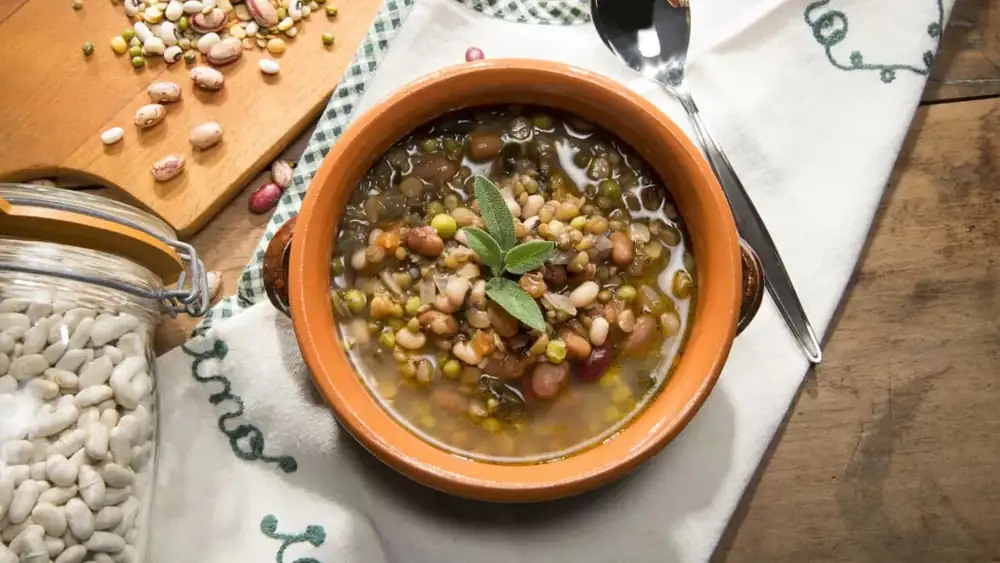
There's an Umbrian legume soup that resembles pebbles. Video recipe for imbrecciata (which is also a salad)
Rustic, with hearty flavors but simple preparation, this is the core of Umbrian cuisine.
What does the gravel have to do with the "pebbles"?
The name of the dish comes from the dialect term meaning "breccia" or "brecciolino," or small gravel. This curious combination stems from the final appearance of the dish, where legumes and grains of different sizes and colors, mixed together, resemble river pebbles. A recipe rooted in peasant cooking, prepared when housewives emptied sacks of legumes and grains, combining them to create a nutritious and economical soup, providing the perfect sustenance after a day's work.
Ingredients and cooking: how to make Umbrian imbrecciata
Slow cooking, traditionally done in terracotta pots, involves a varied mix: grass peas, Castelluccio or Colfiorito lentils, beans, chickpeas, farro, and barley. Pay attention to the different cooking times, then flavor everything with a sauté of herbs, a little tomato (if desired), and a variety of herbs, including rosemary and sage. Umbrian olive oil is equally important, both as a base and as a generous drizzle.
The warm soup that also becomes a salad
This version from the YouTube channel Food Network Italia demonstrates this: what began as a warm winter soup can be adapted to other seasons. Once the legumes and grains are boiled, they can be cooled and seasoned with just a few chopped fresh herbs (spring onions, oregano, mint, and parsley) and a vinaigrette of olive oil, lemon, and balsamic vinegar. Depending on the temperature, the video recipe explains how to vary the dish with a few simple adjustments.