Stop seasoning the rice after it's cooked: the cooks' secret to getting fluffy rice without having to wash it multiple times
Fluffy rice doesn't just depend on repeatedly washing the grains or adjusting the flavor after the pot is already cooked.
The seasoning should be added before the water.
When garlic and onion are added only at the end, the flavor becomes concentrated in certain areas and poorly integrated into the rice. Sautéing them first allows their aromas to infuse into the fat, which then comes into contact with virtually all the grains.
The result is rice that is already seasoned when cooked, without needing subsequent mixing that could break the grains or make them more compact.
The raw rice should be briefly sautéed in the mixture.
Once the onion is translucent and the garlic begins to release its aroma, add the raw rice. At this point, stir for about one or two minutes, just until the grains are well coated in the fat.
Deep browning isn't necessary. The idea is to distribute the oil and spices over the surface before adding the water.
The fat helps the grains stay more separated.
During this brief sautéing, a thin layer of fat spreads across the surface of the rice. This can reduce direct contact between the grains in the initial stages of cooking and contribute to a less sticky texture.
This effect, however, does not mean that the oil completely "seals" the rice or prevents water from entering. The grain continues to absorb liquid normally. The benefit is mainly in fat distribution, flavor, and texture control.
Washing rice multiple times is not always necessary.
Washing removes some of the surface starch present in the grains and, in some types of rice, can help reduce stickiness. But there's no need to turn this into an endless sequence of rinses.
For the common white rice used in everyday Brazilian cooking, the correct combination of water ratio, initial sautéing, and minimal stirring during cooking often makes as much difference as insisting on multiple washes.
- If you want to wash it, one or two rinses may be enough;
- Drain well before placing in the pan;
- Avoid placing soggy rice directly into hot oil;
- Do not stir constantly after the water gets in;
- Keep the pot covered during the final stage of cooking.
The amount of water continues to be crucial.
Even with a good sauté, too much water can make the rice soggy. Too little water can leave the center hard. The ideal ratio varies depending on the type of rice, the size of the pan, the heat intensity, and even the amount being prepared.
Therefore, the sautéing technique improves the result, but it doesn't automatically correct an incorrect liquid ratio.
Stirring too much after adding the water ruins the texture.
Another habit that can make rice stickier is stirring it continuously while it cooks. The movement increases friction between the grains and promotes the release of starch into the water.
After adding the liquid and adjusting the salt, it's best to stir only as needed, lower the heat, and let the cooking process proceed with minimal interference.
The final resting helps to finish the cooking process.
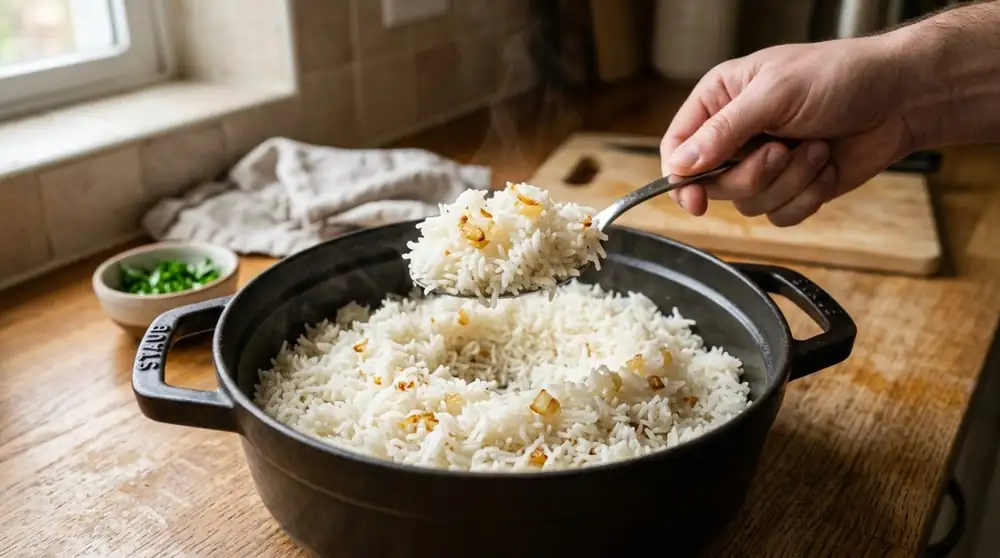
Once the water has evaporated and the grains are cooked, turning off the heat and letting the rice sit covered for a few minutes makes a difference. The residual steam finishes distributing the moisture throughout the pot.
After this resting period, use a fork or spoon to gently loosen the grains, instead of pressing them down.
The secret lies more in the beginning than in the end.
Flavorful, fluffy rice starts before the water. Sautéing garlic and onion, coating the grains in oil for a few moments, and only then beginning to cook it distributes the seasoning better and promotes a more separated texture.
There's no need to completely abandon washing if it works well in your routine, but there's also no need to rinse the rice countless times or try to correct the flavor once it's cooked. With the seasoning added at the right time and less manipulation during cooking, the result tends to be more uniform, aromatic, and fluffy.