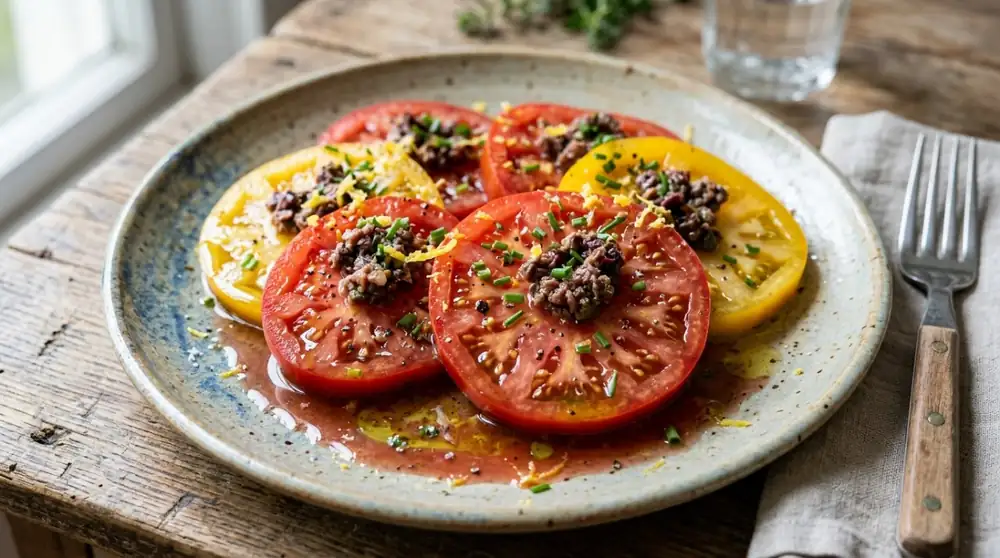
To enhance the tomatoes, don't just season them with salt and olive oil; it's better to add a can of anchovies, lemon, and olives
Ripe tomatoes are already delicious with salt and olive oil, but a dressing with anchovies, lemon, and olives adds acidity, saltiness, and umami without requiring a complicated recipe.
Why do anchovies and olives go so well with tomatoes?
Tomatoes combine natural acidity, sweetness, and plenty of moisture. Anchovies and olives fill in the gaps, adding salt and a deeper flavor. Anchovies are rich in compounds associated with umami, while olives add salty and slightly bitter notes.
When these ingredients are used together, there's no need to overdo the salt. For four ripe tomatoes, a simple combination might include:
- about 40 grams of pitted olives;
- three anchovy fillets in oil;
- zest of half a lemon;
- two tablespoons of olive oil;
- half a tablespoon of vinegar;
- Add chives or another fresh herb to finish.
How do you prepare the sauce using the tomato's own juice?
The first step is to slice the tomatoes and collect all the liquid that drips onto the cutting board or plate. This tomato juice is flavorful and can serve as a base for a quick vinaigrette. Simply mix it with olive oil, a little vinegar, and a pinch of salt until a smooth sauce forms.
Instead of seasoning each slice separately, pouring this mixture over the tomatoes helps to better distribute the acidity and fat. The fruit's own juices are no longer discarded and become part of the dish.
How do you make anchovy, olive, and lemon paste?
Olives and anchovies can be finely chopped to form a mixture resembling a rustic paste. Then lemon zest is added, providing aroma without adding as much liquid as lemon juice. The idea is similar to a simplified tapenade, but prepared in just a few minutes.
- Chop the olives and anchovy fillets;
- Mix until an uneven paste forms;
- add the lemon zest;
- Spread small portions over the tomato slices;
- Finish with fresh herbs and, if desired, a few flakes of salt.
Why is it better to taste before adding more salt?
Anchovies and olives already contain a significant amount of salt. If the tomatoes are seasoned normally before adding these ingredients, the result may be too salty. Therefore, it's best to use a small amount of salt in the initial sauce and adjust it only at the end, after all the flavors have combined.
The same care should be taken with the amount of anchovies. They should enhance the tomato flavor, not overpower the dish. Three fillets for approximately four ripe tomatoes are usually enough to create an umami base without turning the dish into a salad with a predominantly fishy taste.
Does olive oil have a function beyond adding flavor?
Yes. In addition to forming the base of the sauce, olive oil helps to carry aromas and better coats the surface of the tomato. The fruit also contains lycopene, a fat-soluble carotenoid, and the presence of fat during the meal can promote its absorption by the body.
This doesn't mean you need to add a lot of olive oil. Two tablespoons are enough to combine the tomato juice, vinegar, and other ingredients to make a dressing sufficient for several servings.
The result works best when the tomato remains the main ingredient.
The main advantage of this combination is that it transforms a simple dish without masking the flavor of the ripe tomato. The anchovy provides depth, the olive enhances the saltiness, the lemon adds aroma, and the olive oil brings all these elements together around the juice naturally released by the slices.
Served with bread, the sauce that remains at the bottom of the plate can still be fully utilized. Instead of relying solely on salt and olive oil, the mixture creates different layers of flavor with few ingredients and almost no additional work. The secret lies less in adding large quantities and more in balancing acidity, umami, and salt to allow the tomato to remain the centerpiece of the recipe.