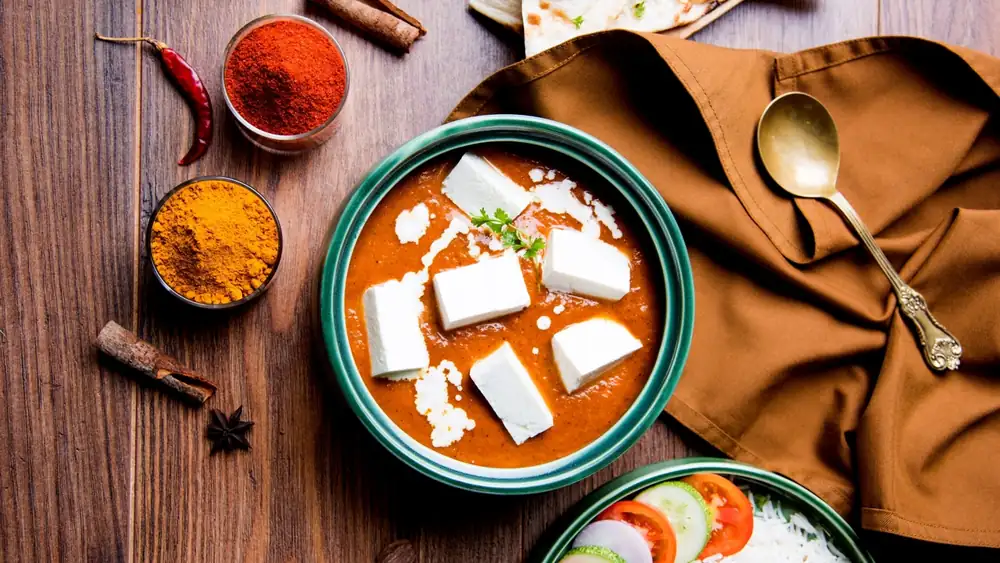
In India they make a magical fresh cheese when cooked: it doesn't melt or even melt
Much of cheese's allure lies in the fact that the sum of its ingredients yields transformative and unpredictable results.
The history of paneer: sacred, profane, and foreign influences
This product, rooted primarily in the northern subcontinent and other parts of South Asia, has unclear and still debated origins. Some maintain that it has entirely indigenous roots, as reported by some Vedic texts that mention a curdled dairy product used in ritual offerings. However, some food historians believe that the technique of coagulating milk using acidic agents only arrived in India in the 15th century from Persia and Afghanistan, or was even perfected later by Portuguese colonists in Goa.
Historically, Hindu culture avoided curdling fresh milk, considering it a sacred food that should not be "corrupted" for religious reasons. It is therefore more likely the fusion of Middle Eastern and European techniques with Indian eating habits that gave rise to paneer.
Production and reasons for heat resistance
Paneer's processing allows it to be considered a vegetarian cheese. As mentioned, it can be made from cow's or buffalo's milk; the latter is particularly rich in fat and protein, giving it an even firmer consistency and lighter color. The milk is heated to a high temperature and acidified, not with animal rennet, but simply with lemon juice, vinegar, or fermented whey, so that the solid curd separates from the whey.
The curd is collected in a light cotton cloth, rinsed, and pressed with a weight to remove as much moisture as possible. Paneer thus does not undergo the enzymatic fermentation of stretched-curd or aged cheeses, and has a dense, solid protein network: these are the reasons for its heat resistance, which prevents it from melting on the griddle or in cooking liquids.
The uses of Indian cheese at the table
While its appearance and texture may resemble tofu, or Mediterranean cheeses like primosale, ricotta salata, or halloumi (the crunchy Cypriot variety), Indian cheese has a more neutral and delicate flavor, without overly salty overtones. An underlying sweetness, one might say, makes it a kind of "sponge" ideal for absorbing ground meat, spices, and other flavors.
A staple also considered for festive occasions, appearing at wedding receptions or during religious celebrations—it's a staple during Diwali, the Festival of Lights between October and November—as an alternative to meat dishes. From homemade pan-fried versions like Mattar Paneer with peas and spices to Palak Paneer in creamed spinach, to skewers grilled in the tandoor oven, it's a product that those who frequent Indian restaurants have come to know. For those who want to try making it at home, it's a good idea to visit international grocery stores, or try the local version produced by Caseifici Zani in Cigole, in the province of Brescia (also available online; 160 g, €2.30).