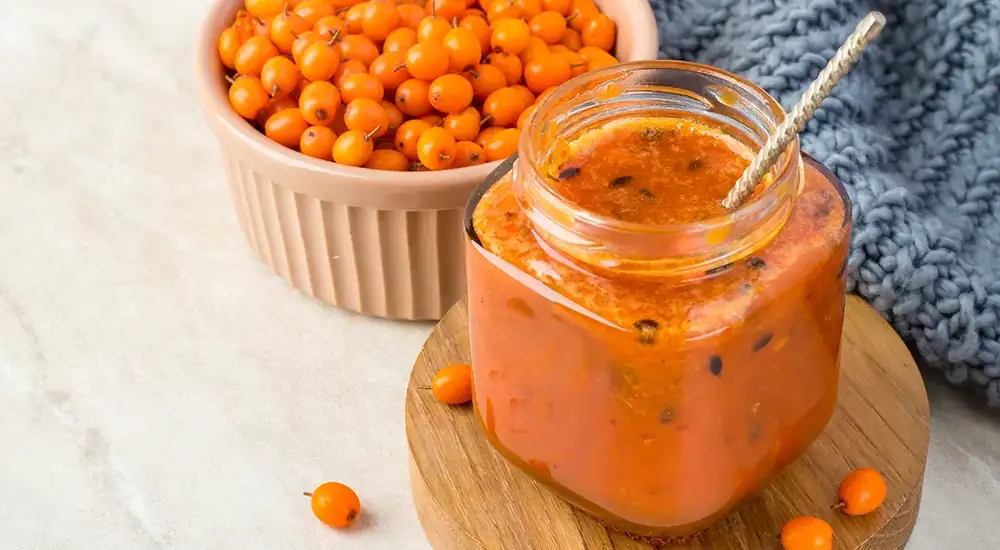
Sea buckthorn with sugar for the winter, no-cook recipe with step-by-step photos, 4800 kcal
First, process the harvested sea buckthorn.
Step 1
First, process the harvested sea buckthorn. Remove any damaged berries, including twigs, leaves, and other debris. Select only smooth, unblemished berries. Otherwise, your preserves won't last long.
Step 2
Wash the sea buckthorn thoroughly. Don't wash it under running water, but in a basin. Debris will float to the surface. Collect it with a sieve, then drain the water and add fresh water—repeat several times. Finally, rinse the sea buckthorn in the sieve under running water.
Step 3
Shake off any excess moisture from the berries and spread them on a towel. Pat the top dry with paper towels. To ensure proper storage of uncooked sea buckthorn, it needs to be dried.
Step 4
Place the sea buckthorn in a large bowl and puree with an immersion blender, but don't over-puree. You don't want any whole berries to remain. Then add the sugar, stir, and blend again. You can also mash the sea buckthorn with sugar using a regular potato masher.
Step 5
Let the sea buckthorn mixture sit until all the sugar has dissolved, stirring occasionally. There are several options for preserving sea buckthorn for the winter without cooking. First, you can roll the resulting sea buckthorn mixture into dry, sterilized jars and store them in a cool place.
Step 6
Second option: you can pour the sea buckthorn and sugar into small disposable plastic containers with lids and freeze. Third option: you can strain the resulting mixture through a sieve to obtain a puree, which can then be canned or frozen.
Late September and early October are prime times for harvesting sea buckthorn. This bright orange berry is now fully ripe, soft to the touch, and ready for culinary use. And if you have a bountiful harvest, don't let this vitamin-packed fruit go to waste—make some homemade preserves. We'll explain how to properly dry and freeze the berries and, of course, what to make with sea buckthorn for the winter. Compote, juice, jam, puree, and pastila—our selection features only tried-and-true recipes!
Simple sea buckthorn jam isn't just delicious, it's also beautiful: amber "beads" immersed in clear syrup. To ensure that simple sea buckthorn jam retains not only its nutritional value and flavor, but also its beauty, keep a couple of important points in mind. First, the berries for the jam should be whole and firm, without cracks or damage. Second, you first need to prepare the syrup—it should flow off the spoon like a thick, thick thread—and then carefully simmer the sea buckthorn in it. Below is a step-by-step recipe for sea buckthorn jam called "Five Minutes."
Summer is the perfect time to share winter preserving secrets, like how to make delicious jam without cooking berries or fruits. This cold-preparation method for this popular dessert allows you to maximize the beneficial properties, natural flavor, and aroma of berries and fruits. Plus, no-cook jam for the winter can be made quickly and easily from frozen berries—so convenient!
Siberian pineapple—that's what sea buckthorn was called in the old days. Its vibrant color, juicy fruity aroma, and unique health benefits make it a natural addition to the list of Russian superfoods. What are the benefits of sea buckthorn, and why did our ancestors love and value it so much? Can it really be compared to pineapple, or is this berry even superior to the exotic fruit? Let's find out.