Autumn Corporate Catering in Italy Requires Modular Menus and Strict Logistics
As Italian businesses concentrate their events between September and November, caterers are adopting modular menus and strict logistical protocols to serve food effectively in unequipped corporate spaces.
Between September and November, corporate event catering in Italy experiences a concentrated surge in demand. Businesses compress trade fairs, sales conventions, and internal training into this window to clear backlogs before the December holidays. This volume requires caterers to replace the leisurely pacing of private events with rapid, highly structured service models.
The foundation of this model is defining the budget before constructing a menu. Planners must establish three fixed parameters: the confirmed number of participants with a defined minimum and maximum threshold, the exact duration of service, and the consumption format. Only then can ingredient and equipment choices be scaled accurately.
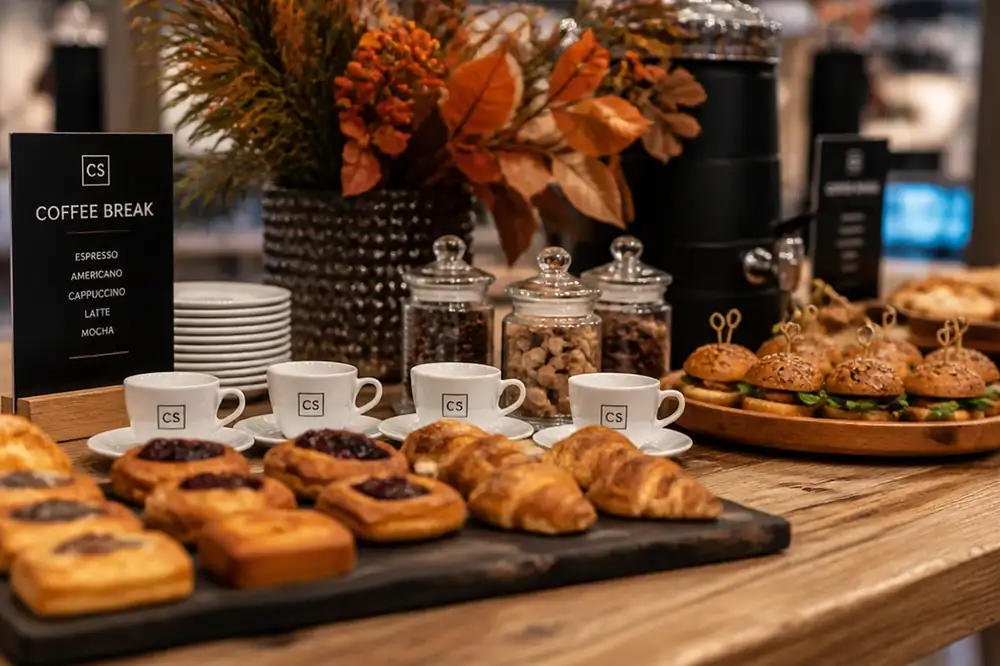
Corporate audiences require food that is practical, rapid to consume, and easily digestible, as they return to work immediately afterward. The technique shifts toward small-portion finger food and highly visible dietary accommodations. Clear labeling for vegetarian and gluten-free options is now a standard operational requirement, with specific headcounts requested from human resources departments during the initial quote.
The primary technical challenge lies in the venue. Events frequently occur in open-plan offices, conference rooms, or exhibition halls lacking basic culinary infrastructure. A mandatory site visit one week prior is necessary to verify electrical capacity and water access.
To compensate for absent kitchens, the catering team must transport a self-contained ecosystem. This includes buffet tables, thermal containers or chafing dishes, portable washing stations, and independent power generators. The equipment must maintain precise food temperatures without relying on the venue’s utilities.
Tight lead times of two to three weeks necessitate modular menu tiers with pre-calculated pricing. Staffing ratios are strictly applied to maintain service flow: one server per fifteen to twenty guests for a standing buffet, and one per ten to twelve for seated service. Contracts now routinely include a tolerance clause, allowing participant numbers to fluctuate by ten percent up to forty-eight hours before the event.
This operational shift reveals how professional cooking adapts to the constraints of modern commerce. When the kitchen is transient and the timeline is compressed, the recipe is no longer just a list of ingredients, but a rigid framework of time, temperature, and spatial planning that guarantees consistency regardless of the room.