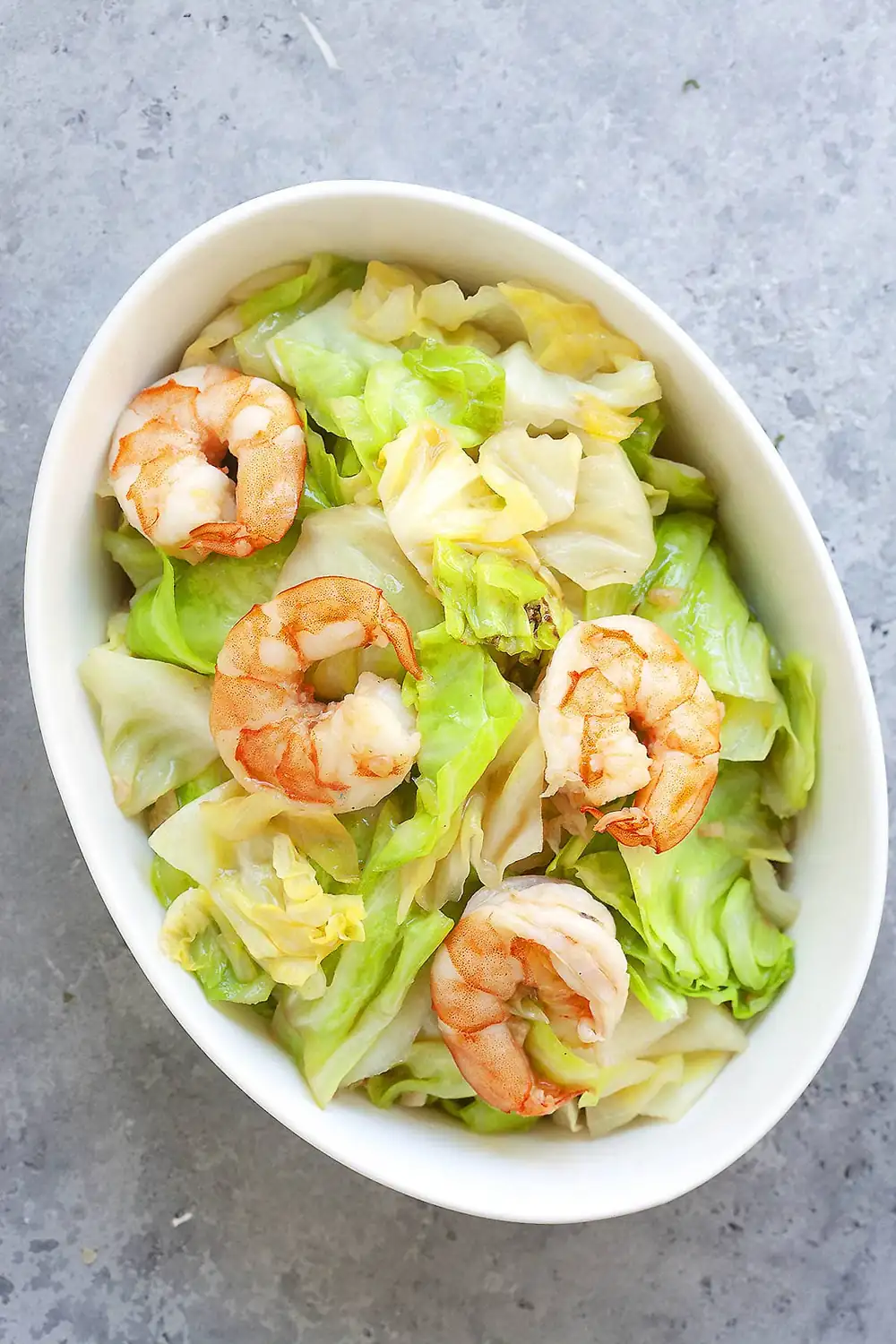
Sauteed Cabbage
This quick garlic sauteed cabbage with shrimp is the ultimate 15 minute side dish!
- 1 lb cabbage (core removed and cut into pieces)
- 2 tablespoons cooking oil
- 3 cloves garlic (minced)
- 4 oz shrimp (peeled and deveined)
- 1 heaping tablespoon oyster sauce
- ½ cup water
- salt (to taste)
- Trim off the bottom part of the cabbage and remove the core. Cut the cabbage into chunky pieces.
- Add cooking oil to a skillet over medium-high heat. Once hot, add the garlic and sauté until it begins to sizzle. Next, add the shrimp and stir-fry with the garlic until the shrimp are cooked through. Then, add the cabbage to the skillet and stir to combine well with the shrimp and garlic.
- Add the oyster sauce and water to the skillet. Stir and cook until the cabbage wilts, softens, and is cooked through. Season with salt to taste. Dish out and serve immediately.
Recipe Summary
- 🔪 Prep Time: 10 minutes
- 👨🍳 Cook Time: 5 minutes
- ⏱️ Total Time: 15 minutes
- 🍽️ Servings: 4 people
- 🏷️ Calories: ~118 calories
- 🍳 Cook Method: Sauteed
- ✨ Flavor Profile: Crisp, chunky cabbage and juicy shrimp tossed in a savory oyster sauce with a punchy garlic kick
- 🧩 Difficulty: Very easy (Perfect for a fast weeknight side dish)
Chinese Sauteed Cabbage
Cabbage is one of the most delicious but underrated vegetables. It is healthy, with a wonderful sweet taste, crisp texture, and it can be sauteed, stir-fried, made into soups, served as salads, in stews, and so much more! I love cabbage, and a quick plate of it is always on my dinner table because it is fast, cheap, and packed with flavor. One of the easiest ways to cook cabbage is to saute it, and the Chinese way of stir-frying cabbage produces amazing and mouthwatering results. Best of all, cabbage goes well with everything! No matter what protein you cook up, rest assured that this cabbage recipe will be a delicious pairing.
I have made this so many times, and I can say it is completely tried and tested. This recipe is a favorite because the chunky texture stays wonderfully crunchy while absorbing all that rich umami flavor. It is incredibly easy to make, as the entire dish comes together in a single pan in under 15 minutes. I can guarantee that the end result is fail-proof. The leaves wilt just enough to stay tender without becoming soggy or limp, while the bright green color stays fresh and inviting. This is the best Chinese sauteed cabbage recipe ever!
Western Style vs Asian Sauteed Cabbage
If you have only ever had Western style sauteed cabbage, this version is going to be a completely different experience for you. Traditional Western recipes usually focus on slicing the leaves into very fine ribbons or shreds, cooking them down slowly until they are incredibly soft.
For this recipe, I do things differently:
- The Texture: I cut the cabbage into big, chunky pieces because I want you to get a satisfying, juicy crunch in every single bite.
- The Cooking Fat: Instead of melting a big pat of butter or ghee to slowly caramelize the vegetable over low heat, I use a neutral cooking oil on medium-high heat to flash-cook everything quickly.
- The Acid: I completely skip the sharp acids like apple cider vinegar or lemon wedges that you see in so many popular online recipes.
- The Sauce: I rely on fragrant minced garlic, savory oyster sauce, and a splash of water. This creates a rich, deeply comforting savory glaze that coats every single chunky piece perfectly.
- Cabbage
- Shrimp
- Oyster sauce
See the recipe card below for all the ingredient details and exact measurements.
Pro Tip #1: Why I Use Neutral Cooking Oil I use a standard cooking oil with a high smoke point instead of butter. This allows us to cook over medium-high heat safely, getting that perfect sear on the shrimp and garlic without anything burning. Excellent neutral options for this stir-fry are vegetable oil, canola oil, corn oil, or peanut oil.
Pro Tip #2: Why Oyster Sauce Is Essential I add a heaping tablespoon of oyster sauce because it acts as an instant flavor builder. It provides a rich, sweet, and savory umami depth that coats the leaves beautifully, meaning you do not need a long list of extra seasonings. For the absolute best consistency and flavor punch, I highly recommend using a quality brand like Lee Kum Kee.
Pro Tip #3: The Purpose Of Water I include a half cup of water to create a quick steaming environment in the hot pan. It helps dissolve the thick oyster sauce into a smooth glaze while gently softening the tough vegetable walls.
Pro Tip #4: Add Salt Only At The End I leave the salt until the very end of the cooking process. Since oyster sauce is already quite savory, tasting the dish right before serving makes sure you add just the right amount without over-salting.
Shopping Guide: Choosing The Perfect Cabbage When shopping for green cabbage, look for a head that feels heavy for its size with tightly packed, crisp leaves. Avoid anything with loose, soft, or wilted outer layers. Those signs mean the vegetable has lost its moisture and will turn out rubbery instead of crunchy.
How To Make Sauteed Cabbage
Trim off the bottom part of the cabbage and remove the tough inner core. Cut the remaining leaves into large, chunky pieces and set them aside.
Add the cooking oil to a large skillet or wok over medium-high heat. Once hot, drop in the minced garlic. The moment it begins to sizzle and smell fragrant, toss in the peeled shrimp. Stir-fry constantly for 1 to 2 minutes until the shrimp turn pink and cook through.
Pro Tip: Keep a close eye on the pan! Garlic burns incredibly fast on medium-high heat, so move quickly so the shrimp stay juicy and the garlic does not bitter.
Dump the cabbage pieces directly into the skillet. Pour the oyster sauce and water straight over the top. Stir continuously to coat the leaves in the sauce and cook until the cabbage wilts, softens, and is cooked through.
Pro Tip: The skillet will look completely full at first, but the leaves shrink down significantly within a couple of minutes. The dish is done when the stem parts look slightly translucent but still gives a clean, distinct snap.
Taste the sauce, season with a pinch of salt if needed, and give it one final toss. Dish it out onto a plate and serve immediately while it is piping hot.
Can I make this dish vegetarian or vegan?
Yes. Just swap the traditional oyster sauce for a vegetarian mushroom-based stir-fry sauce. It gives you the exact same rich, glossy look and deep savory flavor without any seafood.
Can I make this dish ahead of time?
Stir-fries are truly best straight from the pan because the leaves lose their crispness as they sit. To save time, you can chop the cabbage and prep the shrimp in the morning, then store them in separate containers in the fridge until you are ready to cook.
Why did my cabbage turn out soggy?
Soggy vegetables happen when your heat is too low or you cook them for too long. Cooking on medium-high heat for just 3 to 4 minutes makes the water evaporate quickly instead of boiling the leaves, keeping the texture nice and crisp.
How do I store and reheat leftovers?
Store any extra portions in an airtight container in the fridge for up to 2 days. To reheat, give them a very quick toss in a hot skillet for 2 minutes to revive the flavors. Avoid the microwave because it will make the texture completely soft.
How many calories per serving?
This recipe is 118 calories per serving.
What To Serve With This Recipe
For an easy and wholesome Chinese weeknight dinner, I recommend the following recipes:
Sauteed Cabbage
sauteed cabbage with shrimp is the ultimate 15 minute side dish!