Loch Ryan Native Oyster Supply Sells Out at Record Stranraer Festival
The 2026 Stranraer Oyster Festival cleared over one and a half tonnes of Scotland’s last wild native oysters, demonstrating the enduring culinary and economic viability of preserving regional fisheries.
“And it’s not about the chefs, a lot of food festivals is all about big name chefs, but it’s not about that here, it’s about the local people and about how wonderful the oysters are. I think it’s brilliant.”
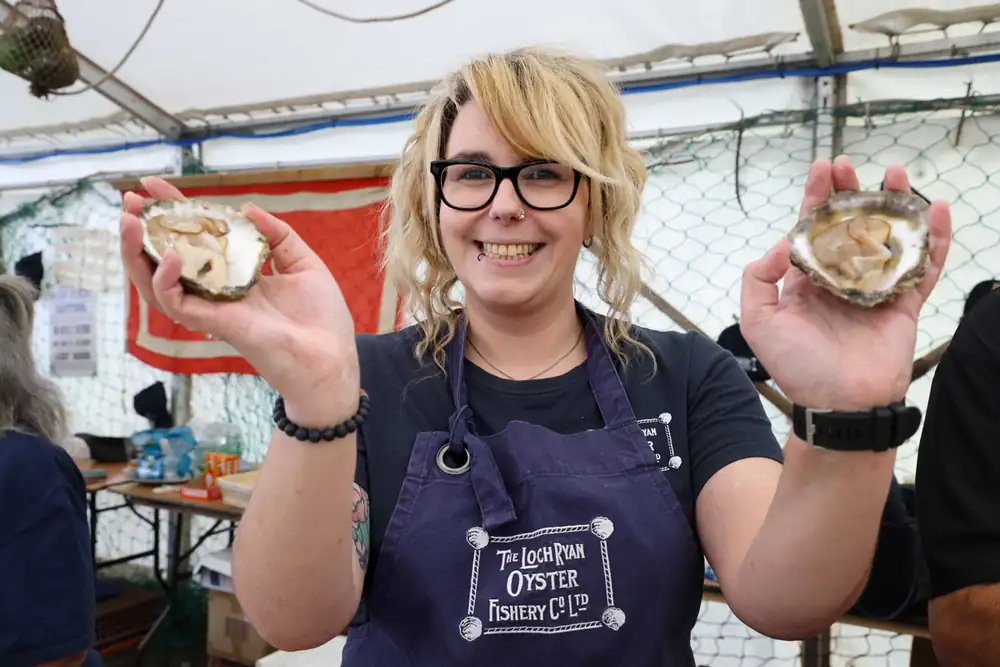
The 2026 Stranraer Oyster Festival, held on the waterfront from 11 to 13 September, recorded its highest attendance and ticket sales since its inception. Organisers confirmed that more than one and a half tonnes of oysters were supplied and entirely consumed over the weekend.
These oysters originate from Loch Ryan, which sustains Scotland’s last wild native oyster fishery. Unlike farmed varieties, native oysters require specific tidal conditions and careful harvesting to maintain their distinct mineral profile and texture.
The preparation remains strictly traditional, relying on precise shucking technique to preserve the liquor and flesh integrity. Neil Reader secured the Scottish Shucking Championship title during the event, subsequently yielding his place at the upcoming World Shucking Championship in Galway to runner-up Grace Murray.
Festival organisers adjusted the site layout this year to eliminate bottlenecks while preserving the direct sightline to the oyster beds. Romano Petrucci, chair of the Stranraer Development Trust, noted that maintaining this visual connection to the water remains central to the event’s identity.
Founded in 2017 after the town lost its ferry port, the event operates on a not-for-profit basis. Independent analysis indicates the festival has generated over £12 million for the local economy, with the majority of its budget directed toward local suppliers and supported by 150 community volunteers.
Culinary demonstrations featured chefs including Matt Tebbutt, Rosemary Shrager, and Julie Lin, who emphasized the informal, community-focused nature of the gathering. The programming extended beyond the kitchen, with marine science sessions and local history talks drawing significant attendance.
The complete depletion of the wild harvest in a single weekend indicates a shift in regional consumption habits. When a community aligns its economic model directly with the preservation of a specific, finite marine resource, the survival of that fishery becomes a matter of sustained public demand rather than mere ecological policy.