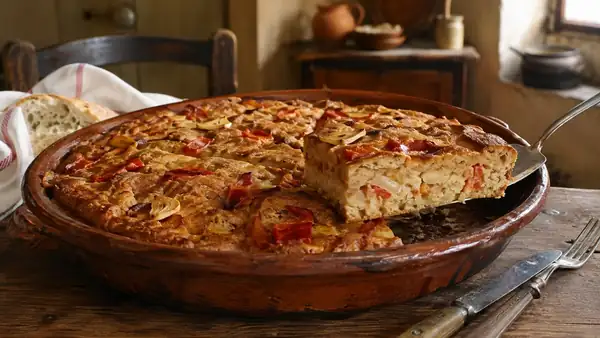
The authentic fideuà recipe from Gandía: it originated as a sailor's spaghetti paella
There is a fideuá recipe that was not born in a luxury restaurant, but from the ingenuity of the sailors of Gandía on the high seas.
- 400g of fideuà noodles number 4 (or thick spaghetti-type noodles)
- 1 liter of rockfish fumet (small fish) or homemade fish stock
- 4 large prawns or shrimp
- 4 crayfish
- 250g of diced monkfish
- 1 grated ripe tomato
- 1 small onion
- 2 cloves of garlic
- 1 teaspoon of sweet paprika
- A few strands of saffron (optional)
- 100 ml of extra virgin olive oil
- Salt to taste
- How to prepare fideuà from Gandia, step by step
- Prepare the fish stock. Boil the small fish with 1 liter of water and a pinch of salt for 20 minutes. Strain and reserve the hot stock.
- Clean the prawns, langoustines, and monkfish. Lightly season with salt and sear them in the paella pan with a drizzle of oil over high heat for 1-2 minutes per side. Remove and set aside.
- In the same paella pan, add the rest of the oil and sauté the chopped garlic and onion over medium heat for 8-10 minutes, until soft.
- Stir in the grated tomato and paprika. Cook for 5 more minutes, stirring to prevent burning.
- Add the noodles and stir-fry them with the sofrito for 3-4 minutes, until they are lightly browned.
- Pour in the hot fish stock and add the saffron if using. Cook over medium-high heat for 10-12 minutes.
- After that time, scatter the reserved seafood and monkfish on top. Cook for another 3-5 minutes, until the noodles are cooked and the broth is almost gone.
- Turn off the heat with a little broth still visible. Cover with a clean cloth and let it rest for 3-5 minutes before serving.
The anecdote dates back to the beginning of the 20th century, with the cook of the fishing boat Santa Isabel. The trawler set sail every morning from the Port of Gandía. While preparing lunch for the crew, the cook realized there was no rice left on board. He did, however, have spaghetti.
To get by, he chopped the long noodles and used them as a substitute for rice. The idea worked: the port's sailors adopted the recipe. Decades later, in the 1950s, some restaurants began serving it as their own dish. The pioneers were La Casita de Paco, La Pastaora, and the restaurant at the Hotel Europa, where Emilio López Bonías was the first to cook it in a paella pan.
Today, the recipe has its own association. The Gandía Fideuà Gastronomic Association, honorarily presided over by Avelino Alfaro, organizes an international competition every year and promotes the technique worldwide. You can find more information about the dish's history on its Wikipedia page.
The secret to a good fideuá is not in the aioli: it's in a good fumet and in noodles that taste of the sea, not wheat.
Avelino insists that fideuà shouldn't taste of wheat, but of the sea. That's why the thickness of the noodle matters more than it seems. Number four compact noodles are the closest to conventional spaghetti and hold the broth well without clumping together. The dish became popular in beach restaurants before it did inland.
Tricks to make it perfect
Choose your noodle carefully. Not angel hair or thick noodles; the compact number four absorbs the flavor without tasting like wheat.
Neutral stock. Prepare a strong fumet but without added salt, and adjust the salt level at the end of cooking.
Don't overcook it. Turn off the heat a little before it dries out completely and let it rest: this way it will be loose and slightly syrupy.
🍽️ The recipe card
- 🍴 Dish: Fideuá from Gandía with seafood and monkfish
- 👥 Servings: 4 people
- ⏱️ Time: 50-60 minutes
- 📊 Difficulty: Medium