El color negro intenso de tu galleta Oreo no proviene del chocolate negro, entonces, ¿de qué proviene?
Es la galleta más vendida del mundo, se lanzó en 1912 y ahora está disponible en docenas de sabores: la galleta Oreo.
It is the best-selling cookie in the world, was introduced back in 1912, and is now available in dozens of flavors: the Oreo cookie. But how well do we really know this classic? After all, what is actually inside such a black-and-white cookie? What is the white layer in the middle? And is an Oreo vegan?
How does an Oreo get so dark?
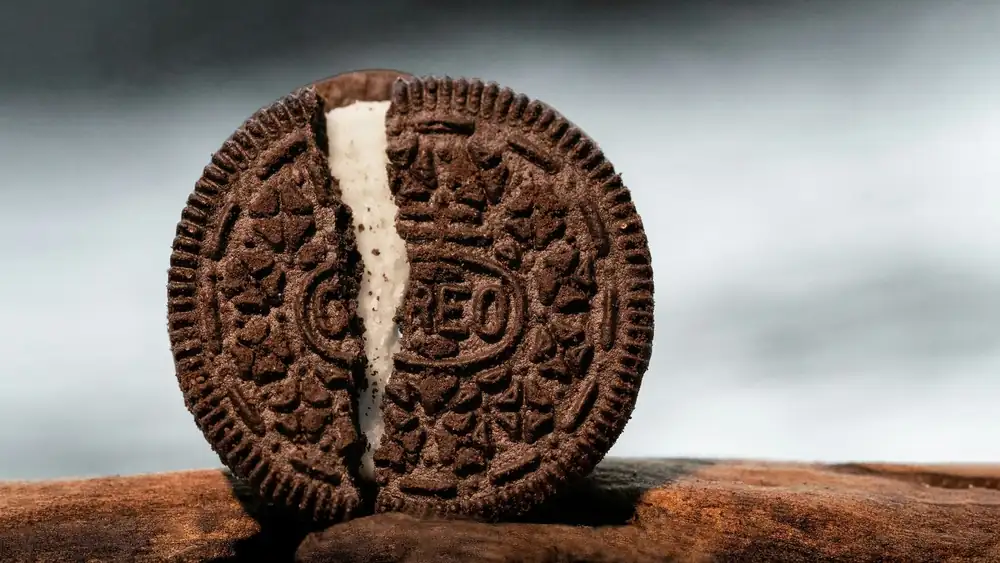
One of the biggest misconceptions about Oreos is that they are made with dark chocolate. That makes sense, because the cookies are jet-black in color and taste deliciously rich in cocoa. But: there is no traditional chocolate in them. What is in them, however, is a special type of cocoa powder, also known as black cocoa.
This black cocoa is a highly alkalized form of cocoa, which means that it has been treated with an alkaline substance (such as potassium carbonate) to lower the acidity. This process, also known as Dutch processing (named after the Dutch inventor Coenraad van Houten), changes not only the color of the cocoa but also the taste.
The more alkalized it becomes, the darker and milder the cocoa. In the case of Oreos, the result is: almost black cookies with a velvety cocoa flavor and less bitterness.
Black cocoa is also often used in American baking recipes where a deep black color is desired, for example for chocolate cakes or brownies with extra drama.
And what about that white layer?
There are also some questions regarding the filling. Many people think it is a creamy, milky cream, but nothing could be further from the truth: the cookies contain no dairy products. The filling is made from sugar, vegetable fats, vanilla flavoring, and emulsifiers. And although technically it cannot be called a 'cream' (because it contains no dairy), it remains an irresistible combination with the dark cookie.
And yes, that also means that Oreos – in their original form – are completely vegan. Without dairy or eggs, and therefore suitable for people who eat plant-based. It's no wonder that they often pop up in vegan baking recipes as a crunchy addition.