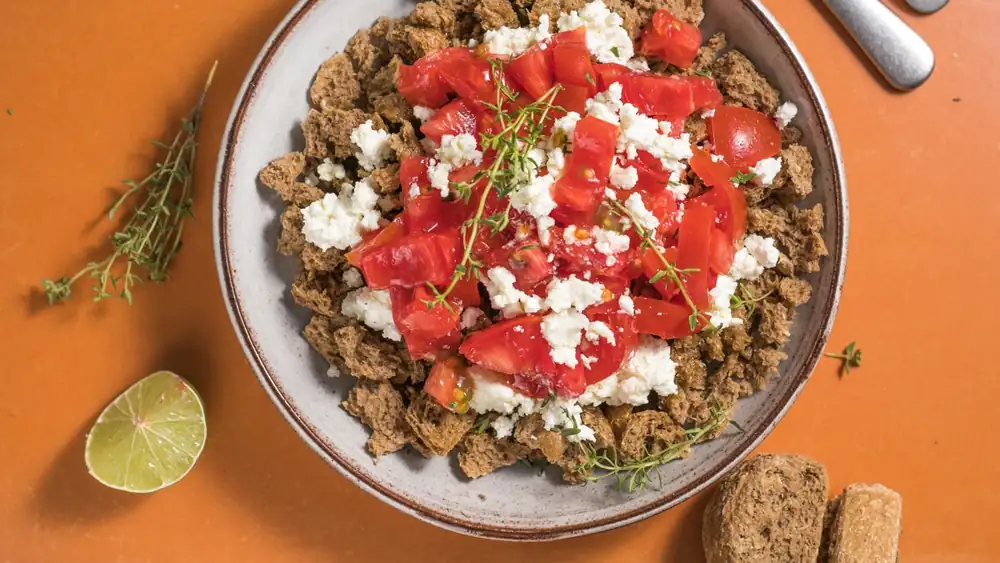
Beyond Greek Salad: In Crete, a dish similar to panzanella is prepared to be discovered
Perhaps some of you have recently returned from your Greek vacation with a new gastronomic obsession.
Paximadi: the barley bread at the base of the dakos
Like many other Greek recipes, Dakos owes its origins to peasant and rural history, in this case, Cretan. Breadmaking was certainly widespread here, but not a daily occurrence, and was supported by products that were non-perishable and could be stored for a long time. Such is the Paximadi, loaves made primarily from barley with a small percentage of durum wheat, which were baked twice.
This resulted in slices, or chunks, that were very dry and hard, difficult to attack by mold. Farmers and shepherds would take them to the fields, where they simply softened them with a drop of water and oil, then seasoned with garden produce, for a nutritious lunch.
Ingredients and preparation of Dakos
It goes without saying that such an ancient recipe relies on a few, unrefined ingredients. It begins with dried barley bread discs, which serve as a slightly crunchy, slightly soaked base. On top, plenty of ripe tomatoes are placed—either grated or diced; never sliced—so that the juices soak into the bread, along with extra virgin olive oil.
Mizithra, a fresh goat or sheep cheese made with a slightly tart taste, is also a must, as is feta (which is often used as an alternative, especially nowadays). Dakos is finished with wild oregano, salt, and, if desired, Kalamata olives and desalted capers.
Similarities and differences with our bread-based dishes
When told this way, Cretan salad brings to mind panzanella, or pane frattau, dressed as it is in Sardinia. Unlike Tuscan unsalted bread, however, which is softened in water and vinegar and then crumbled, the base of Dakos remains as whole as possible and maintains its consistency: soft where it absorbs the tomato juices, but crunchy and chewy inside.
While the most apt comparison is with the versatility of friselle, there are various options to try it in Italy: for example, at Vasiliki Kouzina in Milan, which offers it quite regularly as an alternative to the classic Greek salad, at Ladi Ke Rigani in Imola, which also makes it with fresh onion, or at Greco Romano, in the capital, where they add Italian parsley and season it with Aegean salt.