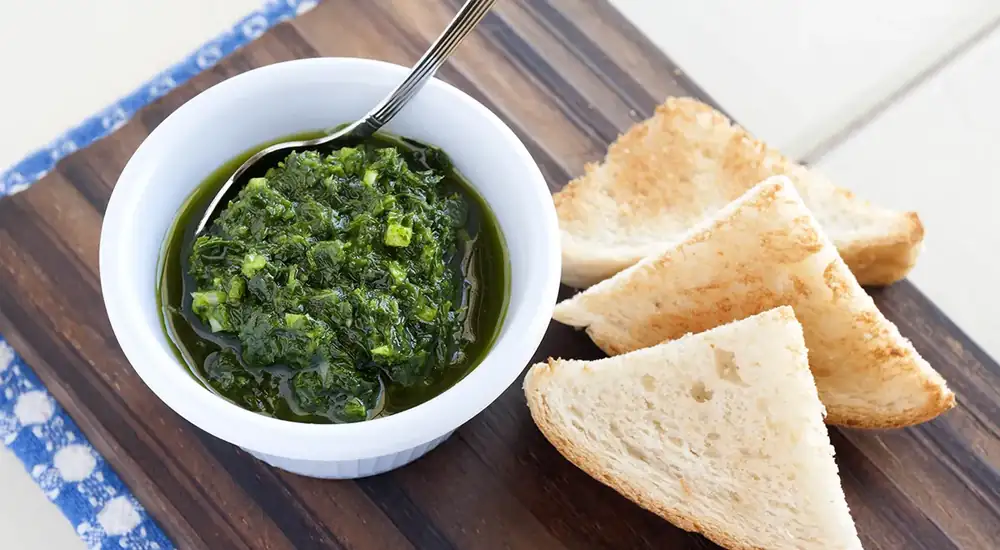
Horseradish leaf seasoning for the winter
Wash the horseradish leaves thoroughly.
Step 1
Wash the horseradish leaves thoroughly. Remove the tough central veins. Finely chop the horseradish leaves with a knife. Finely grate the zest from the lemon. Squeeze the juice from the lemon.
Step 2
Peel the garlic cloves. Remove the seeds from the bell peppers. Sort and wash the parsley. Shake off excess water. Grind the horseradish leaves, bell pepper, garlic, and parsley through a meat grinder with a fine mesh.
Step 3
Add salt, sugar, lemon zest, and juice to the resulting green mixture. Stir. Pour in the vegetable oil. Stir again and divide into sterilized jars. Seal with regular lids and refrigerate.
Horseradish is a symbol of Russian cuisine and a powerful immune booster. Its zesty flavor instantly whets the appetite, gets the blood pumping, and adds a punch to even the most bland dish. To preserve this unique ingredient until spring, use it to make sauces, seasonings, appetizers, and drinks. We've compiled nine tried-and-true recipes for weekdays and holiday meals.
Unfortunately, a jar of homemade cucumbers opened in winter often disappoints both the host and guests. Everything seemed to be done according to the recipe, but instead of firm, crisp cucumbers, you end up with soft, whitish ones, fit only for pickle soup. To avoid this, let's figure out which cucumbers are best for canning and which recipes are guaranteed to work.
The spicy Russian condiment khrenovina is especially popular in Siberia and the Urals. In other regions of Russia, it's often given other common names, such as "cobra" or "little fire." And for good reason. Its main ingredient, horseradish, has exceptional bactericidal, antimicrobial, and antiviral properties. An old Russian proverb says, "Eat horseradish—and you'll live longer." There are countless ways to prepare khrenovina, and every home cook has their own. I'll share our family recipe in the hope that this season you, too, will make a couple of jars of this incredibly tasty and healthy condiment using fresh, field-raised tomatoes.
Country-style pickled cucumbers in a jar are a traditional snack in Russian, German, and Polish cuisine. These cucumbers are firm, not soggy, very crunchy, and quite spicy. They were once prepared in large wooden barrels and tubs, which is why many still call them "barrel pickled cucumbers." Instead of blackcurrant leaves and horseradish, you can use oak or cherry leaves—they also produce a delicious result. Our recipe explains how to cold-pickle cucumbers.
Pickled cucumbers for the winter without vinegar are usually pickled in a barrel and stored in a cold cellar. But even if you don't have a barrel or cellar, we'll teach you how to make pickles and then store them in regular glass jars.