From overripe fruit to frozen fruit: mistakes to avoid when baking desserts
We've all tried making a dessert with fruit at least once because, let's face it, they're beautiful, colorful, fresh, and also because they give that vague sensation of eating a super healthy dessert.
That's why it's not enough to simply take any cake, add some fruit at random, and throw it in the oven: overly large pieces, incorrect use of frozen fruit, or fruit with a high water content can compromise the baking and texture of the cake. Below, we've listed some mistakes to avoid when using fruit in your baked goods.
1. Underestimating the texture of fruit
Not all fruit behaves the same when added to a batter: a firm fruit cut into cubes, a very ripe banana mashed, and a very soft peach may have the same weight, but not the same texture or the same effect on the recipe.
This doesn't mean you should avoid overly ripe fruit: some recipes, like banana bread, call for it precisely because its soft, sugar-rich pulp is an integral part of the recipe. The problem arises when you replace the intended fruit with a much riper one or change its shape without considering how this might affect the dough. A diced apple, for example, retains a different texture than a grated apple, which distributes a greater amount of pulp and moisture into the dough. Therefore, before substituting a fruit or changing its processing, you should consider not only the weight, but also the consistency and shape in which it is incorporated.
2. Ignore the water content in fruit
This is one of the most important aspects to keep in mind: fruit is naturally rich in water, and during cooking, some of this water can be released into the batter. If the amount of fruit is large or particularly juicy, the result can be a moister cake with different cooking times than a cake with little or no fruit. The problem can become even more evident when fruit is used in large quantities in batters that already contain a high percentage of liquid. Therefore, when adding fruit to a recipe, it's important to consider that its weight not only corresponds to pulp, fiber, and sugars, but also to a significant amount of water that will contribute to the balance of the preparation.
3. Overdoing the amount of fruit
A cake with lots of fruit can be delicious, but increasing the recipe's recommended quantity isn't always a good idea. Adding more fruit simultaneously increases the weight of the solid ingredients and, in most cases, also the amount of water and sugar the batter must handle. If the recipe wasn't designed to accommodate that amount, the cake may be moister, heavier, or have a less uniform texture.
This is especially true for batters like muffins, plum cakes, and soft cakes, where the ratio of liquid to solid ingredients plays a key role in the final structure. If you want to make a particularly fruit-rich dessert, it's therefore best to start with a recipe specifically formulated for this type of preparation, rather than simply increasing the amount of fruit.
4. Treat frozen or dried fruit like fresh fruit.
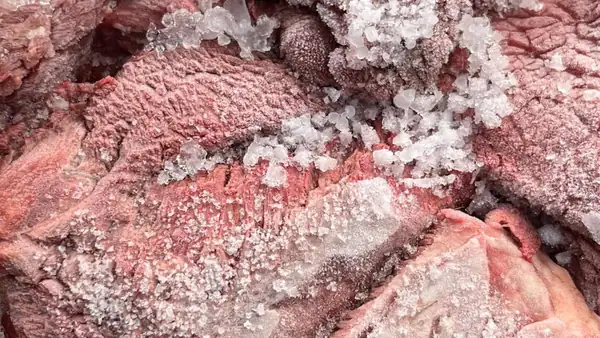
Frozen fruit is incredibly convenient, but the extreme cold breaks down the fruit's cell walls, resulting in much more juice when thawed than fresh fruit. There's no universal rule here: if the recipe requires a short cooking time, it's often best to thaw and drain the fruit to avoid pools of water in the batter; in other cases, it can be used while still frozen.
The difference with dried fruit (raisins, dates, dried apricots) is even more drastic: deprived of water, it has a very high sugar concentration and a completely different specific weight, so replacing it with fresh fruit at the same weight unbalances the chemistry of the dessert.
5. Cutting fruit into pieces that are too large
The size of the pieces affects how the fruit is distributed and cooked within the cake: very large pieces can remain more compact while the surrounding batter cooks and can concentrate more moisture in specific areas. Cutting the fruit into more uniform pieces, however, makes it easier to achieve even distribution and more even cooking.
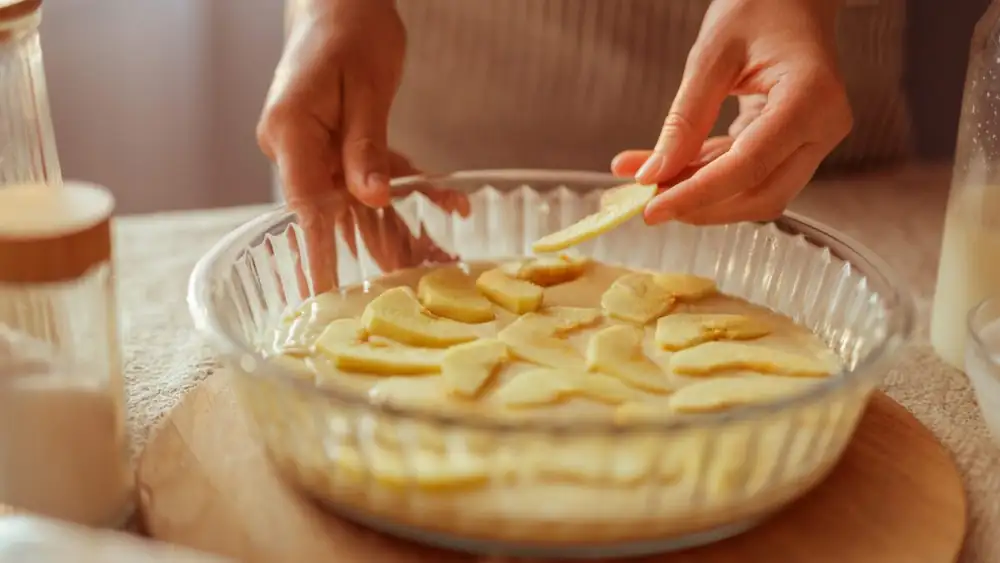
However, there's no one-size-fits-all solution: a large apple slice placed on the surface of a cake serves a different purpose than small apple cubes incorporated into the batter. The size should therefore be chosen based on the type of cake and the role the fruit will play in the preparation.
6. Thinking that flouring the fruit always solves the problem
Dredging blueberries, berries, or fruit cubes in flour before adding them to the batter is a popular trick to prevent them from sinking during baking. It can work, of course, but not always: the distribution of the fruit depends on several factors, including the size and weight of the pieces and the consistency of the batter. In some cases, the key is simply to adjust the batter's density before baking: a sufficiently structured batter will hold the fruit in suspension without needing to open the oven halfway through baking.
7. Alter the balance between acids and leavening agents
Lemons, oranges, currants, and raspberries add a delicious tart note, but they interact directly with the chemistry of the cake. In recipes that use baking soda as a leavening agent, the fruit acid serves to trigger the reaction that produces carbon dioxide and makes the cake rise. The problem arises when the acid component called for in the original recipe is drastically altered (for example, by replacing part of the liquid with a lot of lemon juice): by increasing the acidity too much, the reaction with the baking soda will be exhausted too quickly before the batter has time to firm up during baking, causing the cake to collapse.
8. Judge the doneness based only on the toothpick test
Fruit-heavy desserts often require a few extra minutes of baking time at the center due to the extra moisture released by the fruit. For this reason, relying solely on the surface color or blindly relying on the toothpick test can be risky: if the toothpick is inserted right through a piece of fruit, it's perfectly normal for it to come out moist, resulting in a false positive. To be sure the dessert is ready, it's best to test the center in several places (looking for areas of just batter) and verify that the entire structure is stable and doesn't move in the pan.
9. Ignoring moisture migration after cooking
The work doesn't end when the cake comes out of the oven: in products composed of different elements (such as fruit-filled tarts or assembled cakes), water naturally tends to move from the moister to the drier areas—a phenomenon known in cooking as moisture migration. This is why an initially crispy pastry base can become soft and soggy after a few hours in contact with a moist fruit filling. Properly managing the fruit's cooking, letting it rest properly, or creating an insulating barrier (such as a layer of chocolate or almond flour on the bottom) are the final, crucial steps for a flawless result.