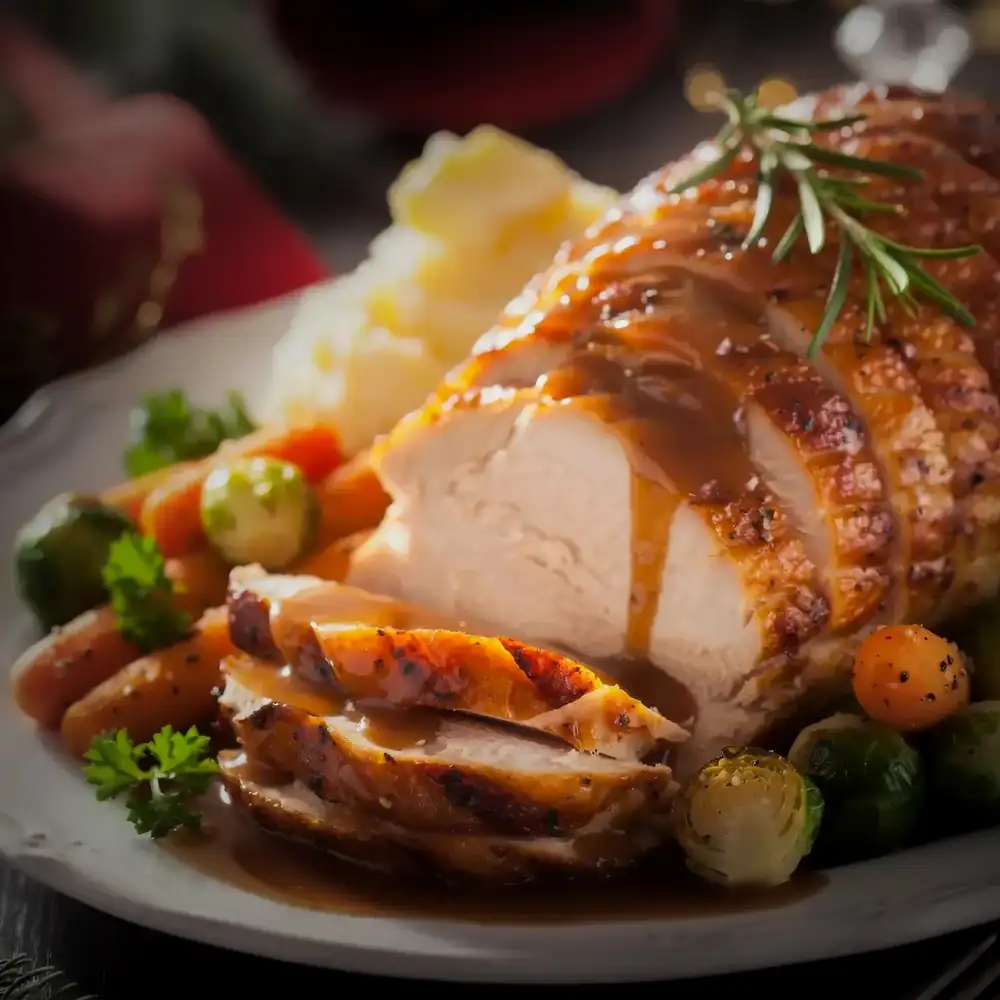
How to make a delicious turkey breast with gravy sauce
Making a turkey breast that doesn't look like a piece of cork is easier than you think.
- Para la pechuga
- 1 pechuga de pavo de 1.2 kg aproximadamente (con piel y preferiblemente con hueso)
- 50 g de mantequilla a temperatura ambiente
- 1 cucharada de aceite de oliva virgen extra
- 2 dientes de ajo picados finamente
- 1 cucharadita de tomillo seco o fresco
- 1 cucharadita de romero picado
- Sal y pimienta negra al gusto
- 250 ml de caldo de pollo (para la bandeja)
- Para la salsa gravy
- Los jugos resultantes de la cocción (completar con caldo de pollo hasta llegar a 500 ml)
- 40 g de mantequilla
- 40 g de harina de trigo común
- Una pizca de sal y pimienta
- Saca la pechuga del refrigerador 30 minutos antes de empezar para que pierda el frío extremo. Precalienta el horno a 180°C (350°F).
- Mezcla en un bol pequeño la mantequilla blanda con el ajo, el tomillo, el romero, la sal y la pimienta hasta formar una pasta.
- Despega con cuidado la piel de la pechuga usando los dedos, intentando no romperla. Introduce la mitad de la mezcla de mantequilla directamente sobre la carne, debajo de la piel.
- Unta el resto de la mantequilla y el aceite de oliva sobre la piel de la pechuga. Esto ayudará a que quede dorada y crujiente.
- Coloca la pechuga en una bandeja de horno y vierte los 250 ml de caldo en el fondo de la fuente. Esto evita que los jugos se quemen y crea vapor para que la carne no se reseque.
- Hornea durante 50 o 60 minutos. El tiempo exacto dependerá del grosor, pero la pechuga estará lista cuando la temperatura interna alcance los 74°C (165°F).
- Retira la pechuga de la bandeja y colócala en una tabla. Tápala con papel de aluminio y deja que repose 15 minutos antes de cortarla. Este paso es vital para que los jugos se redistribuyan.
- Para el gravy, cuela los jugos de la bandeja y pásalos a una jarra medidora. Si no llegas a los 500 ml, añade más caldo de pollo.
- En un cazo a fuego medio, derrite los 40 g de mantequilla. Añade la harina y cocina durante 2 minutos removiendo constantemente hasta que huela a galleta, pero sin que se queme.
- Vierte el líquido poco a poco mientras bates con unas varillas para evitar grumos. Cocina a fuego lento durante 5 o 7 minutos hasta que la salsa espese y brille. Rectifica de sal si es necesario.
Well, gravy is the perfect sauce for a turkey breast. Thick and glossy, it makes the most of every drop of flavor the meat releases during cooking.
You don't need to cook a whole six-kilo turkey to enjoy that classic flavor. A good breast and the right seasonings will do the trick.
Turkey breast recipe with gravy sauce
- 380 Kcal
- For the breast
- 1 turkey breast of approximately 1.2 kg with skin and preferably with bone
- 50g of butter at room temperature
- 1 tablespoon of extra virgin olive oil
- 2 finely chopped garlic cloves
- 1 teaspoon of dried or fresh thyme
- 1 teaspoon of chopped rosemary
- Salt and black pepper to taste.
- 250 ml of chicken broth for the tray
- For the gravy sauce
- Add chicken broth to the juices resulting from cooking until you reach 500 ml.
- 40g of butter
- 40g of plain wheat flour
- A pinch of salt and pepper.
- Take the chicken breast out of the refrigerator 30 minutes before starting so it loses its extreme chill. Preheat the oven to 180°C (350°F).
- In a small bowl, mix the softened butter with the garlic, thyme, rosemary, salt, and pepper until a paste forms.
- Carefully loosen the skin of the chicken breast using your fingers, trying not to tear it. Place half of the butter mixture directly onto the meat, under the skin.
- Spread the remaining butter and olive oil over the skin of the chicken breast. This will help it become golden and crispy.
- Place the chicken breast in a baking dish and pour 250 ml of stock into the bottom of the dish. This prevents the juices from burning and creates steam so the meat doesn't dry out.
- Bake for 50 to 60 minutes. The exact time will depend on the thickness, but the chicken breast will be ready when the internal temperature reaches 74°C (165°F).
- Remove the chicken breast from the tray and place it on a cutting board. Cover it with aluminum foil and let it rest for 15 minutes before slicing. This step is vital for the juices to redistribute.
- For the gravy, strain the juices from the roasting tin and transfer them to a measuring jug. If you don't have 500 ml, add more chicken stock.
- In a saucepan over medium heat, melt the 40g of butter. Add the flour and cook for 2 minutes, stirring constantly, until it smells like cookies, but without burning.
- Pour in the liquid gradually while whisking to avoid lumps. Simmer for 5 to 7 minutes until the sauce thickens and becomes glossy. Adjust the salt if necessary.
Tips for this recipe
- If the skin browns too quickly before the meat is ready, loosely place a piece of aluminum foil over it to protect it.
- Don't skimp on resting time. If you cut the chicken breast as soon as you take it out of the oven, you'll lose all the juices on the cutting board and the meat will become stringy. Just wait a little while.
- For a deeper flavor, add a teaspoon of soy sauce or Worcestershire sauce (the famous English sauce) to the gravy while it thickens.
- If you don't have fresh herbs, dried ones work fine, but use half the amount indicated because their flavor is more concentrated.
Cooking times according to weight and type of piece
Adjusting the baking time to avoid ruining the piece is crucial. To help you, here's a quick guide for baking at 180°C:
- Boneless chicken breast (per 500g): Allow 15-20 minutes. A 1kg piece will take about 35-40 minutes.
- Bone-in chicken breast (per 500g): Allow 22-25 minutes. The bone acts as a heat conductor but also requires more total cooking time. A 1.5kg piece will take about 70-75 minutes.
- In a slow cooker: Cook on low (Low) for 6 hours or on high (High) for 3 hours, always with a little liquid at the bottom.
- In a pan: Only recommended for chicken breast fillets. Cook for 4 minutes per side over medium-high heat.
Emergency gravy: when there's no juice
Sometimes the chicken breast is very lean, or the oven has evaporated all the liquid. If you're left without those natural juices, don't worry. You can make an excellent gravy by following these steps:
- Melt the butter and toast the flour as explained in the main recipe.
- Use a very good quality chicken broth, preferably dark or concentrated.
- Add half a teaspoon of beef extract (like Bovril) or a crumbled stock cube to give that characteristic brown color and depth of flavor.
- Add a pinch of onion powder and garlic powder to compensate for the lack of juices from the roast.
What to serve with this dish
- Rustic mashed potatoes: The classic combination that best uses up excess gravy.
- Roasted vegetables: Carrots, Brussels sprouts or asparagus with a touch of honey and lemon.
- Barley and apple salad: It adds a crunchy and sweet touch that balances the intensity of the turkey.
How to store and reheat this turkey breast with gravy
Store leftovers in an airtight container in the refrigerator for up to 3 to 4 days. It's best to store the sliced turkey and gravy separately.
To reheat without drying out the meat, place the turkey slices in a baking dish, add a couple of tablespoons of broth or some of the gravy on top, and cover with aluminum foil. Heat in the oven at 150°C (300°F) for 10 minutes. If using a microwave, heat on medium power and cover the dish with a lid to retain the steam. The gravy can be heated in a small saucepan or skillet. If it's too thick, add a splash of water or broth to thin it out.
FAQs
What is the exact table of minutes per kilogram for bone-in vs. boneless chicken breast?
For boneless chicken breast, allow 40 minutes per kilo at 180°C. For bone-in chicken breast, increase the time to 50 minutes per kilo to ensure the heat reaches the center of the piece.
How to make a tasty gravy if the chicken breast didn't release enough juices?
Use concentrated chicken broth and add a teaspoon of soy sauce or meat extract. This provides the dark color and umami flavor that would normally come from the juices of the roast.
What techniques exist to ensure the juiciness of the chicken breast?
The most effective technique is compound butter under the skin. By placing fat directly on the meat and under the skin, we protect the protein from direct heat and keep it constantly moist during cooking.
Can you freeze turkey breast with gravy?
Yes, you can freeze them together or separately for up to 3 months. For best results, freeze the turkey slices submerged in a little gravy so the sauce protects the meat from freezer burn.
Why is my gravy lumpy and how do I fix it?
Lumps will appear if you add the stock too quickly or if you don't blend it well at the beginning. If this happens, pass the sauce through a fine sieve or give it a quick pulse with an immersion blender to make it perfectly smooth.