How to prepare a charcuterie board for guests
To put together a good charcuterie board, you don't need to buy a dozen items or cover the entire table.
It's also a good idea to carefully calculate the quantities and take the products out of the refrigerator a little in advance. This will prevent you from running out, buying too much, or serving cheeses so cold they barely have any flavor. In this guide, you'll find simple proportions to adapt the cheese board to the number of guests and your budget.
How much cold cuts and cheese to calculate per person
If the charcuterie board will be served as an appetizer before a meal, allow between 80 and 100 grams of cured meats and cheeses per person. For the main meal, increase the amount to about 180 or 200 grams per guest.
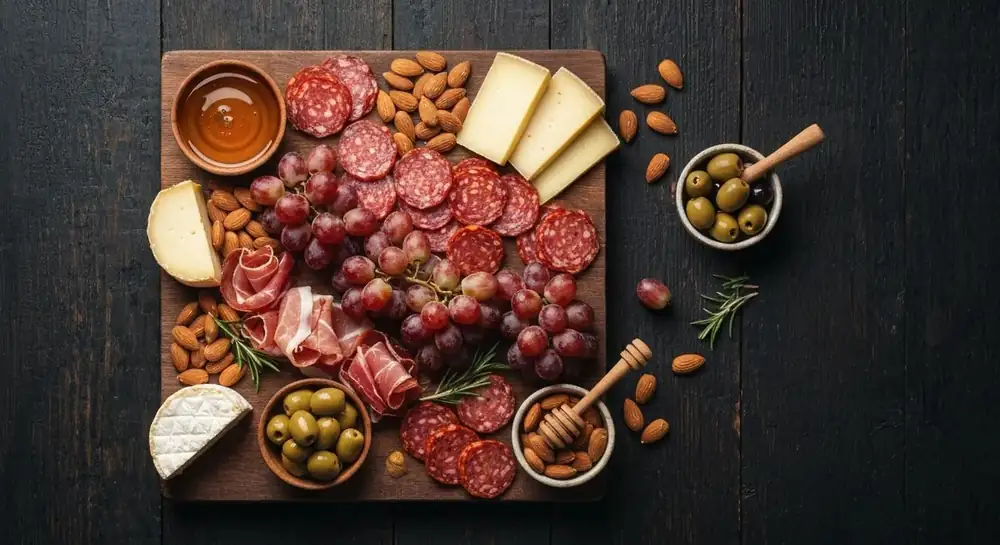
For a gathering of eight people, for example, you could prepare about 400 grams of cured meats and 400 grams of cheese if other dishes will follow. Complete the spread with bread, olives, fruit, and nuts, which add variety and allow you to alternate between richer or more flavorful snacks.
Which cold cuts to choose
Three or four varieties are enough to make the platter interesting. Make sure they don't all have the same flavor or a similar texture.
- A Serrano or Iberian ham cut into thin slices.
- A spiced sausage, such as chorizo, salchichón or fuet.
- A milder option, such as cured pork loin, quality cooked ham, or mortadella with pistachios.
- A pâté or a terrine, if you want to add something to spread.
You don't need to include them all. With a good ham, a salami, and a mortadella, you already have quite different flavors and textures.
Which cheeses to choose
A similar logic applies to cheeses. The easiest thing to do is choose a mild one, a semi-cured one, and one with a more intense flavor.
- A soft and creamy cheese, like brie or camembert.
- A semi-cured cheese, such as Manchego, Gouda, or Mahón.
- A more intense cheese, such as blue cheese, Cabrales, or a cured sheep's cheese.
- A fresh goat cheese or mozzarella, if you want to add a lighter flavor option.
If you're only serving two cheeses, choose one creamy and one hard. That contrast usually works better than arranging several very similar pieces.
Side dishes for a charcuterie board
- Sourdough bread, baguette, breadsticks or crackers.
- Olives, gherkins and other pickles.
- Grapes, figs, pear, apple or red berries.
- Walnuts, almonds, pistachios or hazelnuts.
- Fig jam, honey or quince paste.
- Mustard, pâté or some spreadable cream.
You don't need to include a little of everything. Choose three or four side dishes that complement the main items and don't take up more space than the cold cuts and cheeses.
How to cut sausages and cheeses
Ham, loin, and other cured meats are best enjoyed in thin slices. Chorizo, fuet, and salchichón can be cut slightly thicker to better preserve their texture.
Firm cheeses can be served in triangles, sticks, or irregular slivers. Softer cheeses are best left whole or cut into large pieces so they don't fall apart while you're assembling the cheese board.
How to assemble a charcuterie board step by step
- Place the small bowls with olives, pickles, honey, jams, or sauces first. Since these are the hardest items to move, they will dictate the arrangement of the rest of the board.
- Distribute the cheeses evenly, leaving space between them. If they have very different flavors, avoid placing them too close together so they don't mix too much.
- Add the cold cuts in small groups. You can fold the slices of ham or mortadella without having to make complicated shapes.
- Distribute the fresh fruit in two or three areas to add color and make it easier for everyone to reach it.
- Fill the small spaces with nuts, breadsticks or crackers, but leave some of the bread in a separate basket so the board doesn't get too crowded.
- Place small knives for the cheeses and spoons for the jams or pâtés. If there are olives with pits, also leave an empty container for disposing of them.
Temperature and food safety
Take the cold cuts and cheeses out of the refrigerator 20 to 30 minutes before serving. This is usually enough time for them to regain their aroma and a more pleasant texture, without leaving them out for too long.
Perishable foods should not be left at room temperature for more than 2 hours. If the food is served outdoors and the temperature exceeds 32°C, the limit is reduced to 1 hour.
When the meeting is going to last several hours, prepare two small boards and keep the second one in the refrigerator until needed. It's a safer solution and prevents the food from drying out or losing its freshness.
How to prepare the board in advance
You can slice firm cheeses and some cured meats a few hours in advance, as long as you keep them well covered and separate in the refrigerator. Thinly sliced ham, soft cheeses, bread, and fresh fruit are best prepared closer to serving time.
Assemble the board without the bread or nuts, cover it well, and refrigerate. Add the dry items last so they don't absorb moisture.
How to prepare an inexpensive charcuterie board
You don't need expensive products to create an appealing charcuterie board. A good fuet, salchichón, cured ham, and two well-chosen cheeses can produce a fantastic result.
Complete the meal with toasted bread, olives, apple, grapes, and almonds. Seasonal produce is usually more affordable and adds color without breaking the bank.
How to prepare a gourmet platter
For a more special version, it's best to buy fewer products and choose them more carefully. You could combine Iberian ham, a cured sheep's cheese, a Brie or Camembert, and a country-style pâté.
Serve with fresh figs, quince paste, toasted almonds, and good bread. Four quality main ingredients are usually enough; filling the platter with too many things ends up obscuring precisely what you paid more for.
How much cold cuts and cheese should I buy for 10 people?
If the platter will be an appetizer, allow between 800 grams and 1 kilo of cured meats and cheeses in total. If it will be the main course, you'll need around 1.8 or 2 kilos, plus bread, fruit, and other accompaniments.
How long can the board be left out of the refrigerator?
Perishable foods should not be left at room temperature for more than 2 hours. When the temperature exceeds 32°C, this time is reduced to 1 hour.
How do I prepare a chart for celiacs?
Check that cold cuts, pâtés, sauces, and crackers are labeled gluten-free. Serve wheat bread in a separate container and use different knives, tongs, and cutting boards to avoid cross-contamination.
What fruits go well with cold cuts and cheeses?
Grapes, figs, pears, and apples work especially well together. Red berries add color and acidity, while melon pairs beautifully with cured ham.
In what order is the table assembled?
Start with the bowls and cheeses, then add the cold cuts and fruit, and finish by filling in the gaps with nuts and crackers. Keep the main bread in a separate basket so it doesn't take up the entire surface.
Can I prepare the table the day before?
You can cut the ingredients ahead of time and store each item separately, but it's not recommended to assemble the entire board the day before. The bread will soften, the fruit will oxidize, and some cheeses will impart their aroma to the other foods.