Nus, the Japanese-Andalusian tavern that livens up Palma de Mallorca
Santa Catalina has transformed from a fishing neighborhood outside the city walls into a fully integrated part of Palma de Mallorca.
“Santa Catalina is a double-edged sword,” says Irene Martínez, who runs the kitchen. “It’s changed, and many Mallorcans don’t want to come because they think it’s a neighborhood for foreigners where the restaurants are only interested in making money. It’s affecting those of us who try to do things right, precisely for the locals.” Since 2022, she has been working to attract them to her restaurant, and she does so with a cuisine that draws from her Andalusian roots, from Mallorca—where she was born—and from Japan—where she worked for an extended period.
If there's one word that repels, it's fusion. Fusion sounds like a shortcut, like two cuisines clashing to impress passersby, a buzzword for a trendy neighborhood. However, what happens in this restaurant is different and requires more effort. Here, the regional cuisine doesn't merge with others, but rather is tied together. Hence its name: nus in Mallorcan means knot, and Martínez manages to join these seemingly disparate threads seamlessly—just as his father, a carpenter, did with wood.
From this blend of influences comes its menu, divided between dishes with a tavern feel and more substantial courses, also designed for sharing. In addition, it offers two tasting menus with excellent value for money (Mijilla, €55, and Pechá, €70), always mindful of seasonal ingredients.
The thread that binds
Thus, on the table: anchovies marinated in sunomono—for which they use sherry vinegar instead of rice—; Peking-style pork rinds; pringá banh mi; a fresh coconut milk soup, with lemongrass leading the way. The yellowtail nigiri is seared, with a soy and mirin syrup that rounds it out. Mallorca is condensed in a dumpling filled with porc negre, flavorful and lightly fried. And the bread, here, is a mantou, a fluffy Chinese bun perfect for lying down.
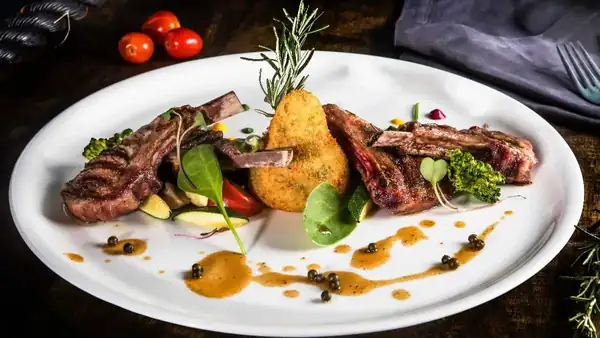
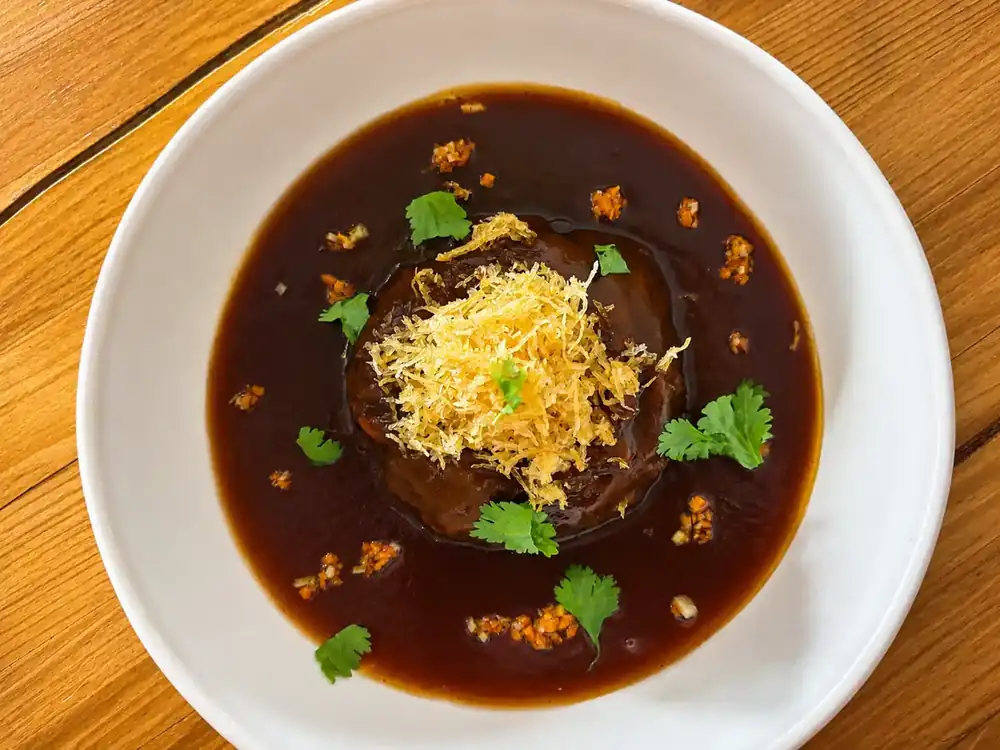
The tuna steak is smoked in a kamado grill. It arrives accompanied by a mayonnaise that allows the fish to breathe rather than compete with it. The red prawn empanada or the oxtail à la royale reveal the chef's skill, honed through her experience at DiverXO, Arume, and Dins de Santi Taura. There are also dishes that appear as daily specials and show promise. The Mallorcan red prawn stew is one of them, where the cilantro adds a twist that sets it apart from the predictable. The soft-shell crab follows the same line of restless cuisine, one that doesn't settle for the established repertoire.
The wine list, likewise, is at the heart of that triangle that unites Japan, Mallorca, and Andalusia at its vertices: "I want to give them prominence, to showcase them. To have good sake options, ten or fifteen Andalusian selections, which are hard to find here unless you go to a Michelin-starred restaurant," he explains. They also offer half a dozen cocktails with Japanese influences, such as the Negroni Umeshu (gin, Campari, and plum liqueur), a fantastic drink to kick off any of their gatherings, dinners that are often accompanied by live music from local musicians.
From a well to a fair
Last February, she closed to reflect, to breathe: "I was completely burned out, I'd developed a bit of a grudge against the restaurant," she confesses. The expenses, the staff, the worry about the few reservations during the off-season. "I was sinking into a rut, I was feeling awful. I'm still there, but we've made changes and now we're on the upswing." She's cut the staff in half, eliminated the daily set menu, simplified the à la carte menu, and put dishes like the lamb shank, which required two days of preparation—and was superb—on the shelf. That's why she's leaned more towards a tavern-style concept.
Among the new additions is a food truck, an idea she was excited about and which allows her to connect with the people of Mallorca, rather than the other way around. It offers potatoes, sandwiches, kebabs, and even churros. Hence its name, Feria (Fair): "I wanted to do something more relaxed, more fun. And, interestingly, it came from going through a rough patch. So here we are, still fighting. I'm very stubborn. They'd have to really screw me over to bring me down."
Nus is a welcoming place, with an open kitchen, and the service—a young, informal, friendly, and approachable team—perfectly complements everything else. It's a place you'll want to return to: for the skillful way Martínez presents each dish and for that unexpected authenticity that peeks through.