Autumn Starter: Quick Spring Salad Recipe with Young Cabbage and Zucchini
This starter relies on the contrast of textures.
This starter relies on the contrast of textures. The goal is to balance the crispness of seasonal vegetables with a light emulsion, using specific cutting techniques and mechanical processing to ensure the dressing penetrates the vegetables rather than sitting on the surface.
Step-by-Step Instructions
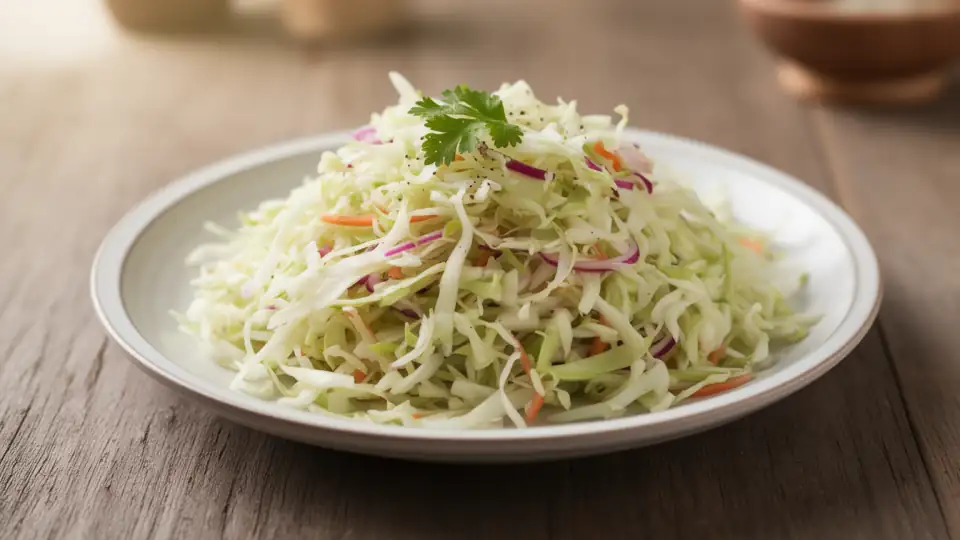
Cabbage Preparation: Remove any damaged outer leaves. Shred the cabbage into the thinnest possible strips. A fine cut is essential for a tender final structure.
Zucchini Preparation: Select young zucchini with thin skins and underdeveloped seeds. Use a julienne grater (Korean carrot grater) to create long, uniform shreds. As noted by chef Lyudmila Kravtsova, this specific cut is critical; thicker slices release too much moisture, making the salad watery, while thin shreds maintain elasticity.
Herb Preparation: Wash the parsley and dill thoroughly and pat dry with a towel. Remove tough stems and finely chop the remaining leaves with a sharp knife.
Mechanical Processing: Combine the vegetables and herbs in a deep bowl. Add salt and massage the mixture vigorously with clean hands. This step breaks down the rigid cell walls of the cabbage, allowing it to release its own juice and soften.
Dressing and Finishing: Whisk together the vegetable oil, lemon juice, black pepper, and dried garlic. Pour the emulsion over the salad and mix thoroughly. Garnish with sesame or flax seeds before serving.
Technical Tips
The Importance of Massaging: Do not skip the hand-kneading phase. Without this mechanical action, young cabbage remains too stiff, and the dressing will fail to penetrate the fibers, resulting in an uneven flavor profile.
Can I substitute lemon juice with vinegar?Yes. Use apple cider or white wine vinegar in a 1:1 ratio. Avoid standard 9% distilled vinegar, as its acidity is too aggressive for these delicate vegetables.