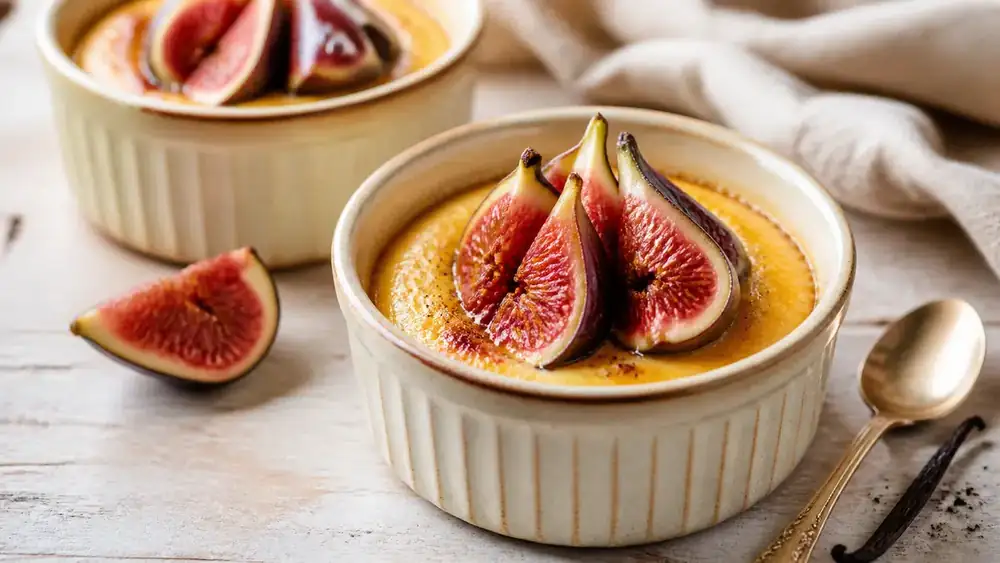
Semolina flans with figs: a light and airy dessert that's a nice change from clafoutis
Semolina flans with figs have that comforting, childhood-like quality that comes back at just the right time.
When fig season arrives, we often think of tarts, sweet and savory salads, or jams. Yet, these fruits lend themselves beautifully to creamy desserts. Their flesh becomes soft, almost candied, as soon as it meets a sweet and slightly vanilla-flavored base.
The appeal of this dessert lies precisely in its balance. The semolina provides structure without being heavy, the figs add texture, and the vanilla rounds out the whole. The result is a dessert that can be served at the end of a meal, as an afternoon snack, or even for breakfast for those who enjoy simple, uncomplicated treats.
Why semolina works so well in flan
Fine semolina has a valuable advantage: it quickly thickens dairy preparations and gives them a supple texture, somewhere between a set custard and a very tender cake. Unlike pie crust, it requires no resting, rolling, or delicate baking of the base.
In a flan, it plays a structural role. It absorbs the liquid, soaks up the flavor, and maintains a pleasant texture once cooled. This is what makes this dessert lighter on the palate than a dense cake, while still being indulgent enough to satisfy a sweet tooth.
This practicality also explains why semolina desserts are easily making a comeback in everyday kitchens. They are inexpensive, quick to prepare, and can be made with a wide variety of seasonal fruits.
The figs provide the real gourmet twist
Figs make all the difference. Their sweet flesh, crunchy seeds, and almost honeyed aroma contrast beautifully with the sweetness of the semolina. Whether placed on top of the flan or lightly incorporated into the mixture, they add a more sophisticated touch without complicating the recipe.
The best approach is to choose ripe figs, but not bruised ones. If they're too firm, they lack flavor. If they're too fragile, they release too much juice and can make the surface soggy. Ideally, cut them into quarters or thick slices to maintain their shape.
The vanilla, butter and fig combination works particularly well: the vanilla softens, the butter brings a round note, and the fruit keeps that fresh touch which prevents the dessert from becoming heavy.
A clever alternative to clafoutis
Clafoutis remains a classic, but it can sometimes seem too eggy, too dense, or too predictable. Semolina flans with figs offer another option: the same family spirit, the same simplicity, but a creamier, less pastry-like texture.
It's also a great option when you want to prepare individual portions. In ramekins, the dessert is easy to serve, keeps better chilled, and looks more elegant on the table. For an impromptu dinner, a few figs on top are all it takes to give it the look of a truly refined homemade dessert.
If you like fruity desserts that play on a melting texture, this recipe may remind you of the spirit of a very creamy rice pudding, but with a fruitier and more seasonal side.
The details that prevent an overly compact flan
The main pitfall with semolina is a texture that's too firm. It continues to thicken as it cools, so it's best to aim for a mixture that's still pliable when you divide it among the ramekins. If it seems compact when hot, it's likely to be heavy after it has cooled.
Another important point: flavor the base sufficiently. A neutral semolina can quickly seem bland. The vanilla, a little butter, and the figs should be present without overpowering each other. The dessert should remain delicate, but not flat.
Chilling the flan helps the flavors settle. Served warm, it feels more comforting. Served cold, it becomes crisper, almost like a set custard. Both options work, depending on the season and the time of day.
A dusting of icing sugar, a few pieces of dried fruit, or a spoonful of Greek yogurt can be enough. Figs also love notes of honey, almond, or hazelnut, but use them sparingly so as not to mask their flavor.
For a fresher dessert, add the raw figs at the last minute. For a more melt-in-your-mouth result, arrange them before setting or baking, depending on your chosen method. In both cases, the idea is to keep some pieces visible: these are what make it appealing at first glance.
And if you like fruity tricks that save seasonal desserts, this idea of using semolina with a mirabelle plum tart also shows how this discreet ingredient can change the texture of a preparation.
The simple dessert to keep on hand
This type of flan ticks all the right boxes for a practical recipe: few ingredients, quick preparation, reasonable cost, and an elegant enough presentation to serve to guests. It's a nice change from dry cakes, without requiring the precision of a technically skilled pastry chef.
In short, semolina flans with figs are a great idea when you want a sweet, fruity, and easy-to-adapt dessert. The source consulted didn't detail all the proportions in the accessible text; the important thing here is to remember the basic principle: semolina, figs, vanilla, and butter for a simple alternative to clafoutis.