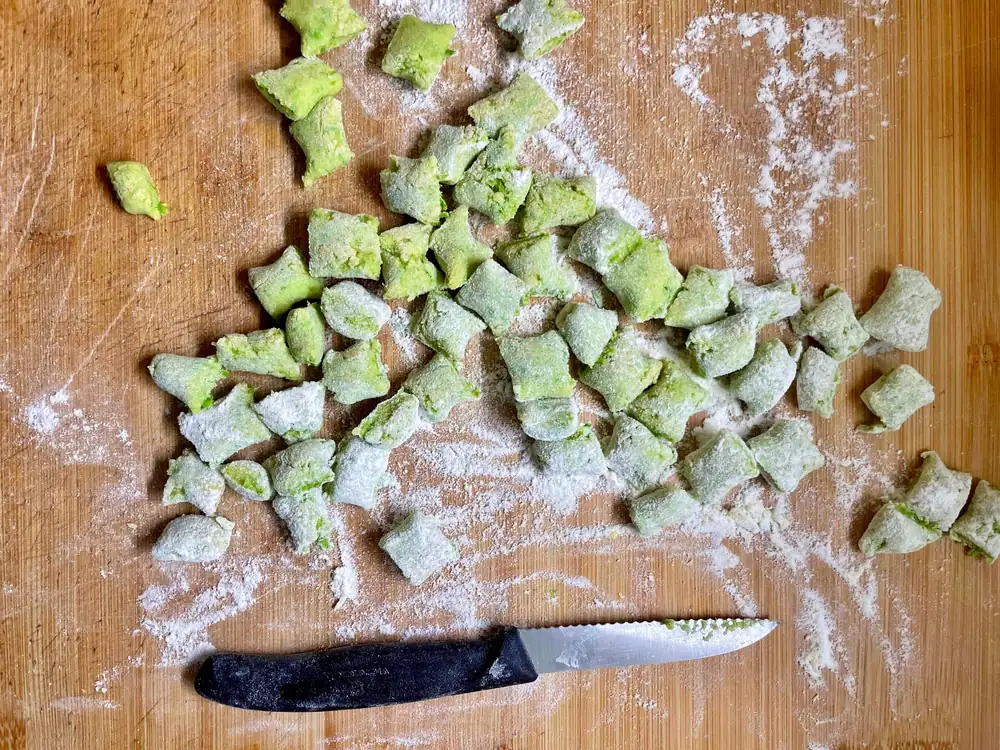
Pea gnocchi without potatoes and eggs: the easy recipe
Pea gnocchi are a delightful twist on classic potato gnocchi: bright green, soft, and with the distinctive sweet flavor of peas, they're a hit with everyone, young and old alike.
Pea gnocchi: why make them without potatoes and eggs?
In this recipe, peas aren't the gnocchi's topping, but the base of the dough. Thanks to their potato-like consistency, they take shape simply by mixing them with a little flour, which acts as a binder and provides structure.
Pea gnocchi, the recipe
- 650g frozen peas
- 350g of 00 flour
- sale
- baby
- extra virgin olive oil
- In a pan, heat a couple of turns of extra virgin olive oil.
- Add the peas and cook for 7-8 minutes, stirring occasionally. Season with salt and pepper to taste.
- Using an immersion blender, blend the peas until they form a puree.
- Pour the mixture onto a floured pastry board and knead with the flour, adding it a little at a time, always continuing to knead.
- Form a ball of dough, divide it into portions with a knife, and—one portion at a time—form thin sausages with your hands, which you then cut into pieces with a knife. Set aside.
- Cook the gnocchi in plenty of boiling salted water, a few at a time. When they rise to the surface, carefully remove them with a slotted spoon and season to taste.
To make soft pea gnocchi, you don't necessarily need to add all the flour indicated in the recipe: the amount may vary depending on the water content of the peas and how dry the puree is after cooking. Then add the flour a little at a time, working the dough until it's soft but firm enough to shape. The dough should be slightly sticky, but not so much that you can't form it into small loaves with floured hands. More flour doesn't mean better gnocchi: if the dough becomes too hard, the gnocchi will be too hard after cooking. If, however, it's too soft and won't hold its shape, gradually add a little more flour.
How to season pea gnocchi?
Now that you've made them, how do you season pea gnocchi? Here are some ideas.
- Butter and sage, with a generous sprinkling of parmesan: a great classic that never goes out of style;
- With a cheese fondue, for a unique creaminess and an excellent contrast with the sweetness of the peas;
- With tomato sauce, traditional or with fresh tomatoes: this too, another great classic;
- With creamed pea soup, if you're particularly sweet. For a burst of flavor, grate some ricotta salata or pecorino romano over it.