Historic Taverns and Dockside Kitchens Define Newport’s Enduring Coastal Cuisine
Newport, Rhode Island, maintains its culinary identity by pairing historic dining rooms with straightforward Atlantic seafood preparations, demonstrating how regional cooking survives through the consistent application of place and ingredient.
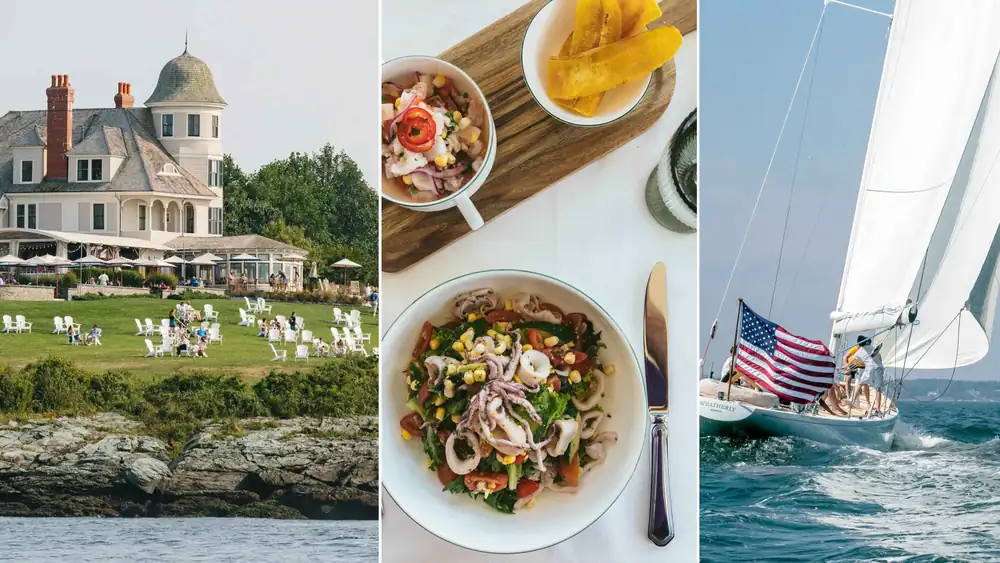
Newport, Rhode Island, continues to operate as a functional center for New England coastal cooking, where historic dining rooms and dockside kitchens serve as the primary infrastructure for regional cuisine. The city’s food scene relies on a fixed geography of wharves and taverns rather than transient culinary trends, maintaining a steady demand for local harvests.
This continuity is most visible in establishments that have dictated the region's dining rhythm for centuries. White Horse Tavern, operating in a building dated to 1673, serves classic Americana and farm-to-table fare alongside rum drinks, grounding the modern menu in colonial-era provisions and architectural permanence.
Bowen’s Wharf functions as the operational hub for Atlantic seafood preparation, concentrating multiple approaches to the same ingredients. The Black Pearl serves clam chowder in a lively dockside setting, while The Mooring provides casual seafood lunches, and Clarke Cooke House utilizes its ship-like interior to plate native cod, summer sushi, and steak frites.
Beyond the immediate wharf, the culinary geography extends logically to Thames Street and neighboring islands. Wally’s Weiners offers an informal counterpoint to formal dining along the city center, while crossing the bridge to Jamestown reveals Beech, a kitchen focused on seasonal American fare driven by local producers.
The region’s ingredient list remains strictly tied to the adjacent ocean and immediate agricultural hinterland. A lobster roll and fries from the concession stand at Second Beach, followed by Del’s Lemonade, represents the unadorned application of local harvest, requiring no elaborate technique beyond precise frying and immediate assembly.
Newer additions to the city, such as the Mediterranean-inspired menu at Flora in the Gardiner House hotel, integrate into this existing framework without disrupting it. Morning routines adhere to this same structure, with elevated comfort dishes at Cru Cafe or the retro energy of Franklin Spa anchoring the daily eating schedule.
The endurance of this dining scene proves that regional cuisine survives through the reliable repetition of established formats. When a kitchen consistently places native cod beside a historic dining room, or a fried lobster roll beside a specific stretch of Atlantic sand, the arrangement becomes a permanent, repeatable record of how the coast eats.