Bastardo del Grappa: what it is, where it comes from, and how to use it in cooking
The history and flavor of Bastardo del Grappa. Do you already know what it is?
The first time we heard about Bastardo del Grappa, we imagined a spirit with a very high alcohol content and a powerful aroma, like the classic and timeless grappa enjoyed in the Veneto region. But that's not the case at all: if you've made the same inference from the name, know that grappa has nothing to do with it, and Bastardo del Grappa isn't drunk, but eaten.
What is the Bastardo del Grappa?
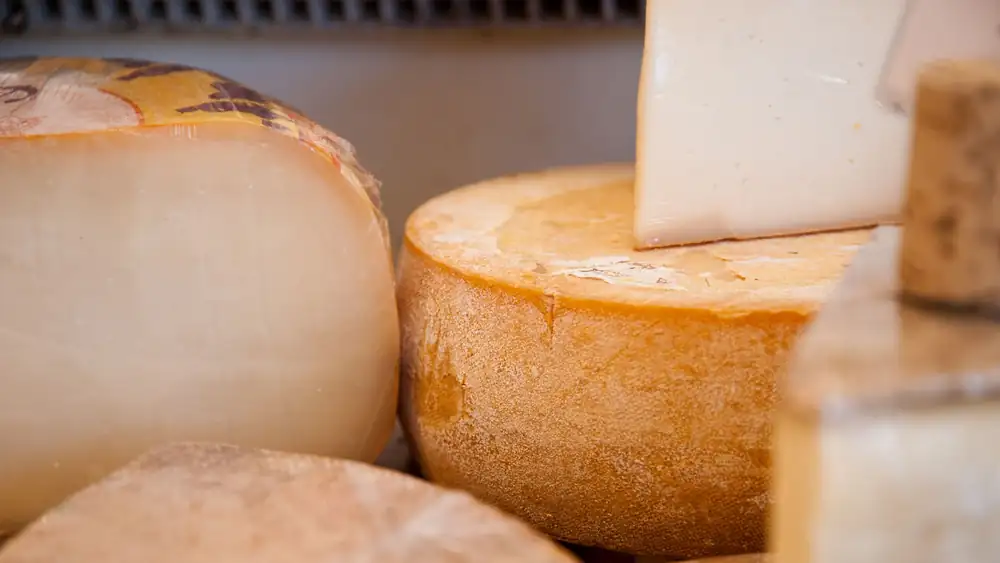
It is, in fact, a cheese made with milk from cows that graze on the mountain pastures of Mount Grappa, in a vast area encompassing several towns in the provinces of Vicenza, Treviso, and Belluno. It is a highly prized and fragrant cheese, especially because it is made with milk from cows that feed exclusively on mountain herbs and flowers.
Why is the Bastard of Grappa called that?
Of course, its name is the most easily remembered, given its decidedly unique nature. And it's not entirely clear why. There are, in fact, at least three different stories as to why it's called Bastardo del Grappa. According to the first, which is the most widespread, the name derives from the fact that in the past this cheese was often a "hybrid," as cow's milk was scarce, so to produce it, it was "mongrelized" with sheep's and goat's milk. Another explanation concerns the production technique: this too, perhaps, is a hybrid between the processing of aged Asiago and fresh (or pressed) Asiago. If you prefer, there's yet another explanation: Bastardo del Grappa was so called because it was created as a "plan B" to use the milk intended for Morlacco (another excellent Venetian dairy product that is also a Slow Food Presidium), which was not suitable for that production.
The story of the Bastard of Grappa
The fact remains that, whatever the explanation for its unique name, Bastardo del Grappa has been produced since the 19th century using the same traditional technique. After World War II, it began to spread beyond the Grappa mountain pastures thanks to easier transportation: it has since then begun to be appreciated on a large scale. Today, it is also included in the Traditional Agri-Food Products (PAT) of the Veneto region, meaning non-PDO and PGI products (regulated by European standards) whose processing, preservation, and aging methods have been consolidated over time and consistently practiced according to traditional rules for at least 25 years.
The flavor of the Bastardo del Grappa
It's definitely worth a try: it's a delicious cheese, not just because it's particularly fragrant. It has a pleasantly sweet flavor that intensifies with aging, which also makes its soft texture more grainy. It's also exceptionally versatile, as it lends itself to a wide variety of recipes.
How to use Bastardo del Grappa in the kitchen
Its use also depends on its maturation, as well as, of course, on taste: Bastardo del Grappa is always excellent when eaten alone, perhaps accompanied by preserves or honey (preferably between two slices of bread). Furthermore, when it is not very mature, it is also commonly eaten fried or grilled. Among its most delicious versions is melted, perhaps on polenta or in risotto.