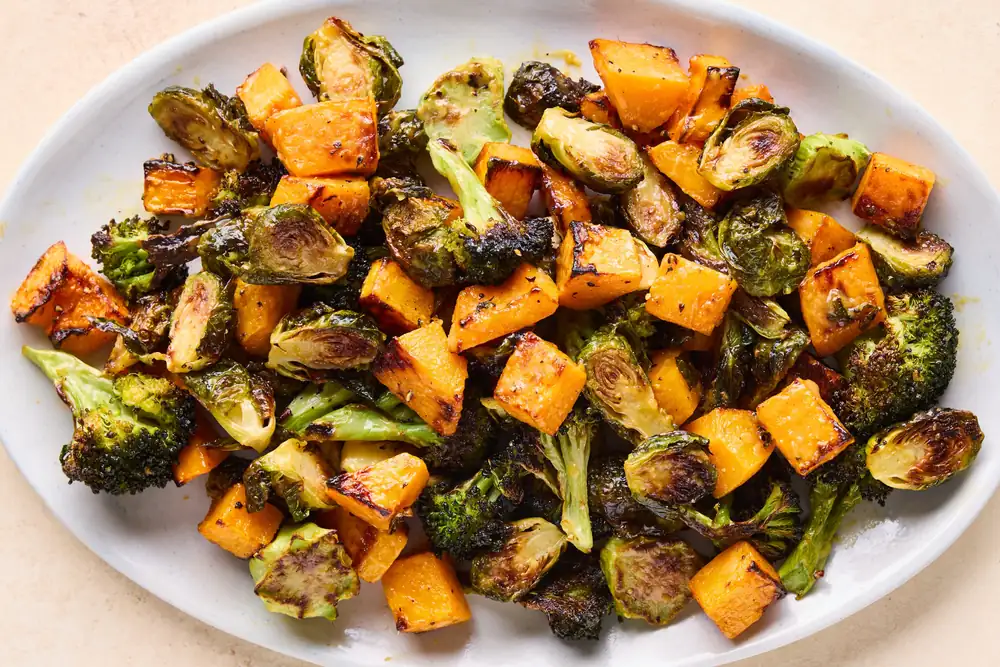
Two-Stage Roasting Method for Maple-Dijon Winter Vegetables
Applying a maple-Dijon glaze during the final ten minutes of a 450-degree roast prevents sugar burn while ensuring even caramelization across dense roots and delicate brassicas.
- 8 ounces broccoli
- 1 pound butternut squash (about half of a small squash), peeled and cut into ¾-inch cubes
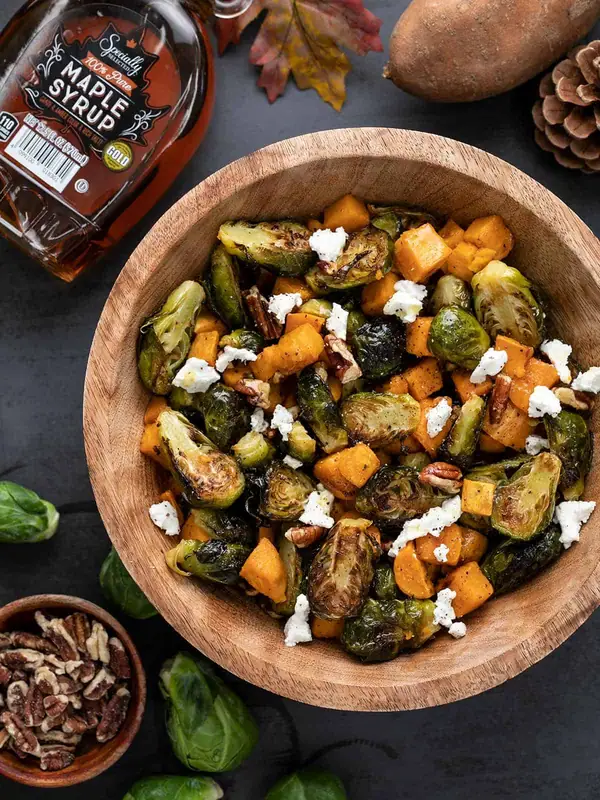
- 8 ounces brussels sprouts, trimmed and halved (quartered if large)
- 1 small red onion (optional), cut into ½-inch wedges
- 3 tablespoons olive oil
- ¾ teaspoon kosher salt, such as Diamond Crystal
- ½ teaspoon black pepper
- 1 garlic clove
- 1 tablespoon Dijon mustard
- 1 tablespoon maple syrup
- ½ cup pecans or walnuts (optional), roughly chopped
- Heat the oven to 450 degrees.
- From the head of broccoli, cut 2-inch-long florets, then slice any remaining stem crosswise into 1-inch pieces. On a rimmed baking sheet, toss the broccoli, squash, brussels sprouts and red onion (if using) with the olive oil, salt and pepper. Arrange in a single layer with the squash around the perimeter of the pan and all the other vegetables in the center, cut side down. Roast, untouched, until the vegetables have shrunk, the broccoli is browned in spots, the squash and sprouts are lightly browned on the underside and the vegetables easily release from the pan, 20 to 25 minutes.
- Meanwhile, grate the garlic into a small bowl. Add the mustard and maple syrup and stir to combine.
- Remove the baking sheet from the oven. Add the nuts to the pan (if using) and pour the syrup mixture over the vegetables and nuts. Use a spatula to toss until evenly coated and arrange back into an even layer (it’s OK for the vegetables to now be mixed). Return to the oven and continue to roast until the squash is fork-tender, the vegetables are browned in spots and the nuts are fragrant, about 10 minutes more.
- Transfer to a serving platter, if desired, or use a spatula to toss the vegetables and nuts once more and serve directly on the baking sheet.
this newspaper documents a standardized method for roasting mixed winter vegetables, specifying a two-phase heat application to manage varying densities. The technique pairs one pound of cubed butternut squash with eight ounces each of broccoli and brussels sprouts, finished with a maple-Dijon glaze.
Precision in preparation dictates the structural outcome. Broccoli is separated into two-inch florets, with any remaining stem sliced crosswise into one-inch pieces. On a rimmed baking sheet, the vegetables are tossed with three tablespoons of olive oil, three-quarters of a teaspoon of kosher salt, and half a teaspoon of black pepper.
The arrangement on the pan is deliberate. The squash is positioned around the perimeter, while the remaining vegetables occupy the center, placed cut side down. The tray enters a 450-degree oven for 20 to 25 minutes, left entirely untouched.
This duration allows the vegetables to shrink, brown in spots, and release naturally from the pan surface. High heat is required to drive off moisture from the brassicas while initiating caramelization in the dense squash.
While the vegetables roast, one grated garlic clove is combined with one tablespoon of Dijon mustard and one tablespoon of maple syrup. Upon removing the tray, half a cup of roughly chopped pecans or walnuts is added to the pan. The syrup mixture is poured over the contents, tossed evenly with a spatula, and returned to the oven for ten additional minutes.
This delayed introduction of sugar is a critical technical adjustment. Maple syrup contains sucrose and fructose, which scorch rapidly at 450 degrees. By introducing the glaze only after the vegetables have structurally softened, the cook achieves a fragrant, fork-tender result without carbonizing the sweetener.
The architecture of this dish relies entirely on the timing of its components. A glaze applied at the start would burn; a glaze applied at the end would remain raw. The ten-minute window at high heat is the exact duration required to toast the nuts, warm the mustard, and adhere the syrup to the vegetable surfaces, proving that thermal sequencing is as vital as the ingredients themselves.