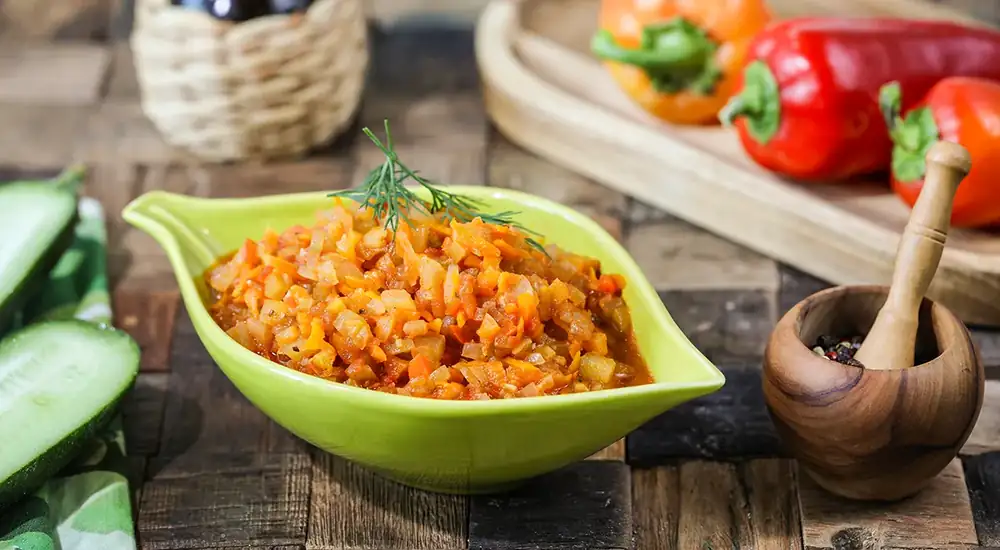
Overripe cucumber caviar for the winter
Peel the cucumbers and cut them in half.
Wash all the vegetables. Peel the cucumbers and cut them in half. Scoop out the watery center with the seeds using a teaspoon. (If you're using healthy cucumbers, not overripe ones, you can leave the skin and seeds on.)
Step 2
Cut the cucumber flesh into very small cubes—5–6 mm on a side. Place them in a sieve over a bowl and sprinkle with 1 teaspoon of salt. Mix well and set aside while you prepare the other vegetables.
Step 3
Peel the onion and finely dice it. Cut the bell pepper into similarly small cubes, removing the seeds and membranes.
Step 4
Peel the carrots and grate them on a medium grater. Remove the stems from the tomatoes, cut them into pieces, and blend until smooth. Chop the garlic and seeded hot pepper.
Step 5
In a large heavy-bottomed saucepan or cauldron, heat the vegetable oil and fry the onion over medium heat until translucent and lightly golden, about 3 minutes.
Step 6
Add the grated carrots. Fry for another 3-4 minutes. Then add the chopped bell peppers and cook for another 4-5 minutes, stirring. Make a small space in the middle of the pan and add the tomato paste. Fry for about 1.5 minutes.
Step 7
Pour the tomato puree into the pan, add the chopped hot pepper, stir, and simmer for 5 minutes. Finally, add the cucumbers, which should have drained a fair amount of their juices, and simmer for 15 minutes, stirring occasionally, until the excess moisture has evaporated.
Step 8
Season the contents of the pan with salt and sugar to taste, add chopped garlic and simmer the cucumber caviar with vegetables for another 5 minutes. Then pour in the vinegar and heat the vegetables for a couple more minutes.
Step 9
Place the hot overripe cucumber caviar into the sterilized jars you prepared earlier. Keep the pan on low heat while you do this. Roll up the jars and wrap them until they cool completely.
Vegetable caviar isn't just a traditional preserve; it's a great way to preserve the flavors of summer for the winter and a way to recharge with vitamins at any time. It also saves you time in the kitchen. Open a jar, and you've got a light snack on the table, the perfect side dish for meat or fish, or even a standalone holiday appetizer. Forgotten your grandmother's recipe for the most delicious zucchini or "foreign" eggplant caviar? No problem, we have plenty of interesting ideas. In this selection, you'll find caviar with carrots, beets, pumpkin, and tomatoes. Each of these vegetable combinations has its own unique flavor and is suitable for any diet. You don't have to worry about what ingredients are needed for the caviar—all the recipes are carefully crafted, the additional ingredients are perfectly selected, and the proportions are meticulously observed. All you have to do is choose your favorite vegetable appetizer.
Delicious cucumber salads for the winter—a snack you should start preparing now! June and July are the months when cucumber season begins, and many home cooks strive to make the most of them, not only adding them to various dishes but also making cucumber salads for the winter.
Pickled cucumber and carrot caviar is a quick appetizer made with whatever you have in the fridge. It's delicious, piquant, slightly crunchy, and very aromatic thanks to the spices. Cucumber caviar is a great spread for sandwiches, a complement to vegetable and grain side dishes, and a unique sauce for shashlik or cutlets. The key is to use salted cucumbers, preferably barrel-salted, but not over-salted. It's best to avoid pickled cucumbers, as they will completely change the flavor of this caviar.
Overgrown cucumber rolls aren't just a way to save those cucumbers you didn't pick on time. They're a true culinary life hack that promises a delight. They say experienced gardeners consider overgrown cucumbers a failure—and scold themselves for the omission. But experienced cooks take note of this oversight and turn it into an advantage. Preserve them according to our recipe, and you'll have a wonderful winter snack or accompaniment to meat and fish dishes. We use dill and tarragon in this recipe. You can use other herbs, too. Mint would be a great addition.