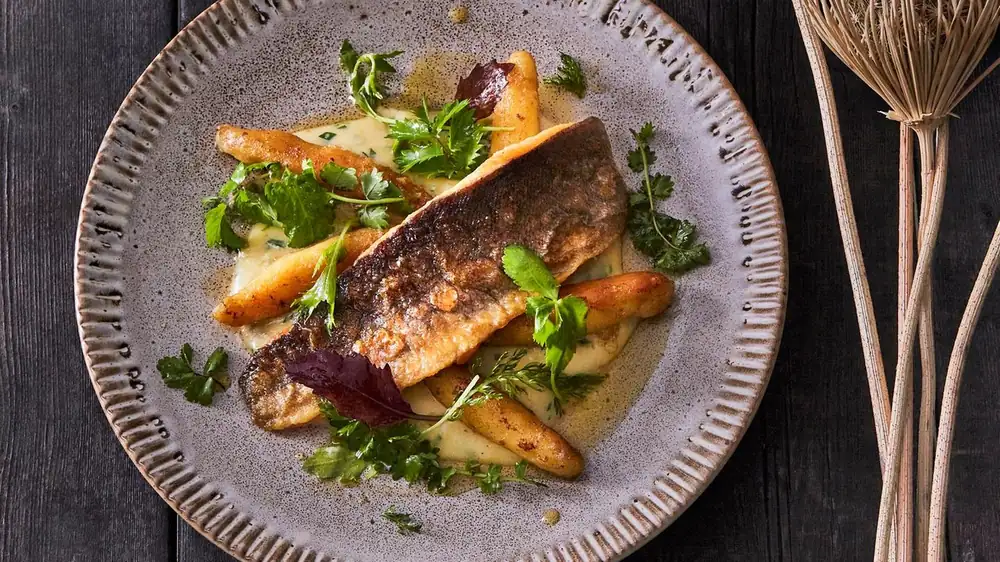
Baking potatoes and parboiling dumplings define German trout with Schupfnudeln
A recorded German preparation of trout and potato dumplings demonstrates how baking tubers before ricing them, followed by parboiling and frying the resulting dough, controls moisture to achieve a crisp exterior and a tender interior.
A recorded German preparation of trout with Schupfnudeln, tarragon cream, and wild herbs establishes a strict sequence for managing potato moisture. The method dictates baking floury potatoes at 160 degrees Celsius for one hour before pressing them through a ricer while still warm.
This baked, riced potato is immediately combined with fifty grams of butter, egg yolks, and cornstarch, then seasoned with salt and freshly grated nutmeg. The dough is rolled into twenty equal pieces and shaped by hand under a slightly cupped palm into finger-thick, tapered dumplings.
The formed Schupfnudeln are dropped into lightly boiling salted water. Once they rise to the surface, they cook for exactly two more minutes before being removed with a slotted spoon, shocked in a sieve, and stored between two damp cloths to halt the cooking process.
Simultaneously, heavy cream is reduced over medium heat for fifteen to twenty minutes until thickened, then folded with chopped tarragon leaves and seasoned assertively with salt and pepper. A wild herb salad is dressed separately with herb vinegar, honey, rapeseed oil, salt, and pepper.
The trout fillets, weighing one hundred grams each and left with the skin on, are lightly salted and dusted with flour on the skin side. They are fried skin-side down in sunflower oil for two minutes, then removed from the heat to rest for two additional minutes. The parboiled dumplings are finally fried in the remaining twenty grams of butter for five minutes until crisp.
This sequence isolates the variables of water and heat at every stage. Baking the floury potatoes at 160 degrees rather than boiling them prevents the tubers from absorbing excess water, which would otherwise demand more starch and yield a heavy, dense dumpling. The initial boil in salted water sets the internal structure of the dough, while the final fry in butter creates the necessary textural contrast against the soft fish and the reduced tarragon cream.
This method demonstrates that a crisp potato dumpling is never achieved merely by adding more fat to a hot pan. True crispness requires removing water from the raw ingredient before the dough is even mixed, proving that the final texture is decided in the oven, not the skillet.