A Polish publication records the assembly of pasta with basil pesto and burrata
The documentation of a two-portion pasta dish highlights how the thermal contrast between hot basil pesto and cold burrata dictates the final texture of the meal.
A Polish food publication has recorded the exact arrangement for a two-portion pasta dish featuring basil pesto and burrata. The record details the specific ratios of ingredients and the sequential steps required to assemble the meal, establishing a repeatable method for combining hot pasta with cold cheese.
The foundation of the dish begins with the browning of the pine nuts. Four tablespoons of pine nuts are lightly browned in a pan to develop flavor before being processed. A single tablespoon is reserved for the final garnish, ensuring a distinct textural contrast in the finished bowl.
The remaining toasted nuts are placed in a blender with twenty grams of parmesan or grana padano, one cup of basil leaves, four tablespoons of extra virgin olive oil, and two peeled garlic cloves. The mixture is processed until combined and seasoned with salt and pepper, creating the primary sauce.
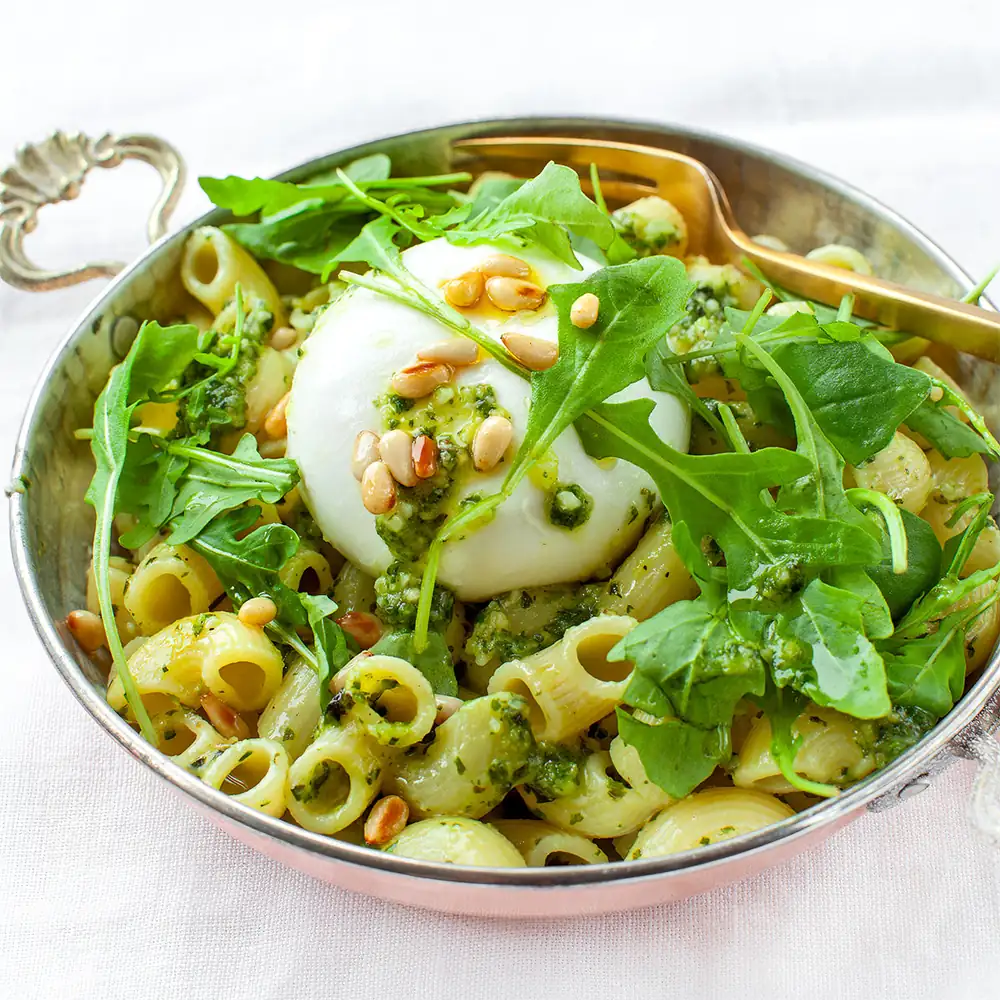
One hundred and fifty grams of pasta are boiled in salted water according to package instructions. After draining, the pasta is returned to the pot and mixed directly with the prepared pesto. This direct combination relies on the residual heat of the pasta to integrate the oil and herb mixture.
The dressed pasta is portioned into deep bowls. Two balls of fresh burrata are placed on top, followed by the reserved toasted pine nuts and a handful of arugula. The dish is finished with a final seasoning of salt and pepper.
This arrangement demonstrates a specific approach to temperature management in pasta preparation. By keeping the burrata and arugula entirely separate from the cooking and mixing processes, the recipe preserves the distinct physical states of the ingredients. The hot pesto coats the pasta, while the cold cheese and crisp greens remain structurally intact until the moment of consumption.
The value of this record lies in its strict adherence to sequential placement. It proves that a dish with minimal ingredients depends entirely on the order of operations, where the final addition of cold elements to a hot base is what defines the eating experience.