Classic Chocolate Bûche de Noël
In France, a proper Christmas dinner wouldn’t be complete without the traditional Bûche de Noël.
- For the Genoise Cake: 1 cup (150g) all-purpose flour 1 tsp (5g) baking powder 4 large eggs 1 cup (200g) sugar1 ½ tsp vanilla extract 3 tbsp (40g) butter, melted and cooled
- For the Dark Chocolate Buttercream: 7 large egg whites ½ tsp salt 1 ¼ cup (250g) sugar 6 ounces (157g) dark chocolate, melted and cooled ½ tsp vanilla extract 1 ½ cup (355g) unsalted butter, softened
- For decorating: 8-10 cranberries, for garnish8-10 fresh rosemary sprigs, for garnishPowdered sugar, for garnish
- A. The Genoise Cake: Step 1 - Pre-heat your oven to 375F (190C) with a rack in the middle. Butter a 10x15-inch (25.5cm x 38cm) rimmed baking sheet and line it with parchment paper. Butter the parchment or spray it with cooking spray. Set the pan aside.
- Step 2 -In a large mixing bowl, sift together the all-purpose flour and baking powder. In a separate bowl, beat the eggs until thick and foamy, about 5 minutes. Add the sugar and vanilla, and beat for 2 more minutes.
- Step 3 - Gently fold the flour into the wet ingredients and stop mixing when just incorporated. Slowly pour the melted butter into the batter while still mixing, and stop again when just incorporated. Gently spread the batter into the prepared pan and smooth it out with a spatula so it covers the whole pan.
- Step 4 -Bake for 12 minutes, until a tooth pick inserted in the center of the cake sheet comes out clean. Right out of the oven, sprinkle a clean kitchen towel with about 1 tablespoon of sugar and flip the cake onto it. Peel off the parchment paper and roll the cake in the kitchen towel, starting from the narrow (shorter width) side. Make the buttercream while the rolled cake cools to room temperature.
- B. The Dark Chocolate Buttercream:Step 1 - In a large mixing bowl, beat the egg whites with salt on high speed until soft peaks form. Set aside.
- Step 2 - In a small saucepan, combine sugar with 2/3 cup (155ml) water over medium heat. Bring to a boil and reduce the liquid by half or until it has thickened to a thin syrup consistency.
- Step 3 - Start beating the eggs whites on high speed again and slowly pour in the syrup. Continue beating and pour in the melted dark chocolate and vanilla extract. Continue beating until the mixture has completely cooled, about 5 minutes. Add the softened butter, one tablespoon at a time, beating well between each addition until the butter is fully incorporated.
- Step 4 - Once all the butter is incorporated, the buttercream should be fluffy and spreadable. If too soft, refrigerate for one hour until it has chilled through.
- C. Assembling: Step 1 - Unroll the cake sheet and transfer it carefully onto a working surface. Evenly spread half of the buttercream, about 2 ½ cups, onto the entire cake sheet. Re-roll the cake into a log, as it previously was.
- Step 2 -Using a large serrated knife, cut a quarter of the cake off of the log on a diagonal and attach that end piece onto the center of the cake with buttercream, to resemble a branch bulging from a tree log.
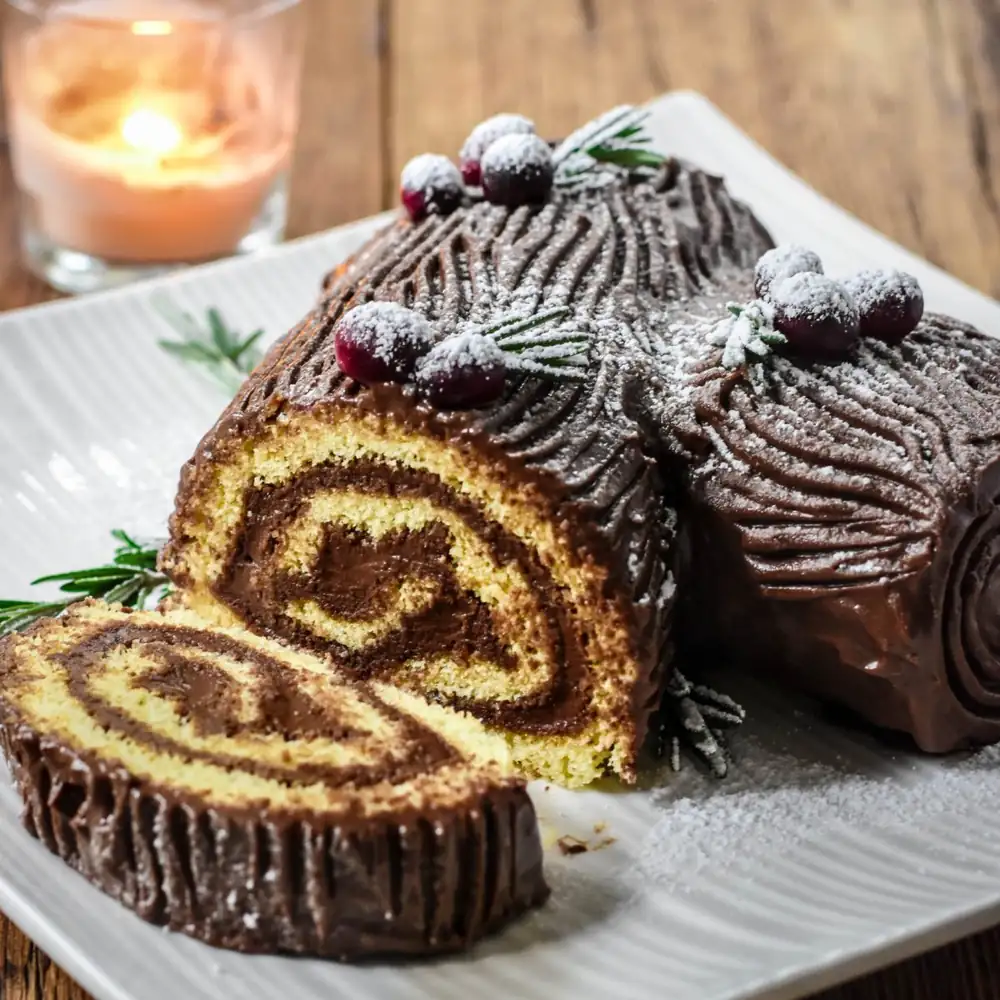
- Step 3 - Transfer the Bûche de Noël to a serving plate and use the remainder of the buttercream to cover the log entirely. Smooth it out with an offset spatula. Take a fork and run it through the log to leave streaks resembling tree bark. Adorn the Bûche de Noël with cranberries and rosemary sprigs.
- Chill the Bûche de Noël for at least 2 hours before serving, to allow the buttercream to set. Dust with powdered sugar right before serving.
This wooden log look-a-like cake, traditionally made of a rolled-up Génoise cake frosted with Chocolate buttercream, is part of the official conclusion to a Christmas feast. A holiday ritual no one will pass on – even with an overfilled belly.
Festive Origins
The tradition of the Christmas Yule log—an actual log, not the cake—stretches back to more than 2000 years ago, before the Medieval era.
People in Scandinavian, Germanic, and Celtic countries would celebrate Winter solstice by selecting and cutting a log, bringing it back to their homes, and burning it in their hearth throughout the longest night of the year. In different countries and families, the choice of the wood (cherry, oak, or birch), the size of the log, and the manner in which it was lit were of utmost importance.
This ritual, a huge part of the celebratory traditions in these households, was a way to welcome the new year and bring fortune for the whole family. Around the 12th century, the tradition was adopted by the Catholic Church.
To add religious symbolism to the ritual, logs were sprinkled with holy water before being burnt. The fire then needed to be nurtured to last 12 days, from Christmas Eve until the Epiphany.
From the Hearth to the Oven
This tradition remained as such until about the 19th century. It then slowly vanished with the disappearance of the large hearth within homes, as many people moved to smaller urban houses.
With no fireplace to burn in, logs were instead symbolically placed on mantles as decoration. Later, in the late 1800s, the first Yule log as a decorative cake was invented—with various French bakers all fiercely claiming credit for its invention, of course.
This simple, light and fluffy Swiss roll-style dessert stood in stark contrast with other common French Christmas desserts of the time, which tended to be overly rich and dense, packed with dried fruits and nuts—closer to the British Christmas pudding or German stollen. It was quickly adopted amongst French households, and by the end of the 20th century, had also caught on in other francophone countries, such as Belgium, Switzerland, and even Quebec, Canada.
A strong French Tradition
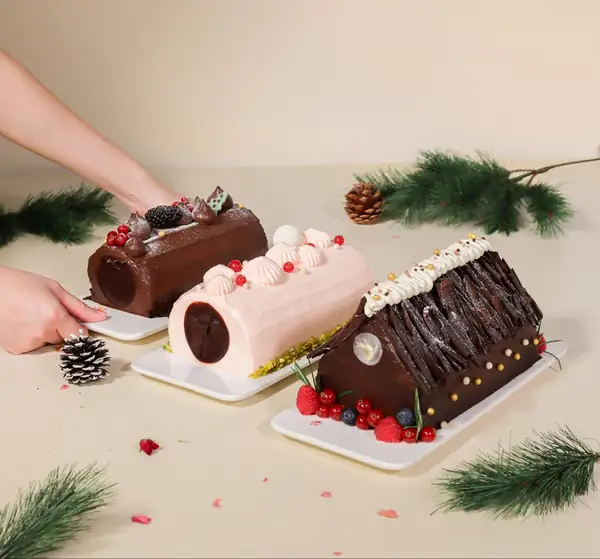
Today, the French’s appetite for the Bûche de Nöel remains alive and well. Every year, bakeries and pastry chefs all around the country kick off their efforts to create their most unique Bûche as early as October.
Each chef always coming up with new flavors and elaborate decorations to distinguish themselves from other bakers. Berry, chestnut, or coconut cakes adorned with gnomes, mushrooms, and pine trees are just a few examples.
With such an incredible selection available at every corner bakery, few people in France make their own Bûche de Nöel at home anymore. Outside of France, though, finding a Bûche de Noel may not be the easiest of tasks.
But creating your own at home is far easier than you may think. It will take two to three hours of your time, depending on your baking abilities, but I guarantee that the process will be fun and rewarding, and leave you with a stunning, festive centerpiece for your holiday table.
Making your own Bûche at home
Despite its elaborate look, this traditional Chocolate Bûche de Nöel is a simple combination of only two elements: a light vanilla Génoise sheet cake rolled into a cylinder and a rich dark chocolate buttercream. The Bûche is presented with one end cut off and re-attached to the side of the cake to resemble a branch, before being entirely covered with buttercream.
This festive dessert is far easier to make at home than what you may think. Take it step-by-step: the Génoise cake first, then the chocolate buttercream, and finally the assembly.
Baking Tips:
- Avoid cracks in the Génoise Cake
The trick to preventing cracks in a Génoise cake when rolling it (or any swiss roll cake) is to roll the Génoise right out of the oven while still warm, in a clean kitchen cloth dusted with sugar. This keeps the cake moist and allows it to “memorize” its rolled shape.
When the cake is cool, gently unroll it and immediately spread the buttercream into it and roll it back up.
- Make a fluffy and spreadable Chocolate Buttercream
As its name suggests, a chocolate buttercream is made with a generous amount of butter, whipped gradually into a fluffy chocolate meringue. The butter should be soft (at room temperature) – to be properly incorporated – yet not too soft or it will make for a runny buttercream.
If the buttercream becomes too fluid during the process of making it, pop your bowl into the fridge until it has chilled through.
- Create a bark-like look
Once the cake is covered with buttercream, a bark texture is created by dragging a fork along the cake. It doesn’t have to be perfect; the more rustic the better.
- Decorations
For finishing, a Bûche de Nöel is decorated with (mostly) edible ingredients to recreate a woodsy theme. You can follow along these few traditional suggestions, or get creative and use ingredients you may already have in your kitchen.
- Garnish the log with meringue mushrooms to match the woodsy theme.
- Sprinkle crushed pistachios here and there to recreate moss.
- Dot the log with fresh cranberries and rosemary sprigs to resemble mistletoe.
- As a finishing touch, dust powdered sugar on the finished log to recreate snow.
I hope you’ll love this Classic Chocolate Bûche de Noël recipe as much as I do! If you have any questions, feel free to leave a comment.