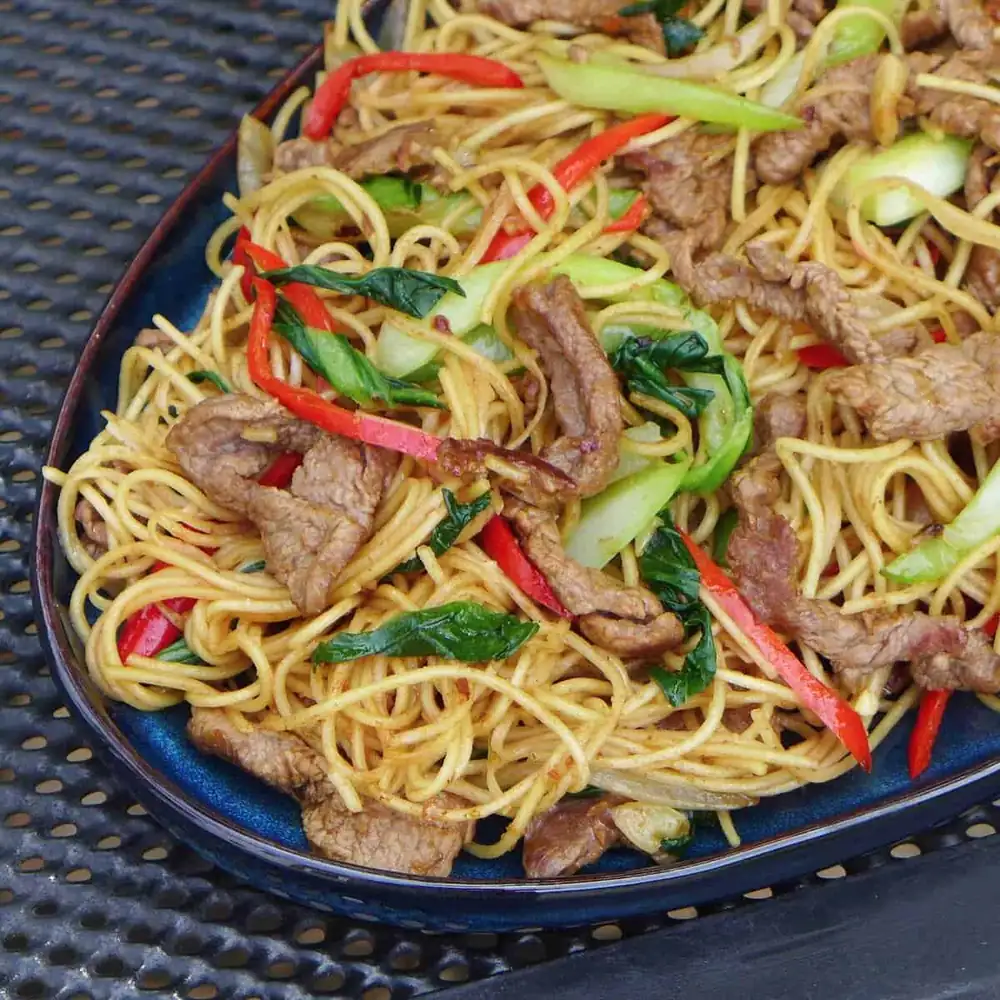
Beef Chow Mein with Sha Cha Sauce
With stir-fried egg noodles, tender meat, crunchy veggies, and super umami Sha Cha sauce, this beef chow mein wins your heart with every mouthful.
- 10 oz beef (see note 1 for cut options)
- 2 teaspoon cornstarch
- 1 teaspoon Shaoxing rice wine
- 2½ tablespoon neutral cooking oil (divided)
- 3 tablespoon Sha Cha Sauce (see note 2)
- 1 tablespoon light soy sauce
- 1 teaspoon dark soy sauce
- 7 oz dried egg noodles (or 1 lb (450g) pre-cooked egg noodles)
- 3 cloves garlic (minced)
- 3.5 oz onion (sliced, about 1 cup)
- 1.8 oz fresh chili pepper (sliced, about ½ cup)
- 2.8 oz bok choy (sliced, about 1 cup)
- Cut the beef, across it grains, into thin slices or strips, then place it in a bowl. Add cornstarch, Shaoxing rice wine, and 1 tablespoon of water. Rub well until the liquid is fully absorbed. Add ½ tablespoon of oil and mix to coat the meat evenly.
- In a small bowl, mix Sha Cha sauce, light soy sauce, dark soy sauce with 3 tablespoon of water.
- Bring plenty of water to a rolling boil, then add the noodles. Cook until they are just underdone (bite one strand to test). Drain, then cut the noodles into shorter strands using scissors. Set aside.
- Heat an empty wok over high heat until it starts to smoke. Add 1 tablespoon of oil and swirl it around to coat a larger area (If using non-stick cookware, add the oil first, then heat it up.) Add the marinated beef, spreading the pieces out so they sear quickly. Once the bottom side of the meat loses its pink color, flip and toss to sear the other side. Transfer to a plate as soon as no pinkness remains.
- Pour the remaining oil into the wok, then add the garlic and onion. Stir-fry until the onion just begins to wilt. Add the chili pepper and bok choy, and stir-fry for about 30 seconds.
- Add the cooked noodles and beef, then toss to loosen the noodles and combine everything evenly. Finally, pour in the sauce mixture and continue tossing until the seasoning is evenly distributed.
About the dish
The term Chow Mein, meaning “stir-fried noodles,” comes from the sound of its Cantonese name.
A super popular dish, it appears on nearly every Chinese takeout menu. You’ll usually see variations using different proteins, but the savor profile is more or less universal, with soy sauce and oyster sauce serving as the key sources of umami.
Today’s beef chow mein features a different savor booster: Sha Cha Sauce, a versatile condiment I always keep in the kitchen (learn more about it in the next section). If you’ve tried my recipes for Sha Cha Chicken or Sha Cha Beef, you already know how much it can elevate a dish.
Ingredient notes
Note: Precise component quantities are in the method card below . Egg noodles are typically used in Chinese stir-fried dishes such as Chicken Chow Mein and Lo Mein, which I shared earlier.
You may use dried, fresh, or precooked egg noodles. When testing this beef chow mein method, I used dried thin ones (see image above), which are often found in Wonton Noodle Soup.
They cook quickly and have a pleasant, springy texture that doesn’t turn mushy when boiled and then stir-fried. Several cuts of beef work well for this recipe. This time, I used sirloin steak (referred to as rump steak in the UK, Australia, and New Zealand), which has some marbling and is tender when prepared and cooked properly.
Other good options include flat iron, flank, skirt, and tenderloin. I chose red chili pepper, bok choy, and onion for their vibrant color combination, crunchy texture, and distinct flavors. You’ll also need some garlic for added aroma.
Sha Cha Sauce
Sha Cha sauce (Shā Chá Jiàng/沙茶酱), as well spelled Shacha or Sacha, is a savory Chinese condiment made from dried seafood, aromatics, and spices. Popular in Teochew, Fujian, and Taiwanese cuisines, it’s known for its deep umami flavor and versatility.
This versatile sauce is a thick, brown paste topped with a layer of reddish oil. Be sure to stir well to combine the two components before using. The most widely recognized brand is Bull Head/牛頭牌 (see two different packages in the image above).
Even if labeled “Barbecue Sauce” in English, Sha Cha is not the same as Char Siu sauce (叉烧酱), which is used for Chinese BBQ pork, or the sweet, peanut-based Satay sauce (沙爹酱), often served with grilled meat skewers.
Other condiments
- Light soy sauce, for the savory and umami taste - Dark soy sauce, for a hint of sweetness and appetizing brown shine
- Cornstarch, for tenderizing the beef - Shaoxing rice wine, for balancing the meat taste
Top Tips
- To ensure optimal tenderness, cut the beef against the grain and marinate it before cookery.
- Sear the beef separately over high heat to avoid overcooking. - Parboil the noodles, then stir-fry them briefly to retain their springy texture.
- Be generous with Sha Cha sauce as it’s the key taste component. - Feel free to customize with any vegetables you have on hand.
Please leave a 🌟🌟🌟🌟🌟 rating and a comment.
Beef Chow Mein with Sha Cha Sauce
- 10 oz beef, see note 1 for cut options - 1 teaspoon Shaoxing rice wine
- 2½ tablespoon neutral cookery oil, divided - 3 tablespoon Sha Cha Sauce, see note 2
- 1 tablespoon light soy sauce - 1 teaspoon dark soy sauce
- 7 oz dried egg noodles, or 1 lb (450g) pre-cooked egg noodles - 3 cloves garlic, minced - 3.5 oz onion, sliced, about 1 cup
- 1.8 oz fresh chili pepper, sliced, about ½ cup - 2.8 oz bok choy, sliced, about 1 cup
Marinate the beef
- Cut the beef, across it grains, into thin slices or strips, then place it in a bowl. Add cornstarch, Shaoxing rice wine, and 1 tablespoon of water.
Rub well until the liquid is fully absorbed. Add ½ tablespoon of oil and mix to coat the meat evenly.
Mix the sauce
- In a small bowl, mix Sha Cha sauce, light soy sauce, dark soy sauce with 3 tablespoon of water.
Cook the noodles (skip if using precooked noodles)
- Bring plenty of water to a rolling boil, then add the noodles.
Cook until they are just underdone (bite one strand to test). Drain, then cut the noodles into shorter strands using scissors.
Sear the beef
- Heat an empty wok over high heat until it starts to smoke.
Add 1 tablespoon of oil and swirl it around to coat a larger area (If using non-stick cookware, add the oil first, then heat it up.) Add the marinated beef, spreading the pieces out so they sear quickly. Once the bottom side of the meat loses its pink color, flip and toss to sear the other side. Transfer to a plate as soon as no pinkness remains.
Fry the vegetables
- Pour the remaining oil into the wok, then add the garlic and onion. Stir-fry until the onion just begins to wilt.
Add the chili pepper and bok choy, and stir-fry for about 30 seconds.
Combine the dish
- Add the cooked noodles and beef, then toss to loosen the noodles and combine everything evenly.
Finally, pour in the sauce mixture and continue tossing until the seasoning is evenly distributed.
Your Recipe Notes
Nutrition information is automatically calculated, so should only be used as an approximation. After shooting the method, we had this dish for lunch.
Though it was no longer hot, the savor was still spot on. My daughter usually doesn’t fancy spicy food, but the heat from the chili pepper mellowed during preparation, so she was quite happy with the subtle hint of spiciness.
As for the rest of the family, who adore hot food, they stirred in some homemade Chili Oil. When I have extra time, I like to pair this all-in-one quick meal with a light soup to balance out its dryness. Seaweed Egg Drop Soup or Tomato Egg Drop Soup are my go-to options.
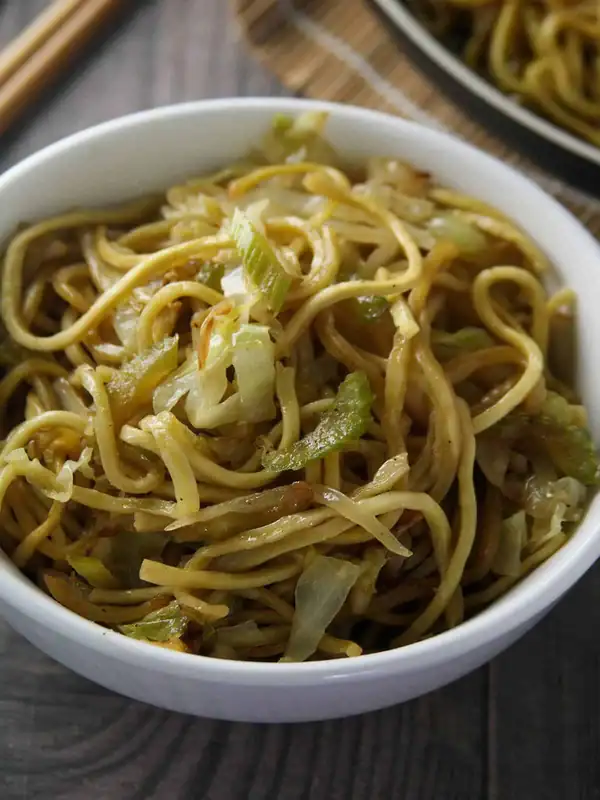
There’s plenty of room for variation in this chow mein method. You can swap the beef for your favorite protein: chicken (see image above), pork, shrimp, egg, or pressed tofu. For the first four options, follow the same preparation order as with beef.
Tofu, even so, can be added along with the vegetables. Feel free to use other vegetables too, such as bean sprouts, bell peppers, celery, Napa cabbage, snow peas, mushrooms, or whatever you have on hand. After all, stir-fried noodle dishes, just like fried rice, are perfect for a fridge raid!