New Lucky Seafood maintains precise squid scoring and light frying in Johor Bahru
The nearly 50-year-old Johor Bahru institution continues to execute the exact cornstarch dusting and high-heat wok frying required for its signature squid balls, alongside the raw preparation of crystal ice vegetable.
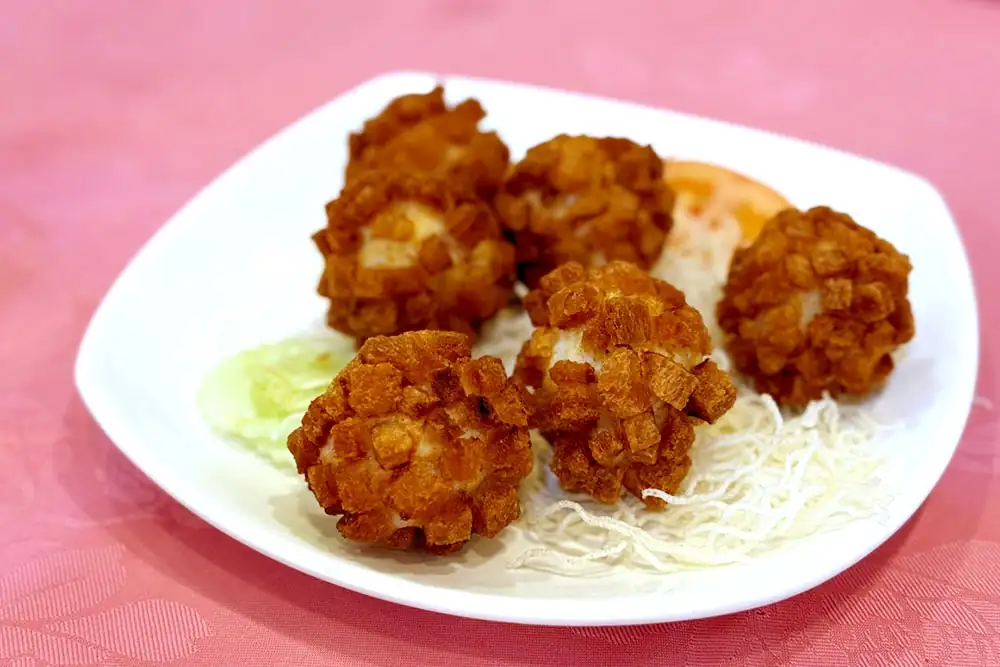
Founded in 1978, New Lucky Seafood Restaurant in Taman Sri Tebrau, Johor Bahru, continues to prepare its Traditional Crispy Sotong Balls. The kitchen relies on a specific sequence of scoring, dusting, and high-heat frying to achieve its required texture.
The cook scores the fresh squid into tiny cubes before shaping it into spheres. This cross-hatching increases the surface area, allowing a light dusting of cornstarch or rice flour to adhere without the heavy panko or thick batters used in other fried preparations.
The spheres are dropped into a hot wok of oil. The high heat sets the minimal starch coating quickly, creating a delicate crust that yields to a chewy, briny interior.
The kitchen applies a similarly strict approach to texture with its Crystal Ice Vege Salad. The bing cai leaves, naturally studded with tiny beads that resemble frost, are served raw and chilled to preserve their brittle crispness and faint mineral salinity.
The vegetable is tossed with green and purple grapes, lychees, and cherry tomatoes. The arrangement relies on a roasted sesame sauce to bind the fruit and vegetable elements without masking the inherent crispness of the ice plant.
Established nearly five decades ago, the restaurant anchors its menu in Cantonese and regional Malaysian seafood traditions. The repertoire extends to stir-fried roasted pork, braised luffa with golden bean curd, and claypot preparations of salted fish with pork belly.
Steamed giant grouper and fried kway teow with cockles further define the regional scope of the kitchen. These dishes require their own distinct thermal arrangements, from the gentle steam required for the fish to the high heat required for the fried noodles.
A restaurant that survives fifty years in a shifting culinary landscape does so by refusing to alter the physical mechanics of its cooking. The longevity of this Johor Bahru institution rests entirely on the repeatability of its starch ratios and wok temperatures.