A thirty-minute mushroom ragu achieves slow-cooked depth through sequential reduction
A newly published home recipe demonstrates how sequential reduction and dried porcini can compress the flavor development of a traditional beef ragu into a thirty-minute stovetop preparation.
- 20g / 0.7oz dried porcini mushrooms (, about 3/4 cup (Note 1))
- 1 cup red wine (, I use pinto noir (Note 2))
- 1kg / 2lbs white button mushrooms
- 2 tbsp olive oil
- 60g / 2oz unsalted butter (, divided)
- 1 brown or yellow onion (, finely diced)
- 3 garlic cloves (, finely minced)
- 3 tsp finely minced anchovy fillets (, or anchovy paste (Note 4))
- 1/4 cup tomato paste
- 1 1/2 tsp cooking salt / kosher salt ((half for table salt, 50% extra for flakes))
- 1 tsp dried thyme (or 2 sprigs fresh thyme)
- 2 fresh bay leaves (, dried ok)
- 3 tbsp plain flour (all-purpose)
- 1 cup chicken stock (, salt reduced - or vegetable stock for vegetarian (Note 5))
- 1/2 tsp black pepper
- 1/2 cup parmesan cheese (, finely grated (Note 6))
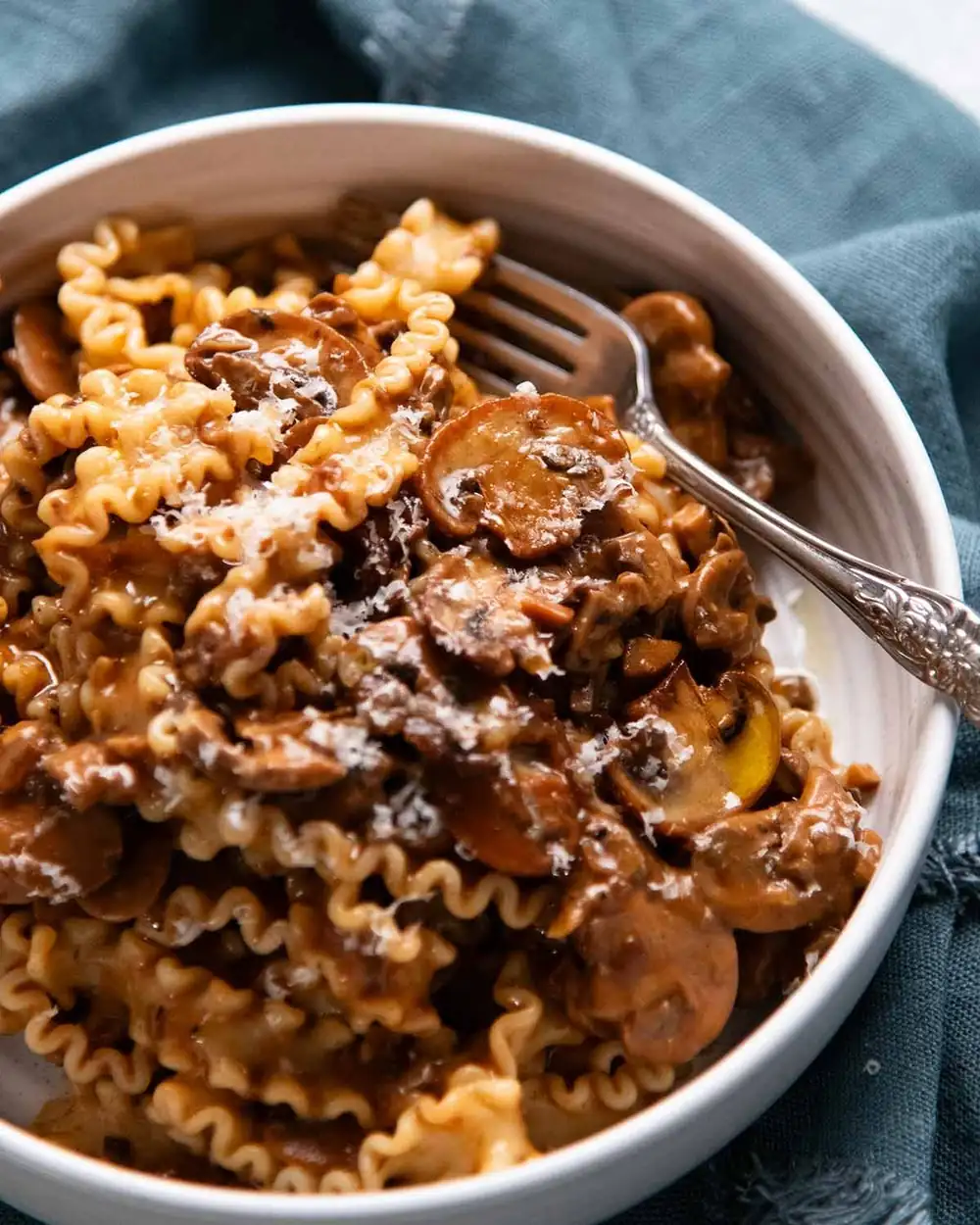
- 400g / 14oz malfadine pasta (curly fettuccini , pictured)
- 1 tbsp cooking salt / kosher salt (, for the pasta water)
- Extra parmesan (, for serving)
- Soak porcini in wine 30 min, strain and chop, reserve wine. Sauté onion, garlic and anchovy in oil and butter. Cook tomato paste, then cook mushrooms, porcini, salt, thyme and bay leaves 8 min. Add wine, reduce 6 min. Stir in flour, then chicken stock, simmer to thicken. Finish with pepper, parmesan and remaining butter.
- Soak the dried porcini in red wine for 30 minutes to rehydrate. Strain, then squeeze the excess wine out of the mushrooms. Reserve the wine.
- Chop the porcini finely (about 3mm/1/8").
- Sauté - Heat the olive oil and melt 2 tablespoons of the butter in a large heavy-based pot over medium-high heat (~26cm/10.5"+). Add the onion, garlic and anchovy. Cook for 2 minutes, stirring regularly with a wooden spoon, until the onion softens.
- Caramelise tomato paste - Add the tomato paste and cook for 2 minutes, stirring regularly.
- Cook mushrooms - Add the sliced mushrooms first and cook for 2 minutes, so they reduce in volume a bit. Add the chopped mushrooms, porcini, salt, thyme and bay leaves. Stir and cook for 8 to 10 minutes, stirring from time to time, until the liquid released by the mushrooms is mostly gone.
- Reduce wine - Pour in the reserved red wine and simmer for 6 minutes, stirring well at first to scrape up the fond at the bottom of the pot, then regularly towards the end. A path drawn with the spoon along the base should briefly hold.
- Thicken sauce - Add the flour, stir well and cook for 30 seconds. Add the chicken stock, bring to a simmer and cook for 2 minutes, stirring regularly, until it thickens to a rich, gravy-like consistency.
- Finish with the pepper, parmesan and remaining butter, stirring until everything is combined and the butter has melted through for a beautifully glossy finish. Put the lid on to keep warm while you cook the pasta.
- Cook pasta - Bring a large pot of water to the boil over high heat. Add 1 tablespoon of salt and add the pasta. Cook per the packet direction minus 1 minute.
- Reserve pasta water - Just before draining the pasta, scoop out one cup of pasta cooking water and set aside. Drain the pasta.
- Toss - Add the cooked pasta and 1/4 cup of the pasta cooking water (the starch in the water helps the sauce stick to the pasta). Toss well on medium heat for 1 minute or until the pasta is all coated with the ragu and serve with a sprinkle of parmesan. Bon appétit!
“). Sauté – Heat the olive oil and melt 2 tablespoons of the butter in a large heavy-based pot over medium-high heat (~26cm/10.5”
The cook begins by hydrating the dried porcini in red wine for thirty minutes. This step extracts earthy compounds from the fungus while infusing the liquid. The mushrooms are then squeezed dry and finely chopped, and the wine is strained and reserved to deglaze the pot later.
Olive oil and butter heat in a heavy pot to soften onion, garlic, and anchovy. The anchovy dissolves into the fat over two minutes, providing foundational savoriness without imparting a fishy taste. Vegetarians may substitute it with an additional quarter cup of parmesan to maintain the necessary salt and depth.
Tomato paste is stirred in and cooked for two minutes until it darkens and caramelizes. Fresh mushrooms are added in stages to prevent overcrowding the vessel. They cook for ten minutes until their released liquid evaporates completely, concentrating their flavor before the chopped porcini and herbs are folded in.
The reserved porcini wine is poured in to deglaze, scraping up the caramelized fond before reducing for six minutes. Plain flour is stirred through for thirty seconds to cook out its raw taste. Chicken stock is then added, simmering until the mixture reaches a thick, gravy-like consistency.
Black pepper, parmesan, and a final addition of cold butter finish the sauce to create a glossy emulsion. Mafaldine pasta, cooked one minute short of the package instructions, is tossed directly into the pot. A quarter cup of starchy pasta water binds the sauce to the ridged noodles.
This arrangement proves that the depth of a traditional ragu relies less on the passage of hours and more on the systematic evaporation of water and the layering of glutamates. By controlling the sequence of hydration, caramelization, and reduction, a cook can replicate the structural integrity of a slow braise in a fraction of the time.