Zebu Investment Partners is supporting African agriculture from ‘dirt to dinner table’
Dennis Matangira sees Africa’s food security challenge and opportunity this way: if agricultural productivity is optimized for land under cultivation, it will be more than enough to feed the continent’s growing population. All of this barely exists in Africa.” The South Africa-based firm’s approach is to invest in oppo…
“which is not a fair comparison because other markets have a developed value chain with angel investors, VC investors, leveraged finance and banks. All of this barely exists in Africa.”
Zebu’s first fund, its African Agriculture Fund (AAF) SME Fund , put money $30 million in the continent’s agri-producers and processors. Its second fund, the Africa Food Security Fund , is aiming to invest $120 million—this time with more of a tech-lens.
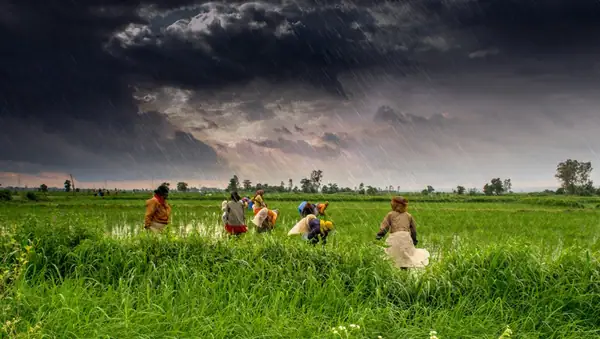
Mapping the opportunity Zebu’s focus on African agriculture opportunities was unique when the business started back in 2012. To build its pipeline, it first had to map out Africa’s agrifood landscape—an arduous task on a continent comprised of 33 million smallholder producers across 54 individual marketplaces.
Data was grossly lacking, says Matangira. “Our fund’s first focus was information gathering, assimilation. Formulating impact metrics and studies,” he explains. “We needed undiluted, unbiased information that covered the whole continent.” Farmers and agri-businesses almost universally cited lack of access to financing as their biggest barrier to expansion, Zebu found in its early investigation. The firm structured its funds to address this gap in multiple ways. The AAF SME Fund took a direct approach, making investments of $1 million to $4 million in seven agribusinesses across the continent.
As a de-risking method, the company paired investments with technical assistance grants that financed strategic, operational and technical support critical to each business’s expansion. Portfolio businesses include Burkina Faso-based egg producer Moablaou , Madagascar-based fertilizer producer Guanomad. Zimbabwe-based Interfresh, an independent agri-producer in known for its citrus operations. Across its portfolio, Matangira explains, “we identify where potential productivity bottlenecks are and where they are struggling with profitability, then we find ways to assist.” Interfresh exemplifies Zebu’s funding strategy.
The company was publicly-listed and operating in the red when Zebu came in in 2012. Zebu performed what it describes as “an aggressive restructuring exercise” that included taking the business private. Its backing supported rehabilitation of Interfresh’s citrus orchards and upgrading irrigation methods and infrastructure.
Going to Zebu, the improvements helped Interfresh boost citrus yields by 400%. Zebu also used technical assistance backing to help Interfresh use its excess manufacturing capacity to process harvests from smallholder farmers, bolstering livelihoods of farmers in the region. Tech-enabled impact The Africa Food Security Fund levels-up Zebu’s strategy with bigger checks and a focus on tech enablement.
In particular, the fund is zeroing in on opportunities to accelerate access to capital for African agribusinesses beyond what Zebu can invest directly. For example, the fund has invested in Mauritius-based trade-finance business Africa Merchant Capital Trade Finance .
It also put money last year in IQ Logistica (IQL), a cloud-based agtech platform that collects and aggregates data on agricultural outputs as they move across the agri-value chain. He tells AFN that firms like IQL exemplify the potential for technology to drive efficiencies. Open new trades across Africa’s agri value chains. “We are trying to promote this lending platform that is driven by the farmer’s capability and competence, rather than their balance sheet, because of how difficult it is for African smallholder farmers to access funding.”
- Who: Zebu · African
- Money: $30 million · $120 million · $1 million · $4 million
- Percentages: 400%
- Figures: 30 million · 120 million · 33 million · 1 million