Building Broth and Stew Without Meat Requires Specific Heat and Time
A compilation of twenty-three global recipes demonstrates that replacing meat in soups and stews requires precise adjustments to heat, time, and stabilizing agents to achieve structural depth.
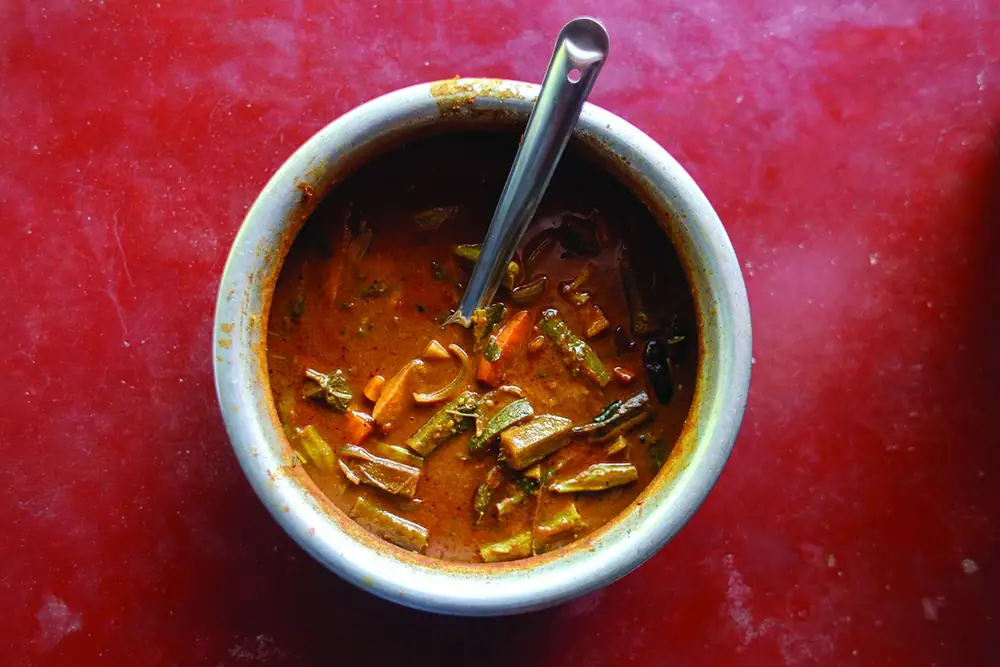
“a split-pea stew which is varied daily with the addition of, say, caramelized shallots or tomatoes or okra or aubergine (eggplant) poached in tamarind juice.”
A recent collection of twenty-three vegetarian soups and stews from global cuisines details the specific techniques required to build depth and texture without meat. The recipes span regions from Tuscany to South India, demonstrating how cooks adjust heat, time, and ingredient ratios to construct a complete dish.
In Tuscany, the traditional bean soup relies on time to alter its physical state. Freshly made, it remains a hearty, brothy liquid, but reheated the following day, the beans break down into a concentrated, almost porridgy stew. Nancy Harmon Jenkins applies olive oil in three distinct stages: sautéing garlic, rubbing on accompanying toasts, and finishing the liquid.
Conversely, the Umbrian vegetable soup, zuppa di verdure all’agliata, requires rapid heat. Unlike a classic slow-cooked minestrone, the vegetables are cooked quickly to preserve their bright flavor rather than breaking down into the broth.
In South India, building a stable emulsion is critical for curried yogurt stew, or kadhi. Chickpea flour acts as a stabilizer to prevent the yogurt from curdling in the hot liquid. Meanwhile, rasam and milagu rasam rely on a specific sequence of toasted spices, tamarind, and black pepper to build a sharp, acidic broth.
In Ethiopia, the choice of legume dictates the final color and texture of the lentil stew. Small masoor dal, which turn yellow when cooked, provide the base for a dish developed by home cook Alemtshaye Yigezu.
In Budapest, chef Andrea Németh builds texture in paprika-spiced cauliflower soup, or karfiolleves, through the addition of galuska. These tiny dumplings are formed by simply dropping bits of dough directly into the simmering broth.
Other regions adapt traditional meat-based structures using local ingredients. In the Caribbean, chef Yvonne Peters-Hope creates a vegetable run-up, a meat-free iteration of a savory breakfast stew typically bound by mackerel. In Lompoc, California, Juliana Fabio combines kidney, pinto, and chickpeas in a tomato base to riff on Santa Maria-style beans.
The removal of meat from a stew does not simplify the cooking process; it merely shifts the burden of structure to other elements. A cook must now rely entirely on the breakdown of legumes, the stabilization of dairy, and the precise application of heat to achieve the viscosity and depth that animal fat and collagen would otherwise provide.