Why is Laminated Dough the Secret to Great Pastry?
What happens between microscopically thin layers of butter and dough.
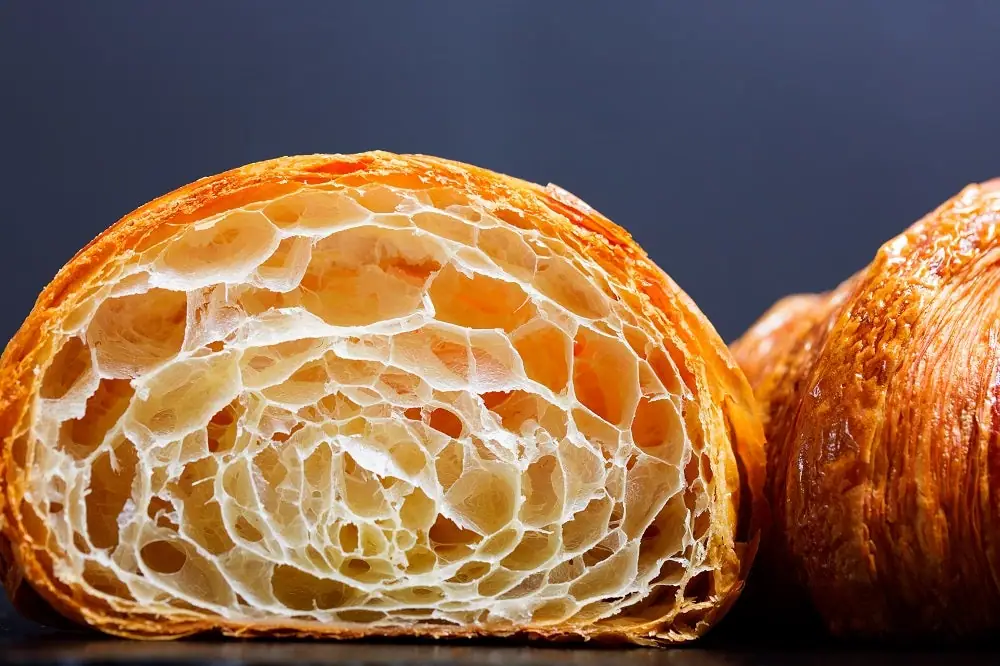
The anatomy of a croissant is an architectural marvel. Thanks to the exponential properties of folding layers of laminated dough, a croissant contains as many as 729 distinct layers of butter sandwiched between microscopic sheets of dough.
This folded-over bread-and-butter marvel is called laminated dough, and it’s the foundation of countless flaky French pastries. Beyond adding rich, buttery flavor to every bite, laminating dough changes the way a pastry rises in the oven.
As the dough temperature hits 212 degrees, moisture in the dough and butter converts to steam, puffing up the layers. The butter keeps those layers separated, and as the temperature continues to rise, the starches in the dough set into distinct crackly sheets slicked with vanishingly thin coats of butter. Those sheets translate into the crunchy flakes you devour with every bite.