
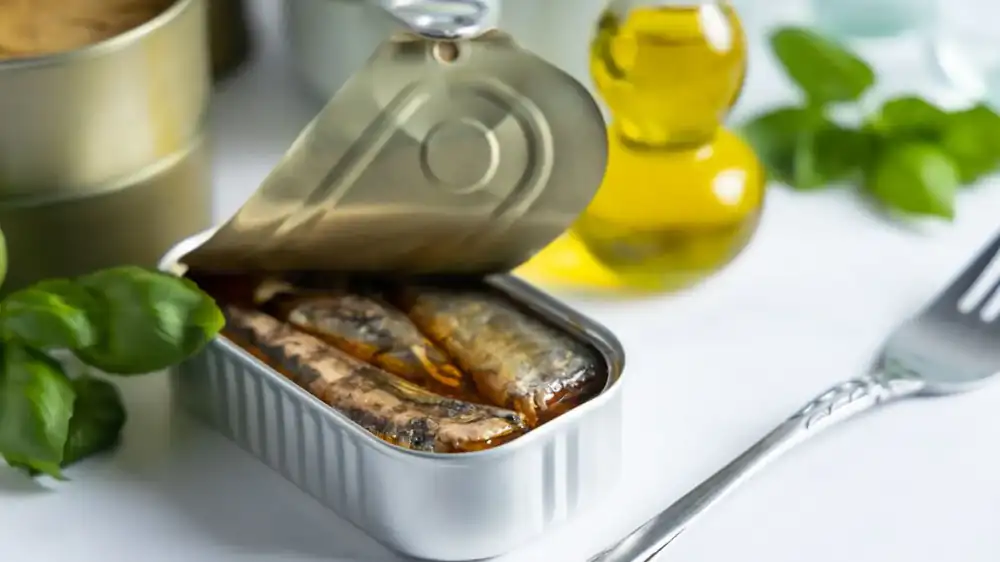
Everyone who has a can of sardines in their cupboard should do this every 6 months
Forgotten in a cupboard, a can of sardines can still hold pleasant surprises several years later. However, this requires following a few storage rules and, above all, adopting a very simple habit about twice a year.
A can of sardines forgotten at the back of a cupboard isn't necessarily destined for the bin. Quite the contrary: among some enthusiasts, the oldest cans are particularly sought after.
Like other products that are left to mature, sardines can change over the years when they are preserved in oil. Their flesh gradually becomes more tender, while the small bones soften.
Some enthusiasts keep their best tins for several years, sometimes up to ten years, in the hope of obtaining a much more melt-in-your-mouth texture.
But simply leaving your sardines to sit on a shelf isn't enough. Inside the can, the oil and moisture in the fish don't remain perfectly distributed over time. Due to gravity, the fat tends to concentrate more at the bottom of the can.
Conversely, some areas of the fish may become less well impregnated. As a result, after several years of storage, the texture may not be as homogeneous as expected.
Regular rotation to preserve the texture of the sardines
This is precisely why a very simple step is recommended about twice a year: turn the can over. Every six months, simply place it on its opposite side so that the oil redistributes itself around the sardines.
This practice promotes more even aging and helps maintain a tender texture. For those who truly wish to age their preserves, writing the purchase date on the can and marking its orientation can also make tracking this rotation easier.
However, not all canned goods are equally suited to this aging process. Sardines in olive oil are generally preferred when long-term preservation is desired. They must be kept in the right conditions: stored in a dry place, away from light and, above all, from significant temperature fluctuations.
A room kept at around 15 to 20°C is ideal. Under these conditions, some enthusiasts let their tins age for three to ten years to achieve a softer texture and more integrated flavors.
An intact box, an essential condition for long-term preservation
This practice does not mean that canned fish can be stored indefinitely without precautions. The US Department of Agriculture recommends a storage period of five years for commercially sold canned fish.
Some products can remain edible beyond their expiration date if they have been stored correctly and their packaging is perfectly intact, but their quality can gradually deteriorate. Before opening an old can, it is therefore best to examine it carefully: swelling, leaks, significant rust, or deep deformation, especially near the seams, should lead you to discard it.
Finally, the six-month rule only applies to unopened cans. Once a can is opened, it should no longer be allowed to age. Any remaining sardines should be transferred to an airtight container, kept in the refrigerator, and consumed within three to four days.
Regularly turning your cans is therefore primarily a tip for enthusiasts who want to see their sardines age over several years. It's a simple step that can make all the difference when a can is left to sit for a long time in the cupboard.