Here is the precise cut of meat recommended by a Michelin-starred chef for making an ultra-tender osso buco
Osso buco: for meat that melts in your mouth, this Michelin-starred chef swears by this very specific cut of veal.
Do you dream of an osso buco that shreds effortlessly, far from dry and stringy meats? Michelin-starred chef Massimo Mori reveals the exact cut to ask the butcher for, and the gestures that make all the difference.
For osso buco that falls apart at the touch of a spoon, it's not all about the pot. Michelin-starred chef Massimo Mori, at the helm of Mori Venice Bar and Emporio Armani Caffé in Paris, places the choice of meat above all else. His advice can be summed up in a simple formula: aim for a single cut, the veal shank, prepared with meticulous precision.
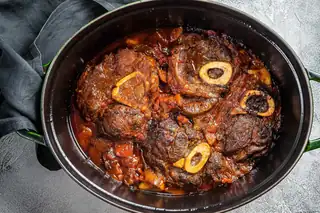
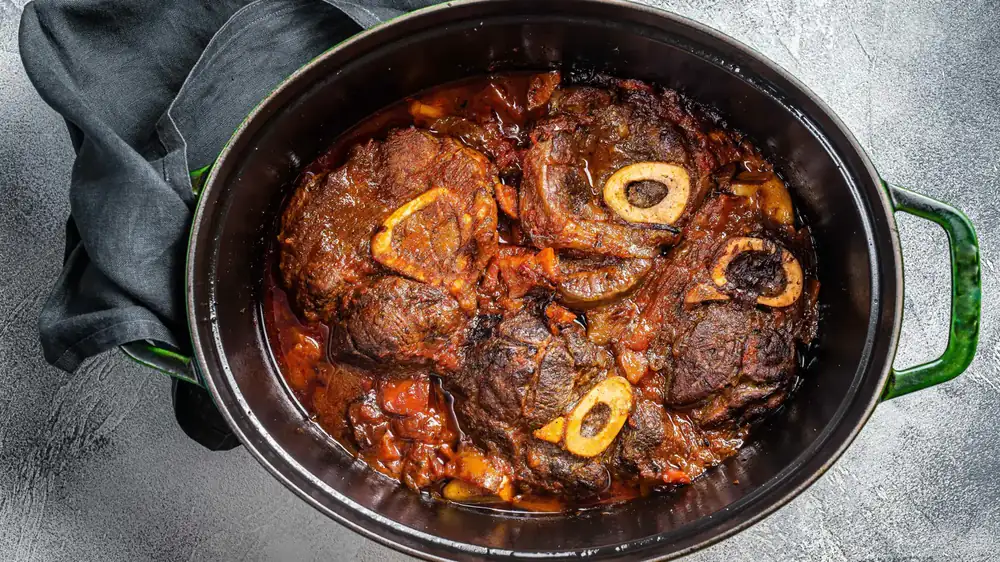
This shank, located between the thigh and the calf, comes from a calf fed primarily on milk, resulting in a lighter, more delicate, and flavorful meat. Cut into approximately 4 cm pieces, it concentrates meat, fat, and marrow bones in a balance that the chef considers ideal for this classic Milanese dish. However, if poorly chosen or trimmed, the same dish can easily become a dry stew, far from the expected melt-in-your-mouth texture.
Cut of meat for osso buco: why milk-fed veal shank dominates
Veal shank is the benchmark cut for traditional Milanese osso buco. Its structure combines lean meat, fat surrounding the bone, and gelatinous areas that slowly melt. During several hours of gentle cooking, these collagen-rich parts loosen, coat the sauce, and tenderize the fibers without the shank falling apart. At the center, the marrow provides an almost creamy texture and gives the sauce a depth of flavor that other cuts of veal cannot replicate.
Massimo Mori's verdict: a ham hock cut into 4 cm sections
According to Michelin-starred chef Massimo Mori, the trip to the butcher already determines 80% of the result. The goal is simple: ask for a milk-fed veal shank specifically for osso buco, sliced into rounds about 4 cm thick, cut with a saw to preserve the central bone. Each slice should have a beautiful, clearly visible cylinder of marrow. The chef also advises lightly scoring the skin all around, then tying each piece with string to ensure it maintains a uniform shape during cooking in a casserole dish.
Chef's techniques in a casserole dish for ultra-tender meat
Once the right cut is obtained, a few steps complete the butcher's work to ensure the tenderness of the osso buco:
- lightly flour the meat just before searing it in a mixture of butter and olive oil;
- gently brown the slices without burning the butter;
- Then sauté carrots, onions and celery in the same pot;
- Moisten with dry white wine then with veal stock to start the long cooking process.
Gentle searing in butter with a drizzle of oil prevents the fat from burning and creates a thin crust that protects the meat. Flour helps the sauce thicken over time, while the shank releases gelatin and marrow. At the end of cooking, the chef recommends a gremolata of garlic, parsley, lemon zest, and anchovies, with the garlic softened in warm milk. In Veneto, this hearty dish is often served with a creamy white polenta or a saffron risotto, making sure to fill the pot with vegetables and keep the meat slices a reasonable size.