This Is My Favorite Sirloin Steak Recipe Of All Time
Welcome to one of my oldest and most loved tutorials: How to cook sirloin steak! I’m a big fan of cooking steaks on the stove and then finishing them in the oven — I do this with other cuts too, including filet mignon and New York strip. But for top sirloin steak in particular, the method is more important than ever.
- 1 recipe Steak marinade
- 1 tbsp Unsalted butter
- 4 8-oz Sirloin steaks
- Prepare the steak marinade according to the instructions here. Marinate the steaks for at least 3 hours, but no longer than 24 hours. (Alternatively, you can simply season generously with salt and pepper and skip the marinade, but the marinade makes them so juicy!)
- Remove the steaks from the fridge about 30 minutes before cooking, to let them come to room temperature. Pat the steaks dry with a paper towel.
- Preheat the oven to 400 degrees F (204 degrees C). At the same time, preheat a cast iron skillet on the stovetop over medium-high heat, about 3 minutes.
- Once the oven is just a few minutes away from being preheated, add the butter and heat until melted. Add the steaks in a single layer. Sear for about 2 minutes, without moving around, until browned with grill marks on the bottom. Flip and sear for 1-2 minutes on the other side.
- Transfer the pan to the preheated oven. Bake for 2 to 6 minutes, to your desired level of doneness. For a 1.5-inch (4 cm) thick steak, that's usually 2 minutes for rare, 3 minutes for medium rare, 4 minutes for medium, 5 minutes for medium-well and 6 minutes for well done. Use a meat thermometer (I recommend a probe thermometer like this) to be sure: 120 degrees F (49 degrees C) for rare, 130 degrees F (54 degrees C) for medium rare, 140 degrees F (60 degrees C) for medium, 150 degrees F (66 degrees C) for medium well, and 160 degrees F (71 degrees C) for well done. Steak temperature will increase by an additional 5 degrees when resting in the next step.
- Remove the sirloin steaks from the oven and transfer to a plate. (Do not leave in the pan or they will be overcooked.) Let the steaks rest for 5 minutes before slicing.
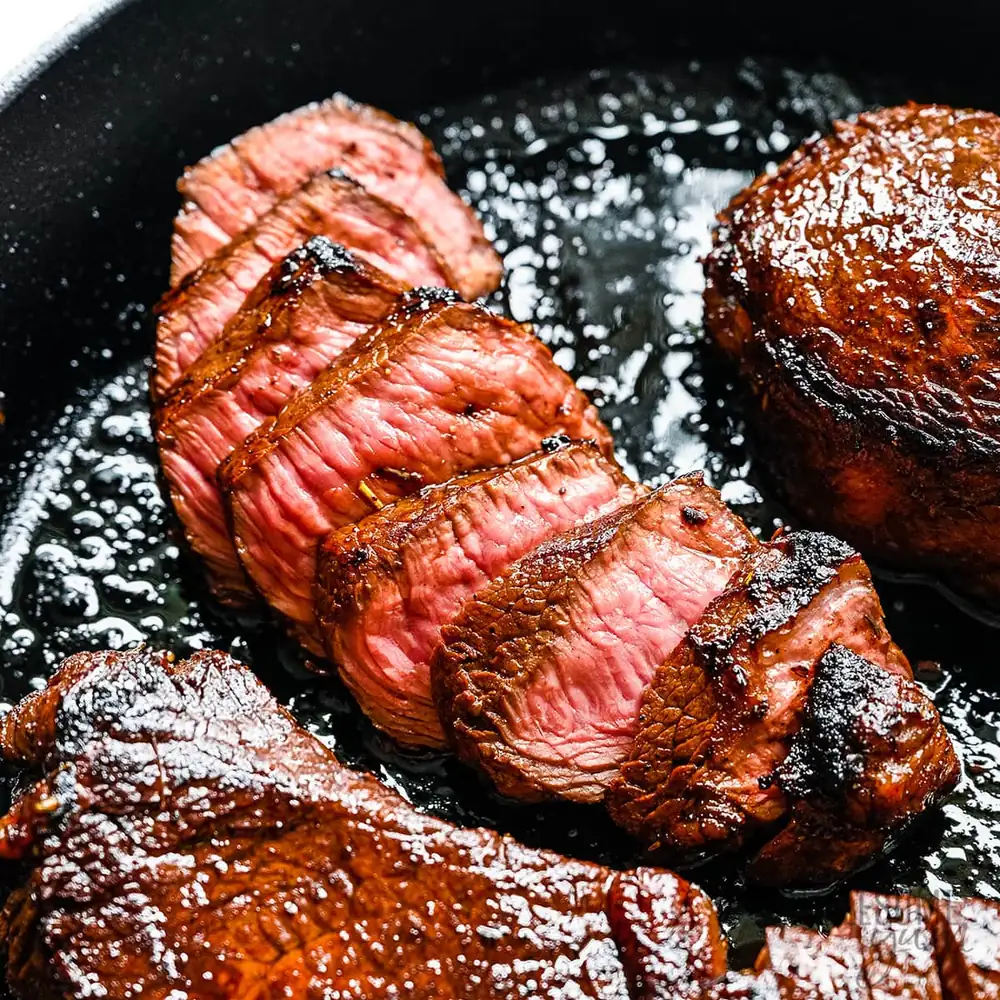
Tender and juicy, not tough – There are many reasons I love this sirloin steak recipe, but the biggest is the texture! The inside is juicy, while the outside forms a beautiful golden crust.
Quick and easy, with simple ingredients – Cooking sirloin steak is super fast, and my quick balsamic marinade for steak uses just 5 common pantry staples (plus salt and pepper).
Choose seasoning or marinade – I think this marinade makes the steak special, but if you don’t have time to wait for it, I have an option for a simple seasoning instead.
Cook to your liking – My temperature and time chart includes guidelines for different steak thicknesses, so you never have to overcook your steaks again.
Beefy, affordable dinner – Sirloin steak recipes are a great way to enjoy a reasonably priced cut of beef without sacrificing that beefy flavor. And even though it costs less than more premium cuts, my method still leaves it incredibly tender.
This recipe has a little extra richness from the butter, and I’ll show you my best tips to master your steaks every time. Grab a skillet and make it with me!
“Sirloin is often on sale in my area but I hesitate to buy it because it can be tough. Followed this recipe exactly as written and I am delighted that I can afford to eat steak again. Perfect instructions, meat came out tender, juicy, and full of flavor. Can’t thank you enough.”
Here I explain the best ingredients for my sirloin steak recipe, what each one does, and substitution options. For measurements, see the recipe card.
You really need just 3 basic components…
Which Sirloin Steak Is Best?
Top sirloin steak is my first choice for this recipe. It gives you the best balance of tenderness, beefy flavor, and price. Look for steaks labeled top sirloin or center-cut top sirloin. If the package just says “sirloin steak,” check the fine print or ask the butcher, because it could be a different cut.
I recommend getting your steak from a butcher shop if possible, as typically these are better quality and fresher than ones in stores.
Top sirloin – This is the cut I used and recommend. Choose steaks that are at least 1 inch thick. If you can find 1.5 inches thick, that’s my favorite thickness for this stovetop-to-oven method.
Bottom sirloin – This is usually more affordable, but also leaner and less tender. You can still use it here, but I definitely recommend the marinade and slicing thinly against the grain. Tri tip comes from the bottom sirloin, but it needs a slightly different method, so use my tri tip recipe for that.
Petite sirloin – Despite the similar name, this is a smaller, firmer cut that I cook differently. Follow my petite sirloin steak recipe instead.
Sirloin tip – This one is confusingly named, because it actually comes from the round rather than the sirloin. I have a sirloin tip steak recipe here.
Beef comes in different grades: Prime, Choice, or Select, listed in order from highest to lowest quality and price. Of course Prime is my favorite, but Choice still has enough marbling to stay juicy without the higher price.
When in doubt, grab a thick top sirloin. It’s the cut I’ve found most reliable for getting that juicy center and golden crust without paying ribeye or filet mignon prices.
Fat For Searing:
I used unsalted butter for searing, because the flavor is just so irresistible. Just be sure to turn on your stovetop fan!
If you’re concerned about the high heat, you can cook sirloin steak in avocado oil and just add a tablespoon of butter in the last few minutes. Olive oil can also work, but has a lower smoke point than avocado oil.
Salt & Pepper (quick & easy) – If you’re the kind of person that thinks all a good steak needs is salt and pepper, I get it! I often go this route too, because no waiting! My rule of thumb is 1 teaspoon of salt and 1/4 teaspoon of pepper per pound of meat.
Marinade (juicy, flavorful make-ahead option) – I think that middle-of-the-road cuts like sirloin benefit from marinating, so I used one in this sirloin steak recipe. Make my simple steak marinade with coconut aminos (or soy sauce), olive oil, balsamic vinegar, Italian seasoning, garlic powder (or minced garlic cloves), sea salt, and black pepper. You can also add fresh herbs, such as rosemary or thyme. If you don’t like the slight sweetness of balsamic vinegar, you can use apple cider vinegar instead, but the marinade will be more tangy and less rich.
Seasoning (quick with bolder flavor) – If you don’t have time for marinating but want more flavor than simple salt and pepper, use my Montreal steak seasoning … or my seasoning for pork chops is actually great for beef too. If you do have time, you can even use these as a dry rub and season in the fridge overnight.
How To Cook Sirloin Steak
I have step-by-step photos here to help you visualize the recipe. For full instructions, including amounts and temperatures, see the recipe card.
Marinate or season the steak. For the marinated option, whisk together the steak marinade in a bowl, then add the steaks and move around to make sure they are evenly coated. You can marinate in a zip lock bag (like my picture below) or in a small baking dish. If you have less time, simply pat the steaks dry and season them liberally with salt and pepper (or your favorite seasoning).
Bring to room temperature. Take the steaks out of the fridge 30-60 minutes before cooking. This is not absolutely required, but I always do this because it helps the steaks cook more evenly. If you skip it, that’s okay, but cold meat can take a little longer to cook.
Preheat the oven and your skillet. Preheat your oven to 400 degrees F. Partway through, preheat a cast iron skillet on the stovetop over medium-high heat. (If you don’t have cast iron, pick your heaviest oven-safe pan.) You want to get it really hot so that you can get a nice sear on your steaks — I usually do this when there are 2-3 minutes left for the oven.
Pat the meat dry. Remove the steaks from the marinade, shake off the excess, and pat dry with paper towels. (This will help get a better sear.) If you used the seasoning option, you don’t have to dry them again.
Sear on the stovetop. Melt the butter in the hot skillet, then add the steaks in a single layer. Sear without moving them around, until a brown crust forms on the bottom. Flip and sear on the other side.
Cook sirloin steaks in the oven. Quickly insert your probe thermometer if you have one (I love mine and recommend it!) into the thickest part of one of the steaks and transfer the pan to the oven. For an accurate reading, I try to insert the probe horizontally through the side into the center of the thickest steak, avoiding large pockets of fat. Roast until they reach your desired doneness — use my time and temp chart for best results!
Let them rest. Remove the steaks from the pan to prevent overcooking. Transfer to a plate or cutting board, tent the top with foil, and rest for 5 minutes before slicing and serving.
How Long To Cook Sirloin Steak?
The right cook time is key for juicy, tender steaks! After a quick sear on the stove, a 1-inch steak may need little to no oven time, while a 1.5-inch steak usually needs about 2-7 minutes. Thicker steaks can take longer. I always use a probe thermometer for the oven step, because thickness, starting temperature, pan material, and the oven itself can all change the timing.
Here’s my time chart for cooking steaks. The temperature is the most reliable, but I added the times that usually work for me to help you as an estimate:
Note: These times assume a fully preheated cast iron skillet. A different pan or a steak thicker than 1.5 inches may take longer. If your steak is below your target temperature after the listed time, return it to the oven and check frequently. For convection ovens, start checking earlier, because the steak may cook faster. The internal temperature will increase by about 5 degrees while resting.
Got an extra-thick steak? Once it’s thicker than 1.5 inches, I find the time chart becomes less predictable. Use a probe thermometer and expect additional oven time. For steaks around 2 inches thick, I prefer my reverse-sear method because it cooks the center more evenly before creating the crust.
My Tips For Juicy, Tender Steak
I cook steaks at least once a week, so I’ve got lots of tips for you! These will help you with all kinds of steak recipes:
Match the method to the thickness, not the steak weight. An 8-ounce steak can be thin and wide or compact and thick, and the thicker one takes longer for heat to reach the center. Thicker steaks that are 1 to 1.5 inches thick are easier to cook (read: harder to overcook!), more flavorful, and usually have a better texture. If you’ve got thinner steaks, I recommend cooking steaks on the stove only, without the oven step.
Marinate for at least 3 hours, up to 24 hours, but no longer. The longer you marinate, the juicier your sirloin steaks will be, but only to a point. Past 24 hours, they can get mushy, so that’s the max I recommend. Keep them in the fridge while marinating.
Cast iron holds heat exceptionally well for the best sear. I love this cast iron grill pan when I want grill marks, but this cast iron skillet is my absolute favorite — it’s beautiful, heats evenly, and best of all, it’s enameled, so I don’t have to deal with seasoning it. A heavy stainless steel skillet also works, but the oven time may be longer.
What if your steaks don’t all fit in the pan at once? Don’t crowd the pan, because you need space to get a nice sear and even cooking. Instead, you can either use two oven-safe skillets if you have them, or cook two steaks completely before starting the next two.
To get a good sear, don’t move the steaks around. I do flip often when I cook only on the stove, but with this stovetop-to-oven method, it works best not to move them until it’s time to flip.
I get the most reliable results with a probe thermometer like this, but a regular instant-read meat thermometer works, too. Steak thickness, starting temperature, pan material, and your oven can all change the timing. If the steak is below your target after the listed time, just return it to the oven and check frequently. When the steaks differ in thickness, I remove each one as it reaches temperature (and this is exactly why I look for similar thickness, to not have to deal with this!).
Have family members and friends who like different levels of doneness? Me too! I always start with the thermometer in the steak that needs the least doneness, pull it out when ready, then transfer the probe to the next steak and continue cooking until that one is done. Repeat as needed. Tent the top with foil while they rest and wait for the others, which brings me to my next tip…
Resting is important. Don’t skip it. This allows the juices to redistribute into the meat, so they won’t spill all over your plate when you cut into your steak. It’s one of my best tricks for super juicy sirloin steak!
Slice against the grain. Before cutting, look for the parallel lines of muscle fibers running through the sirloin steak. Turn the steak so your knife cuts across those lines, not in the same direction. This breaks up the muscle fiber for a more tender texture in every bite! I do this for all my steaks, but it’s especially important for lean sirloin.
Prefer a different cooking method? I also have recipes for cooking steak on the grill (the best for that smoky flavor and grill marks, when the weather is right) and steak in the air fryer (no browned crust, but super juicy and totally hands-off).
Sirloin Steak Recipe (Juicy & Tender)
Learn to cook steak perfectly with my easy, foolproof method & time chart. You'll love this juicy, tender top sirloin steak recipe!