When should you pre-bake a pie crust?
Vegetable quiche, fruit tart… A question often arises before baking: should you pre-bake the pastry before adding the filling? Discover when blind baking is essential to obtain a well-cooked and crispy crust.
- 1 unit shortcrust pastry
- 500g rhubarb
- 4 egg units
- 100 g sucre
- 1 sachet of vanilla sugar
- 30 cl fresh cream
- 180g icing sugar
- 1 pinch of salt
- Wash and peel the rhubarb. Cut it into small pieces. Place the rhubarb in a colander and sprinkle it with sugar to draw out the water for about 1 hour.
- Preheat the oven to 200°C (390°F). Roll out the pastry and line a tart tin. Fill with rhubarb. Beat one whole egg and 3 egg yolks (reserve the 3 egg whites for the meringue) with 100g of sugar and the vanilla sugar. Add the cream.
- Pour the mixture over the rhubarb, being careful not to let it overflow. Bake for 30 minutes.
- Beat the egg whites until stiff peaks form, adding a pinch of salt. Gradually add the icing sugar while continuing to beat.
- Once the tart is baked, spread the meringue on top and bake for another 10 minutes. Finish by broiling for a few minutes, keeping a close eye on it. For a crisp meringue, leave the tart in the oven for 30 minutes with the heat off.
To pre-bake or not to pre-bake, that is the question! When preparing a savory or sweet tart, we immediately reach for a fork to prick the dough and make sure it doesn't puff up during baking. But then, our confidence fades as doubt creeps in: should we blind-bake the crust or can we simply fill it directly? How do we prevent it from being too dry, or conversely, completely soggy? Let's get to the bottom of this.
When should you pre-bake a pie crust?
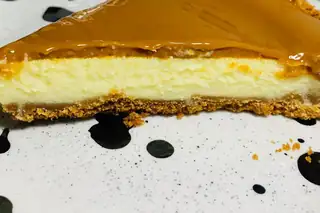
In practice, the rule is quite simple: the pastry must be pre-baked when the ingredients to be added do not require cooking or when the fruit on top is to remain raw. This is the case, for example, with a strawberry tart or a lemon tart, whose fillings do not require further baking (such as pastry cream).
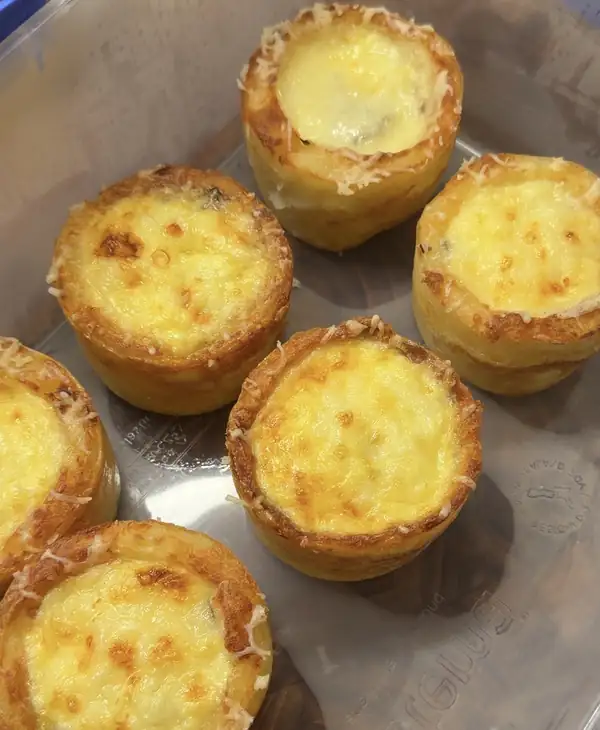
As for other fruits, the key question is: do they release juice or not? With peaches, for example, it's highly recommended to blind bake the pastry so it doesn't become soggy. For preparations like quiches, pre-baking the pastry is also advised to prevent it from absorbing moisture.
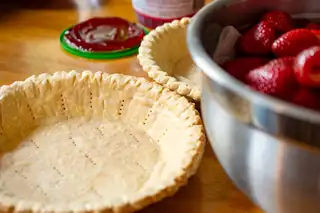
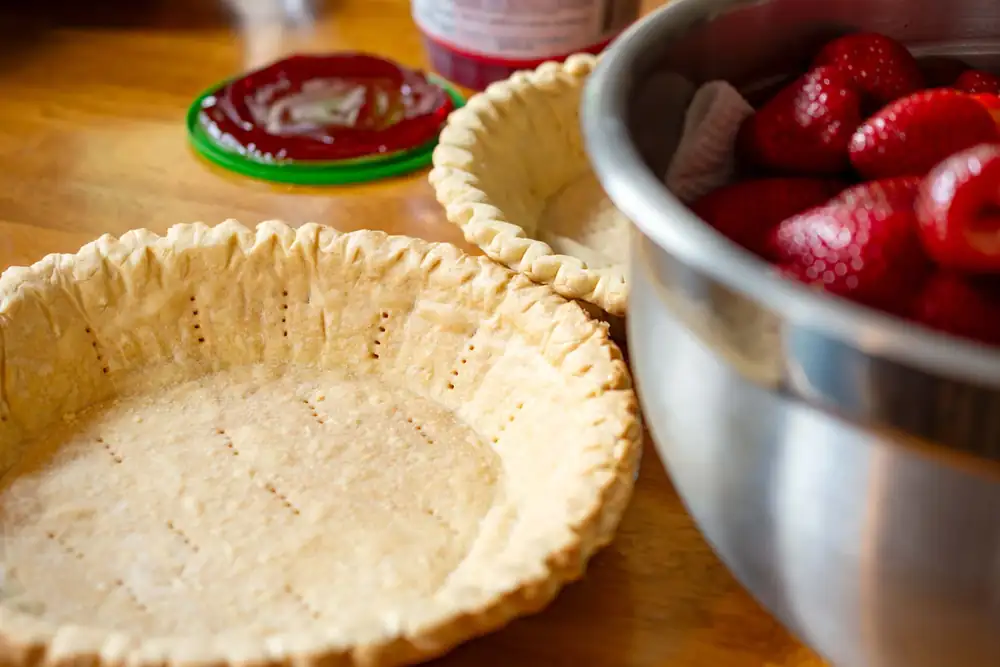
How to proceed in practice? Bake it for about 10 minutes at 180°C (350°F), weighing down the base with something to prevent it from rising (baking beans, dried beans, etc.). A little tip to preserve its crispness: brush it with egg white after the first baking, then return it to the oven for a few minutes to form a thin, waterproof coating.
When can we do without pre-cooking?
Pre-baking a pie crust is unnecessary when the fruit placed on top doesn't release any juice. With apples, for example, it's not essential, and even discouraged: double baking results in a rather dry crust.
Want to make a tart with juicy fruit (peaches, plums, etc.) but don't have time to pre-bake the crust? Sprinkle dry, absorbent ingredients on your tart base to retain excess moisture: almond flour, crushed biscuits, etc.