Rachel Signer: “Natural wine doesn’t have to be strange or full of flaws”
For years, natural wine has been shrouded in both fascination and misunderstanding. It's often associated with colorful labels, cloudy glasses, unexpected aromas, and a certain tribal attitude; but behind all of this lies a much broader conversation about how a vineyard is cultivated, the role of winemaking intervention, and what we expect to find when we uncork a bottle.
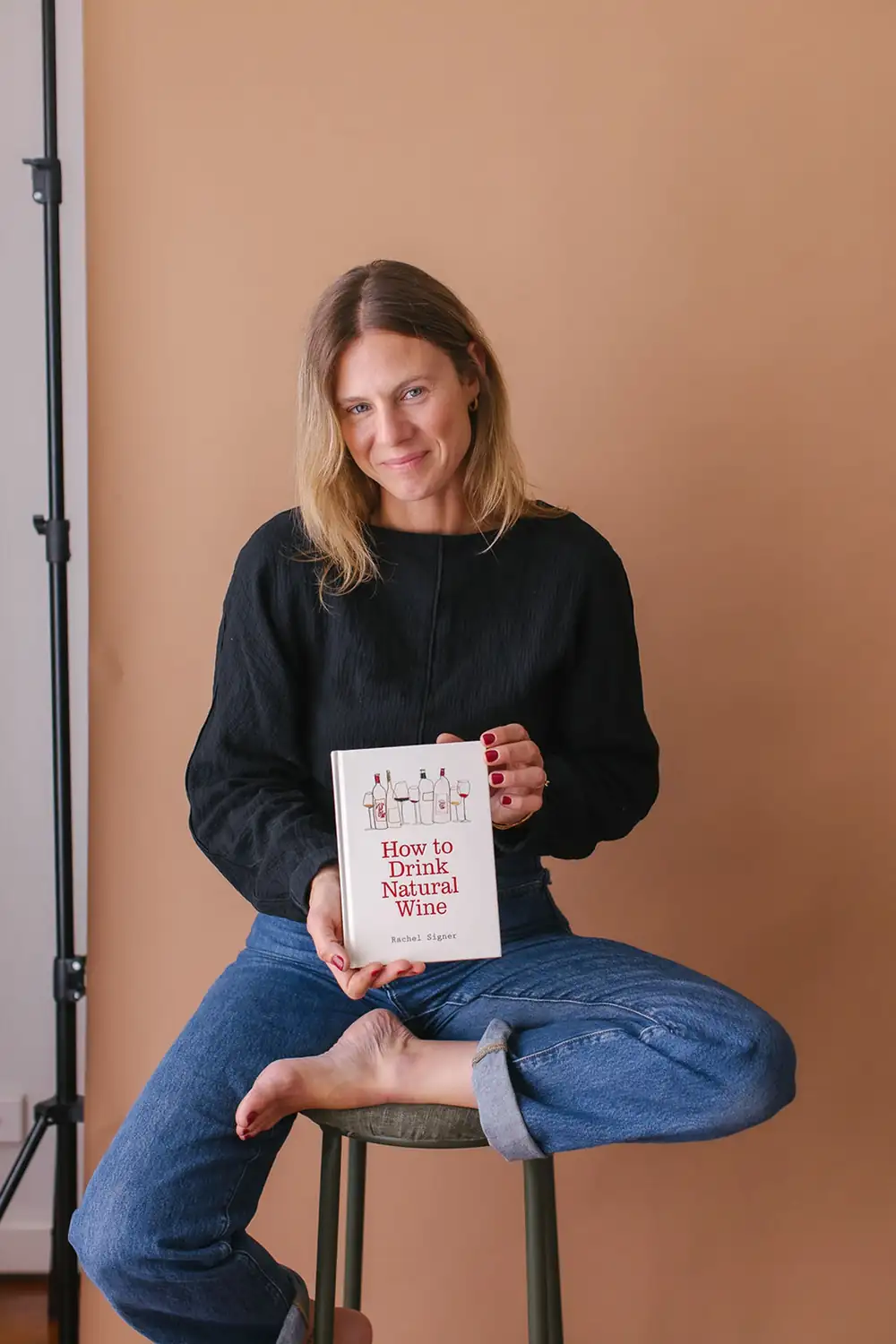
Rachel Signer knows this world from the inside. A specialized journalist, founder of Pipette Magazine, and a natural winemaker for six years, she has just published Natural Wine: What It Is and How to Enjoy It (Cinco Tintas), a visual and accessible guide that explores its origins, styles, and producers. We spoke with her about the confusion that still surrounds the term, the value of conscious agriculture, and the seemingly simple act of asking for a bottle with confidence.
Natural wine continues to spark a lot of curiosity, but also some confusion. If you had to explain it to someone approaching it for the first time, where would you begin?
“Natural wine comes from organic vineyards, cultivated without destructive chemicals. The grapes are harvested by hand and the wine is made without commercial yeasts or additives; it is usually unfiltered and made in a traditional way, with respect for the land and the people. These are usually small productions, from independent winegrowers or families, not large corporations.”
In the book, he proposes a journey from the vineyard to the glass. Why was it important to focus on cultivation and not just on what happens in the winery?
“Without healthy grapes, it’s impossible to make good wine, especially natural wine, because no additives are used to correct it. But there’s an even more important issue: we’re living through a climate crisis, and how we manage the land is an ethical and moral matter. Those who are part of this movement have a responsibility to regenerate the soil, avoid chemicals whenever possible, and seek natural ways to care for their vineyards.”
“Natural” wine is a term as popular as it is controversial: it lacks a single legal definition, and some producers believe it can suggest that other wines are “less natural.” Is it still useful?
“It’s true that it can be a problematic term, although it helps to distinguish these wines—made from organic farming and traditional fermentations—from conventional wines, which come from chemically treated vineyards and industrial production. Of course, there are wines somewhere in between, and that’s where the strictest definition can exclude some producers.”
For now, I think it's the best term we have. Some people prefer to talk about 'living wines,' a particularly beautiful expression in French, vins vivants, or about organic, handmade wines. Ultimately, it's a personal choice.
To what extent is it at risk of becoming a marketing label?
“It would be difficult for such an open movement to be defined in a closed way. It’s a bit like asking a group of jazz musicians to determine which instruments can be part of jazz and which cannot, or a group of artists to declare what defines modernism. We must keep the dialogue open and reach agreements, when possible, on what is important.”
It's not a perfect term, nor a perfect movement: it's an idea, perhaps even an aspiration. There will always be those who try to use 'natural' as a marketing ploy, but those of us who defend this way of making wine try to give visibility to the most authentic producers to prevent that.”
One of the most widespread misconceptions is that all natural wines are 'funky', unstable, or defective. What would you say to someone who still looks at them with suspicion?
“There’s a myth that all natural wine is strange or defective. In general, these wines may aromas and flavors characteristic of spontaneous fermentation, that’s true, but it doesn’t mean they’re poorly made. We’ve been taught to consider certain naturally occurring expressions as ‘defects’ so that we accept conventional wines as the norm.”
Some natural wines can be a bit more 'funky' if they have volatile acidity, but this isn't always the case. There's a lot of diversity, and it's not a good idea to reduce an entire category to a single profile.
And yet, there is also a boundary. Where do you draw the line between a wine with a unique character and a poorly made wine?
“The only defect I truly cannot tolerate is the so-called 'mouse,' which I discuss in the book. It gives the wine a flavor reminiscent of damp almonds or cardboard. Winemakers should not put bottles with this defect on the market.”
You've come to know natural wine as a journalist, editor, winemaker, and producer. What changed in your understanding of it when you went from writing about it to actually making it?
“I made natural wine for six years, entirely by hand; I also planted and cared for vineyards. That experience helped me understand all the stages of winemaking: fermentation, from beginning to end, but also the logistical details, perhaps less romantic but fundamental, such as corks, bottles, labels, and transportation. And, of course, the enormous importance of vineyard management.”
Anyone who truly wants to understand wine would recommend participating in a grape harvest or some practical experience during the harvest season. I include some tips for doing so in the book.”
For someone starting out, how do you recommend approaching styles like orange wines or pét-nats without feeling out of place?
“It’s important to keep an open mind. Many people who are used to conventional wines have developed very strong ideas about what they like or dislike. For example, someone might say they hate sparkling wines if they’ve only ever tasted very sweet champagnes; or that red wine gives them a headache because they’ve drunk very commercial, cheap, high-alcohol blends with lots of sulfites.”
The categories used to organize conventional wine don't exist in exactly the same way for natural wine. The best way to start is to taste with curiosity and without imposing too many expectations beforehand.
Spain is experiencing a particularly fertile period in this area. What interests you about our scene?
“Spain has wonderful vineyards, great varieties—especially Garnacha—and outstanding regions, such as Catalonia. In the book, I include several Spanish natural wine producers whose wines I hope readers will seek out and try.”
And it's impossible to talk about natural wine in Spain without mentioning Bar Brutal in Barcelona, a place that has served as a kind of home base for the international natural wine community.”
Sustainability is a recurring theme in all conversations about wine. What can natural wine truly contribute to addressing the environmental challenges facing viticulture?
“Every winegrower who strives to practice conscious, ecological, and regenerative agriculture is making a difference. So are those who grow vegetables, fruit, or olive trees at home without chemicals: it's all part of building a better world.”
As long as natural wine keeps cultivation and the vineyard at the center of the conversation, we can continue to move in that direction.”
After writing this guide, what would you like to see change in the way we choose and enjoy a bottle?
“I wish people were less afraid to order a bottle. If there are three of you, it makes sense: it usually offers better value for money than ordering by the glass, and it also allows you to enjoy how the wine changes throughout the meal.”
I would also like us to be more confident, even if we don't know much about wine. Everyone knows what they like and what they don't. There's no need to be afraid to express that in a restaurant or a shop to find the bottle that will truly make you happy.”
Is there a place that, for you, encapsulates the deepest meaning of natural wine?
“There are many, and I mention several in the book, but visiting Georgia was an incredible experience. It’s the oldest wine-producing region in the world that has maintained continuous production. Its wine and cuisine are extraordinary and reflect a traditional, non-commercial culture. That direct relationship between wine, food, place, and memory is very powerful.”
Finally, can you recommend three natural wines that are among your favorites?
“Bianco Trilli from La Gazzetta, in Umbria, Italy; Cuvée Marguerite from Matassa, in Roussillon, France; and Vino Rosso from Dinavolo, in Emilia-Romagna, Italy. These three bottles perfectly express the diversity of this world and the connection between small producers, artisanal production, and very specific territories.”