How To Tell If Soy Sauce Is Authentic
The soy sauce on your grocery store shelves is often made in two ways. One is the traditional fermentation method, and the other uses a chemically-mediated approach that speeds up the process and arguably results in a lackluster sauce.
You can also check the ingredient list: The fermented version will have a short and sweet list of soybeans, wheat, salt, and water. The acid hydrolysis sauce will have an ingredient list that might look more like a lab report: Some common additives that will appear are hydrolyzed soy protein or hydrolyzed vegetable protein; you may also see caramel coloring, corn syrup, citric acid, or preservatives listed. The latter three are not a given, but are often used to try to imitate the depth of color and flavor that you'd get in a fermented soy sauce.
You can also look at the price. The non-fermented sauce is usually cheaper, since the chemical process is a lot faster, as compared to the "real" one, for which manufacturers need to leave the sauce for months of fermentation. That said, this method is just a rough indicator and is less foolproof than checking the ingredients.
Is inauthentic soy sauce all that different, though?
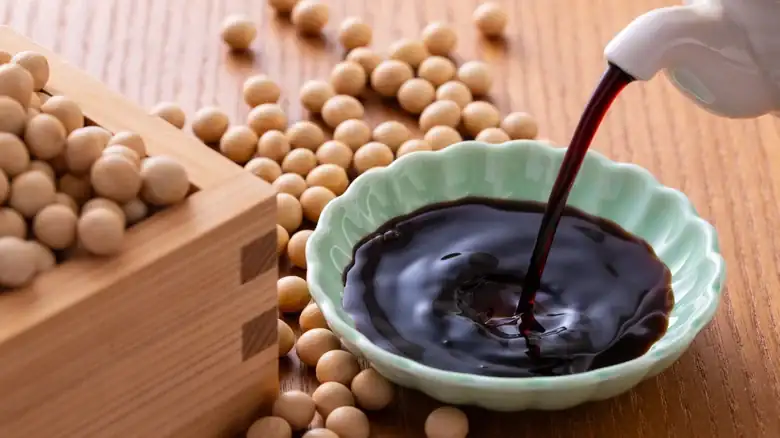
If you're looking for a tastier soy sauce that has real nuance, then you'll want to avoid the acid hydrolysis soy sauce. If you do a blind taste test, you'll likely notice a difference: The fermented sauce has a savory depth that has a deep umami flavor with sweet and sour notes. It should also have a complex scent, thanks to the various compounds that form during fermentation. The industrial versions will be have a flat flavor and smell, often with little more than a strong hit of saltiness. You may also notice color differences: The fermented sauce should be a lighter red-brown shade that lets through some light, while the chemical one is darker and without any translucence (bear in mind that this may be harder to spot if you're looking at dark soy sauce, as compared to its light counterpart).
Even if taste isn't an issue for you, there's one health reason to potentially avoid the imitation soy sauce. The acid-hydrolysis method brings in hydrochloric acid to rapidly break down soy and wheat proteins at high heat. This can create a byproduct called 3-MCPD, and some food safety authorities have flagged this as a possible carcinogen with possible negative impacts on kidney and nervous system health, although these issues are based on animal studies. As a result, food regulators in some places cap the permissible levels of 3-MCPD in food. Naturally brewed soy sauce carries less risk, as the fermentation process produces effectively no 3-MCPD.