How to cook leeks without them becoming stringy or watery?
We love leeks in soups, tarts, fondues, or gratins. But if they're not cooked properly, they can quickly become tough. And the problem often stems from two things: keeping parts that are too tough, or not respecting the correct cooking time. So, to get good leeks...
And the problem often comes from two things: we keep parts that are too hard, or we don't respect the correct cooking time.
So, to get leeks
Before cooking: remove anything that will remain too hard
The white part of the leek is the most tender. The light green part is also very good to cook. However, the dark green leaves are often tougher and more fibrous. For a fondue, tart, or gratin, mainly use the white and tender green parts. The tougher parts can be used in a blended soup or broth. If you cook everything briefly, some of the leaves may remain.
Clean them between each leaf
Leeks often hide dirt between their leaves. Split them lengthwise, gently open the layers, and then rinse them under cold water. For a fondue, you can also slice them into rounds and then rinse them in a large bowl of water. The dirt will sink to the bottom; simply drain the leeks. Before cooking, shake them well or spin them in a salad spinner. The less wet they are when they go into the pan, the less water they will release.
In a pan: 15 to 20 minutes for a successful fondue
This is the ideal method for a leek fondue, tart, or filling. Slice the leeks into thin rounds or half-rounds. Heat a little butter or olive oil, add the leeks, season lightly with salt, and cook over medium-low heat. Cover for the first 8 to 10 minutes to soften them, then remove the lid to allow the water to evaporate. This prevents the fondue from becoming too watery.
Cover for the first 8 to 10 minutes to soften them, then remove the lid to allow the water to evaporate. This prevents the fondue from becoming too runny.
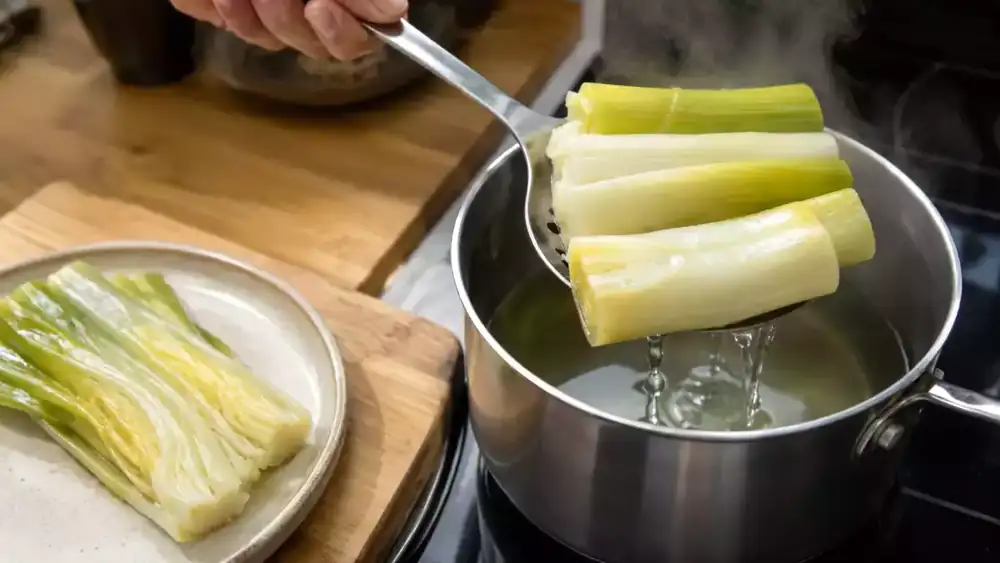
Steaming: 10 to 15 minutes depending on size
Steaming is a practical method if you want tender leeks without drowning them in water. Cut them into even pieces or halve them. The test is simple: the tip of a knife should pierce easily, but the leek shouldn't be crushed. After cooking, let them drain well for a few minutes.
Expect to pay approximately
The test is simple: the tip of a knife should go in easily, but the leek shouldn't be crushed. After cooking, let them drain well for a few minutes.
In water: 10 to 12 minutes, then draining is mandatory
Boiling is ideal for leeks vinaigrette or soups. Bring a pot of salted water to a boil, add the leeks, and cook. For soup, it's fine if they're a little more tender. For a salad or leeks vinaigrette, avoid cooking them for more than 12 minutes if you want them to retain their shape. Then, drain them thoroughly. Leeks retain a lot of water. You can even place them on paper towels or a clean tea towel.
For soup, it doesn't matter if they are a little more tender.
In the oven: 25 to 35 minutes for a more roasted result
In the oven, leeks develop a sweeter, slightly caramelized flavor. Cut them into pieces, drizzle with oil, season with salt and pepper, then spread them out in a dish or on a baking sheet. Don't overcrowd them. If the dish is too full, the leeks will steam and release water instead of roasting.
Count
For a soup: 20 to 25 minutes is enough
In a leek and potato soup, there's no need to cook it for an hour. Once the leeks have softened for a few minutes in a little oil or butter, add the potatoes and liquid. Since the soup is blended, the slightly greener parts can be used, but avoid the really tough leaves if you want a smooth texture.
Expect to pay approximately
Since the soup is blended, the slightly greener parts can be used, but still avoid the really tough leaves if you want a soft texture.
For a tart or a gratin: pre-cooking is essential
This is often where leeks make everything soggy. If you put them raw in a tart or gratin, they'll release water during cooking. The best approach: pre-cook them in a pan. For a gratin, you can also steam them for 10 to 15 minutes, but you'll really need to drain them well before putting them in the dish.
The right thing to do: pre-cook them in a pan.
For a gratin, you can also steam them for 10 to 15 minutes, but you will really need to drain them well before putting them in the dish.
The classic mistake: keeping the lid on until the end
Covering at the beginning helps the leeks soften. But if you leave the lid on until the end, all the moisture stays in the pan. The result: a fondue that's too runny, a soggy tart, or a gratin that releases water when you cut it. The right way is simple: cover at the beginning, then cook uncovered at the end. The leeks will soften.
How to season them without weighing them down
Leeks love simple seasonings: butter, olive oil, cream, mustard, lemon, curry, nutmeg, cheese, salmon, or ham. For a fondue, a spoonful of cream and a little mustard work perfectly. For soup, potato and leek remain an unbeatable combination. For a tart, consider cheese, eggs, herbs, or fish. A helpful tip: add the seasoning at the end of cooking, once the water has evaporated.
Ideas for cooking them without getting bored
Leeks are perfect in a simple, family-style tart. For a wonderfully creamy result, leek fondue is always a safe bet. In a gratin with ham and cheese, they become much more indulgent. And when you're craving something comforting, leek and potato soup is a sure winner.
A good summary of cooking times
For a pan-fried leek fondue, allow for... And above all, remember this: to avoid soggy leeks, you must cook them long enough for them to become tender, but also allow the water to evaporate. This detail makes all the difference between bland leeks and truly melt-in-your-mouth leeks.
And above all, remember this: to avoid soggy leeks, you have to cook them long enough so that they become tender, but also let the water evaporate.
Editorial manager who can't wait for winter so she can eat raclette! Passionate about gastronomy and always on the lookout for new culinary gems, I initially studied law before returning to my first love: the taste of good products and the pleasure of sharing around the table :)