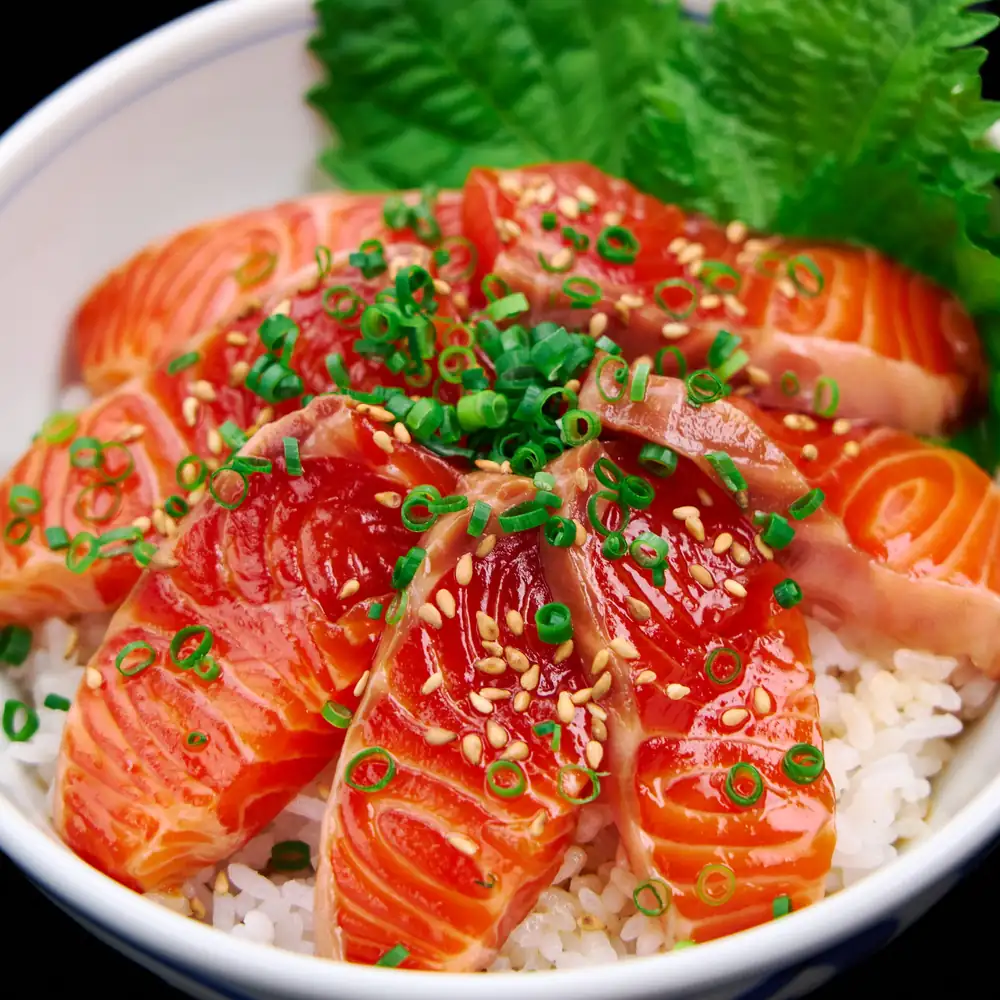
Salmon Sashimi Donburi
Whenever I visited my grandparents in Kyushu as a kid, there was one dish I always hoped would be on the table: zuke donburi (漬け丼), or marinated sashimi bowl. They usually made it with katsuo (skipjack tuna), but this method works beautifully with almost any sashimi-grade fish.
- 200 grams salmon ((sashimi quality))
- 3 tablespoons soy sauce
- 1 1/2 tablespoons mirin
- toasted sesame seeds
- scallions
- 2 servings cooked Japanese short-grain rice
- Use a long, sharp knife to slice 200 grams salmon into 1/4-inch thick pieces of uniform size (see the video above for technique).
- In a bowl, stir together 3 tablespoons soy sauce and 1 1/2 tablespoons mirin. Add the salmon slices and agitate gently to coat them evenly in the marinade.
- Cover and refrigerate for 10–20 minutes. The longer it marinates, the firmer and saltier your salmon zuke will become.
- To serve, divide 2 servings cooked Japanese short-grain rice between two donburi bowls. Top each with the marinated salmon sashimi. Drizzle a bit of the remaining marinade over the rice, then garnish with toasted sesame seeds and chopped scallions.
Today, I'm showing you how to make my zuke salmon donburi recipe, also known as sake don. With just a quick soak in soy sauce and mirin, raw salmon is transformed, yielding a luxuriously velvety texture while supercharging it with loads of umami.
Each bite is rich, clean, and full of umami with a supple texture and surprising depth for such a simple dish. Just slice, marinate, and serve the salmon over hot rice for an effortlessly comforting Japanese meal. Let's take a closer look at what makes this dish so good.
Why My Recipe Works
Marinating enhances texture and flavor - Salmon is naturally tender and can turn mushy when warmed. A short soak in sashimi marinade firms it up, giving the fish a velvety texture by drawing out moisture and gently restructuring its proteins. It also seasons the sashimi, infusing it with rich umami from the natural glutamates in soy sauce and mirin.
Two dishes in one - Brew a pot of hot sencha (green tea) or hōjicha (roasted green tea), and halfway through your bowl, you can transform this sake don into a soul-soothing zuke chazuke.
Quick & cool - This dish comes together in minutes, and if you've got a rice cooker, you don't even need to fire up the stove.
Salmon - I used steelhead (which is technically a type of trout), but any well-marbled fish that's safe to eat raw will work. While using fresh salmon is key, it's not the only factor; wild fish can carry parasites, so it's crucial to buy from a trusted market and ensure it's labeled for raw consumption (e.g., sashimi grade or sashimi quality).
Soy sauce - Cures the fish while adding umami depth, balanced salinity, and a touch of color. Look for naturally brewed Japanese soy sauce. It offers a milder, more nuanced flavor that won't overpower the delicate salmon.
Mirin - Adds mild sweetness, a glossy sheen, and umami-rich amino acids. It does contain alcohol, so if you're concerned, you can briefly boil the marinade to burn off most of it. Just be sure to cool it to room temperature before adding the fish. When choosing mirin, look for true brewed mirin-not "mirin seasoning," which is mostly corn syrup and additives. No mirin? Substitute 1 tablespoon water, ½ tablespoon sugar, and a pinch of MSG.
Toasted sesame seeds - Crunchy pops of nutty texture make this the perfect garnish to contrast the salmon and rice.
Scallions - Green onions add a fresh, crisp flavor that cuts through the richness of the fish. You can also try green shiso leaves or kaiware daikon (radish sprouts).
Other Garnishes - I added some green shiso leaves for an extra pop of color, but kizami nori, wasabi, avocado, or edamame are all fantastic additions to this rice bowl.
Japanese short-grain rice - It wouldn't be a rice bowl without the rice, and I recommend using Japanese short-grain rice, which is often labeled "sushi rice." If you want to go healthier, brown rice is also a good option. I used a rice cooker, but if you need stovetop instructions, check out my perfect rice tutorial.
Remove any pin bones, pat the fish dry with paper towels, and slice it into even ¼-inch-thick pieces.
Tip: Use a long, sharp knife (such as a sashimi knife) so you can slice the salmon in a single, clean pull to avoid tearing the delicate flesh.
Make the Marinade
Stir the soy sauce and mirin together in a medium bowl.
Add the fish and gently mix with your fingers to coat each slice evenly.
Cover and refrigerate for 10-20 minutes.
Science: The salt and sugar in the marinade draw out excess water and trigger structural changes in the protein, firming the texture and enhancing flavor.
Assemble the Donburi
Divide hot cooked rice between two bowls.
Arrange the marinated salmon sashimi strips over the rice.
Drizzle a spoonful of the marinade over each bowl.
Garnish with toasted sesame seeds and chopped scallions.
Serve This With
Round out your salmon zuke donburi with a few easy Japanese dishes for a complete weeknight dinner. Prep a batch of my Sushi Ginger (Gari) ahead of time for a spicy-sweet palate cleanser between bites. To get your veggies in, try my vinegared Sunomono Cucumber Salad or savory-sweet Japanese Seaweed Salad. You can also toss together a simple green salad and drizzle it with my Creamy Japanese Sesame Dressing. Want more protein? Hiyayakko (Cold Tofu Salad) is a cool, refreshing contrast on a hot summer day. And no Japanese meal feels complete without a comforting bowl of Miso Soup, loaded with whatever veggies you've got in the fridge.