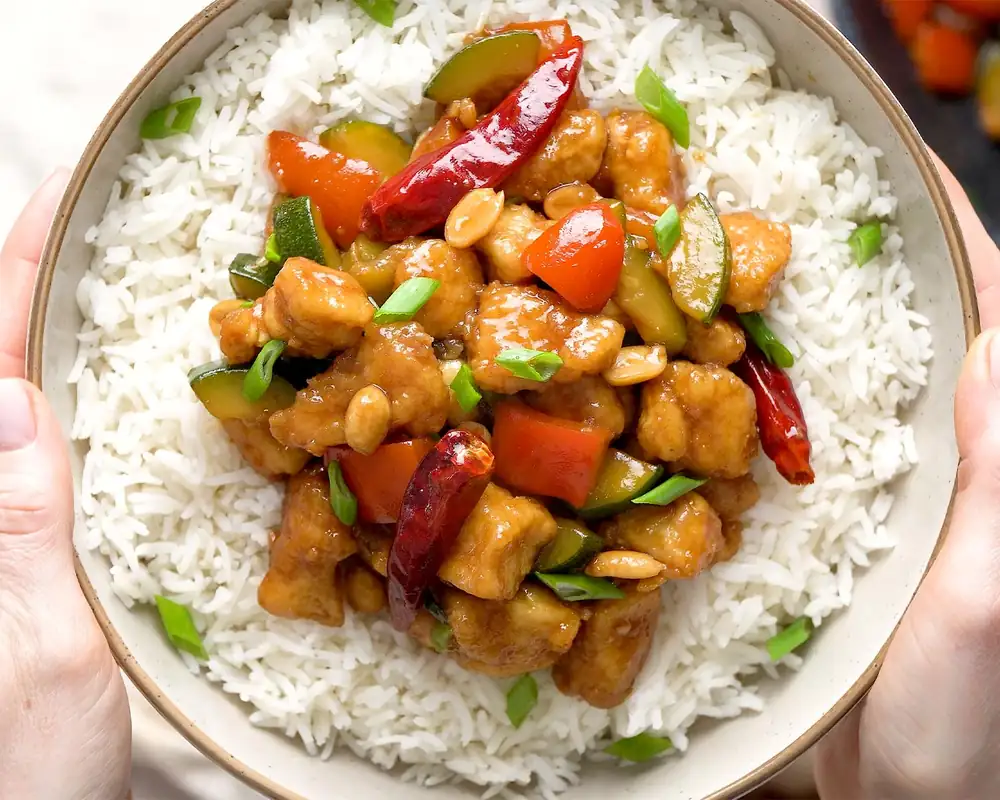
I’ll Never Order Kung Pao Chicken Again After Making This
This Kung Pao Chicken is bold, saucy, and absolutely better than takeout. Tender chicken, crisp bell peppers, zucchini, and peanuts all tossed in a glossy, spicy sweet sauce that comes together in just 30 minutes. It’s faster than delivery, better than takeout, and completely doable on a weeknight.
- 1 pound chicken breast (boneless and skinless, cut into small cubes)
- ¼ cup cornstarch
- 2 tablespoons soy sauce (low sodium)
- 2 teaspoons dark soy sauce
- ½ cup chicken broth (low sodium or no sodium added)
- 2 tablespoons Shaoxing wine
- 1 teaspoon cornstarch
- 4 tablespoons peanut oil (divided)
- 2 cloves garlic (minced)
- 1 teaspoon ginger (minced)
- 1 medium red bell pepper (cut into small 3/4 inch cubes)
- 1 large zucchini (cut into 3/4 inch cubes)
- 10 dried red chilies
- 3 green onions (thinly slices)
- ¼ cup peanuts (dry-roasted, unsalted)
- In a small bowl whisk together all the sauce ingredients. Set aside.
- Toss the chicken with the cornstarch, ensuring each chicken pieces is covered in cornstarch. Set aside.
- The chicken will have to be cooked in 2 batches. Add about 1 tablespoon of the peanut oil to a hot wok or skillet. Add about half the chicken (shaking off any excess cornstarch) and cook for 3 to 4 minutes, stirring occasionally, until chicken is cooked through. Transfer to another plate. Add another tablespoon of peanut oil and repeat with remaining chicken. Transfer the chicken to the plate and set aside.
- Add the remaining 2 tablespoons of peanut oil to the wok and heat. Stir in the garlic, ginger, bell pepper, zucchini and stir-fry for 1 minute. Pour in the sauce and bring to a boil, while stirring. You’ll notice the sauce start to thicken from the cornstarch.
- Once the sauce thickens slightly, add the chicken back to the wok, the red chilies, green onions and the peanuts. Stir everything together so that everything is coated in the sauce and cook for another minute.
- Serve this is over cooked rice such as Jasmine rice or Basmati rice. You could also serve it over noodles.
There’s something about Kung Pao Chicken when it’s done right. The chicken is tender with those golden edges, the sauce clings in that glossy, almost scandalous way, and the heat from the chilies sneaks in just enough to make you pay attention. Then you get the crunch from the peanuts, the snap of bell pepper, the soft bite of zucchini, and suddenly takeout feels… unnecessary.
This version is bold without being aggressive, saucy without drowning everything, and balanced in that spicy-sweet-salty way that makes you go back for one more forkful. It comes together in 30 minutes, which means you can have something that tastes like you planned ahead, even if you absolutely did not.
Better Than Takeout: The sauce is glossy, balanced, and actually tastes fresh. Not overly sweet, not drowning in oil, and not sitting under a heat lamp. You control the spice, the salt, and the quality of everything in the pan.
Loaded With Veggies: Bell peppers and zucchini bring crunch, color, and just enough freshness to balance the richness of the sauce. It’s not just chicken in brown sauce. It’s a proper skillet of food.
Ready in 30 Minutes: Once everything is chopped, this moves fast. High heat, quick stir fry, sauce thickens in seconds, done. Weeknight friendly without tasting like a shortcut.
That Sauce: Salty, slightly sweet, gently spicy, with depth from the Shaoxing wine and dark soy. It clings to every piece of chicken and coats the vegetables beautifully.
Customizable Heat Level: Love it spicy? Crush the dried chilies. Prefer mild? Use fewer or remove them before serving. You’re in charge.
Dried Red Chilies: They give heat, but also aroma. If you want more spice, lightly crush them before adding. If you’re heat sensitive, remove them before serving. You control the drama.
Red Bell Pepper: Adds sweetness and crunch. It balances the heat and gives that bright pop of color that makes the whole dish look fresh instead of muddy.
Zucchini: Yes, we’re keeping it. It softens just slightly but still holds shape, and it soaks up that sauce beautifully. It also makes this feel more veggie loaded and less like straight protein.
Peanuts: Non negotiable in my opinion. They give crunch and that nutty contrast against the glossy sauce. If you must swap, cashews work, but peanuts are classic.
Don’t overcook the vegetables: You want crisp tender, not soft and sad. High heat, quick toss, done.
Whisk together the soy sauce, dark soy sauce, chicken broth, Shaoxing wine, and cornstarch in a small bowl. Set it aside.
Do yourself a favor and whisk it again right before pouring it into the pan. Cornstarch sinks. It always does.
Toss the diced chicken with cornstarch until every piece is lightly coated.
Heat 1 tablespoon peanut oil in a very hot wok or large skillet. Add half the chicken, shaking off excess cornstarch, and cook for 3 to 4 minutes until golden and cooked through. Remove to a plate and repeat with another tablespoon oil and the remaining chicken.
Do not crowd the pan. If you dump it all in at once, it steams. We want golden edges.
Add the remaining oil to the wok. Toss in garlic and ginger and cook for about 30 seconds, just until fragrant.
Add the bell pepper and zucchini and stir fry for about 1 minute. High heat, quick movement. The vegetables should stay crisp tender, not soft.
Pour in the prepared sauce and bring it to a boil while stirring. Within a minute or two it will thicken into that glossy, clingy sauce we’re after.
Return the chicken to the wok along with the dried red chilies, green onions, and peanuts.
Toss everything together until coated and hot. Cook for about 1 more minute, just enough for the flavors to come together.
Serve immediately over hot jasmine rice. Do not let it sit around. This is a straight from the pan to the plate situation.
That beautiful, clingy, glossy sauce you get at a good restaurant does not happen by accident. It’s a combination of heat, timing, and restraint.
First, make sure your pan is hot before the sauce goes in. When you pour it into the wok, it should immediately start bubbling. That rapid simmer activates the cornstarch and thickens the sauce properly instead of turning it dull and heavy.
Second, whisk the sauce again right before adding it. Cornstarch settles at the bottom. If you skip that step, the sauce won’t thicken evenly and you’ll wonder what went wrong.
And finally, don’t drown the chicken. The goal is for the sauce to reduce just enough to coat every piece in a shiny layer. It should cling, not pool. Once everything is glossy and coated, you’re done. Overcooking at this stage will make the sauce tight and sticky instead of silky.
High heat. Quick reduction. Stop when it looks right.
That’s the difference.
Stir fry is fast cooking. Blink and you’ve overdone it. So here’s your cheat sheet.
Have everything prepped before you start. Once the pan is hot, there’s no time to chop. Sauce mixed, vegetables cut, chicken ready. Stir fry waits for no one.
Use high heat. This is not a low and slow situation. High heat gives you browning, keeps the vegetables crisp, and prevents the chicken from steaming.
Cook the chicken in batches. Crowding the pan drops the temperature and you lose that golden crust. Give the chicken space so it can actually sear.
Don’t overcook the vegetables. They should stay crisp-tender, not soft and sad. A minute or two in a hot wok is plenty.
Add the sauce last and cook just until glossy. Once the sauce thickens and coats everything, stop. That shine is your signal.
Is Kung Pao Chicken supposed to be spicy?
Traditionally, yes. It gets its heat from dried red chilies, but the beauty of making it at home is that you’re in control. Leave the chilies whole for moderate heat, break them in half if you like it spicier, or use fewer if you’re cooking for someone who thinks black pepper is aggressive.
What makes this better than takeout?
The texture and balance. The chicken actually browns instead of steaming, the vegetables stay crisp, and the sauce isn’t overly sweet or gloopy. You get real flavor, real heat, and real contrast instead of something that’s been sitting under a heat lamp.
Do I really need Shaoxing wine?
It makes a difference. That subtle depth is what gives the sauce that restaurant style flavor. If you don’t have it, dry sherry is a great substitute. Mirin works in a pinch. The dish will still be good without it, just not quite as layered.
Can I make this ahead of time?
It’s best right after cooking when the sauce is glossy and the vegetables still have bite. Leftovers keep well in the fridge for up to 3 days though. Reheat gently in a skillet with a splash of broth or water to loosen the sauce and bring it back to life.
Why isn’t my chicken browning properly?
Most likely the pan wasn’t hot enough or it was overcrowded. High heat and cooking in batches are key here. Give the chicken space and let it sit for a minute before stirring so it can develop that golden crust.
Can I add more vegetables?
Of course. Broccoli, snap peas, carrots, or even mushrooms work beautifully. Just keep the heat high and don’t overcook them. This dish is all about that balance of tender chicken, crisp vegetables, and glossy sauce.
Kung Pao Chicken is loaded with tender chicken, crisp bell peppers, zucchini, crunchy peanuts, and tossed in a bold, glossy homemade sauce. It’s spicy, savory, slightly sweet, and perfect for an easy weeknight dinner.