How To Make Fish Stock
Fish stock (or fumet as it’s known when concentrated) is one of the quickest, freshest, most fragrant stocks out there, and it is of course very resourceful, sustainable and satisfying to get use out of every part of the animal you’re eating.
- 1kg fish bones, chopped down into 5cm pieces and cleaned
- 1 leek, white parts only, chopped
- 1/2 fennel, chopped
- 1 stick of celery, chopped
- 1 small onion, chopped
- 1/2 garlic bulb
- 500ml of white wine
- 6 white peppercorns, (you can also use pink peppercorns for a more floral flavour)
- 1 tsp fennel seeds
- 1 sheet of kombu, (optional)
- 2 bay leaves
- parsley stalks
- 1 handful of dill
- 1 handful of tarragon
- 2 slices of lemon
- Drizzle some olive oil into a large stockpot over a medium heat and add the fennel seeds and peppercorns
- Once the seeds are sizzling, add the sliced leek, fennel, celery, onion and garlic and gently cook, ensuring you only soften and don’t colour the veg
- Add the wine, turn up the heat and reduce by half
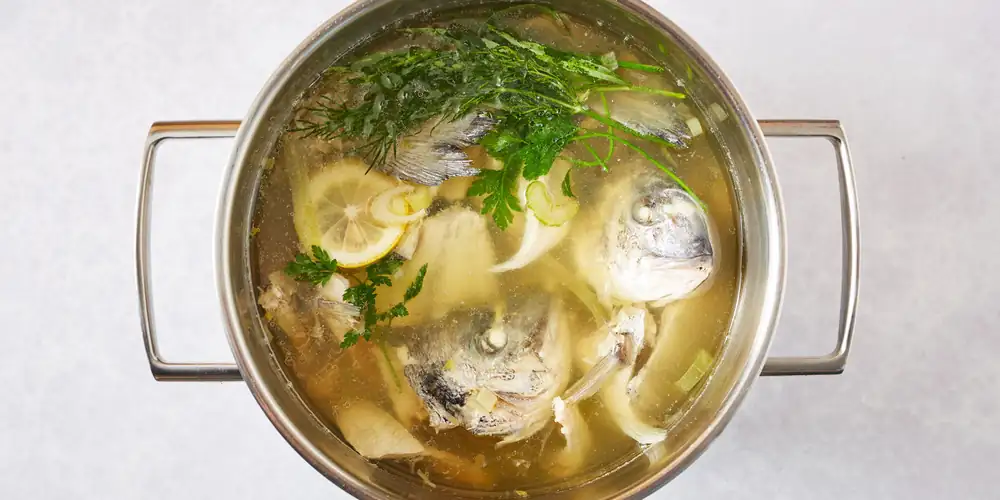
- Add the fish bones to the pan. Be careful not to stir the stock too much once the bones are in, as too much agitation of the bones will turn the liquid cloudy
- Top up with water until the bones are just covered, then add the kombu
- Bring the stock to the boil, skim off the scum, then turn down and add the bay leaves. Simmer for 20 minutes
- Turn off the heat, add the parsley stalks, herbs and lemon slices then cover with cling film and leave to infuse for a further 30 minutes
- Using a ladle, scoop out the stock and pass through a sieve lined with muslin cloth into a container. Again, be gentle and try not to unsettle the bones or you’ll end up with cloudy stock
- The stock will keep for 3–5 days in the fridge, or up to 3 months in the freezer
As with all stocks, it’s a good idea to make a big batch and freeze down portions, so you always have some to hand. The recipe below is for a big batch but you can of course scale down the amounts if you want to make a small batch to use straight away.
If you are not using surplus bones from fish you have filleted yourself, ask your fishmonger for a kilo of bones – they’ll be very cheap (or maybe even free). You must only use the bones of white fish; bass, cod and flat fish are good to use. Bones of oily fish such as salmon, mackerel or tuna are too fatty and will make your stock greasy and unpleasant. The fish bones must be cleaned of any blood and gills as these will impart a nasty, bitter taste and cloud up your stock. Fish heads add a lot of flavour and contain a lot of gelatine which will give body to your stock, but make sure they are thoroughly cleaned (and always remove the gills). A good way of cleaning the bones is to run them under a cold tap and leave them to soak in the water to allow impurities to float the surface (which you can then skim and discard).
Traditionally the vegetables used to make fish stock are fennel and celery, along with aniseed herbs like tarragon and dill. Carrots tend to be avoided, as they discolour the stock. To get the most out of your vegetables chop them nice and finely, as this gives them a larger surface area when frying them off, releasing more of their flavour. For extra umami and a natural taste of the sea, throw in a sheet of kombu seaweed.
Be careful when seasoning fish stock – if you intend on reducing it down for a sauce do not add any salt until right at the end, as the saltiness will intensify and may become overpowering. If you're using the stock straight away without reducing, however, season as normal.
The recipe below makes around 1lt of stock.