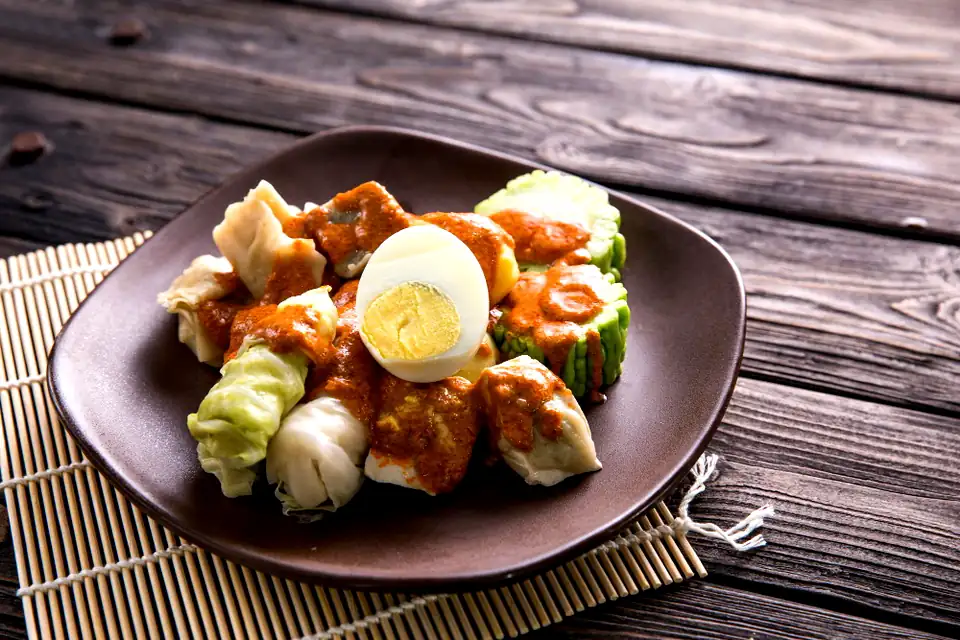
Beware! These Are the Signs of Siomay Made with Janitor Fish
Between going viral and being an open secret, it has been revealed that many dishonest siomay sellers use janitor fish as their main ingredient.
Another problem is that the janitor fish used often come from dirty, waste-filled waters like rivers in big cities and even disgusting sewers. Therefore, it's important to recognize the characteristics of janitor fish siomay to avoid buying the wrong one and ensure it's healthy.
The Increasingly Worrying Sweeper Fish
Photo source: @ariefkamarudin
In recent months, a content creator named Arief Kamarudin has become a social media sensation for his efforts to eradicate janitor fish. The man from Lenteng Agung, South Jakarta, independently shared his journey along the Ciliwung River to eradicate janitor fish. Arief captured and collected these highly invasive fish for later destruction.
Arief's activism stems from his concern about rivers infested with these invasive fish. As reported by CNN Indonesia, Arief recalled that in the past, local fish such as baung (smelt), wild catfish, and young tawes (whitetail) were caught in nets, and even numerous water birds were still found around the Ciliwung River.
Currently, the river that crosses the DKI Jakarta Province is heavily polluted by waste and local fish are becoming increasingly rare due to the rise of invasive species such as the broom.
Naturally, Arief's activism became a topic of public discussion, prompting a response from the Jakarta Provincial Government. The Jakarta Provincial Government launched a simultaneous operation to eradicate the janitor fish that were increasingly infesting rivers, gutters, and waterways.
According to Kumparan, during an operation on April 17, 2026, 6.98 tons of this tough-shelled fish were collected in just 3.5 hours. This fish is so invasive that its numbers are alarming!
Getting to Know the Broom Fish
Photo source: Istockphoto
The janitor fish, which is widespread in Indonesian freshwater, is not actually native to Southeast Asia. According to Digitani.IPB, this freshwater fish, belonging to the genus Pterygoplichthys, originates from fast-flowing, clear rivers in South America, such as Brazil, Peru, and Paraguay.
They have the ability to survive in waters with low dissolved oxygen levels, making them one of the most adaptable fish species.
When it comes to food, this fish, which has the characteristic of a super hard, protective-like scale surface, is known as an opportunistic omnivore.
Growing up to 35-40 cm in length and featuring a suction-like mouth on the underside, this fish is known for its ability to eat algae, seaweed, moss, and other fish waste. They were initially imported to Indonesia for their ability to clean algae and debris from the bottom of aquariums and ponds.
This is what earned it the nickname "janitor fish." However, many people throw or release these fish into rivers, posing a major threat to local aquatic ecosystems.
So, is the janitor fish actually edible? The answer is YES, and native South Americans often use it as a favorite source of protein. However, due to its omnivorous and sucking nature, this fish's meat can be extremely dangerous if its habitat is also polluted.
For example, in the wild janitor fish found in rivers in Greater Jakarta (Jabodetabek), industrial waste containing heavy metals such as mercury, lead, and cadmium has been found. Long-term exposure to heavy metals can have detrimental health effects, including organ damage and neurological problems.
Another highly detrimental characteristic is its ability to eat anything in its path, including the eggs and young of local endemic fish. This has made it one of the main causes of the increasing scarcity of several local fish species in Indonesian waters.
Its highly adaptive abilities, including in polluted waters, make this fish seem to be the sole inhabitant that dominates rivers in urban areas such as Jabodetabek.
Recognizing the Characteristics of Siomay from the Janitor Fish
The news that many people living along the banks of the Jakarta river use janitor fish as an ingredient for their siomay business has been heard for a long time.
The abundance of this fish in rivers and urban drains makes it incredibly cheap. Many unscrupulous siomay vendors use this contaminated fish to cut production costs, rather than using sea fish like mackerel.
1. Dull Color and Dark Fish Flesh
Photo source: Istockphoto
Siomay made from janitor fish can be identified by its color. Unlike mackerel, which has the fresh color typical of sea fish, the meat of janitor fish grown in polluted waters is darker. When made into siomay, these siomay tend to have a dull, grayish color.
So, when you're buying street-side siomay, first pay attention to the color of the siomay, even if it's still unseasoned. Fresh siomay made from mackerel is cleaner and more appetizing, rather than dull and unappetizing.
Unfortunately, the siomay served with peanut sauce, chili sauce, and soy sauce obscures its true color. So, be sure to check the actual color before purchasing!
2. Sharper and Stranger Fishy Smell
Photo source: Istockphoto
The second characteristic that distinguishes janitor fish siomay from other fish is its distinct aroma. Siomay made from fresh mackerel will have a subtle aroma with a subtle fishy flavor.
Meanwhile, the characteristic of siomay made from janitor fish is its very strong fishy aroma even though it has been mixed with other additional ingredients.
Furthermore, because the janitor fish has absorbed a significant amount of heavy metals and other waste, it smells like rotting fish. This extremely fishy to slightly putrid aroma will undoubtedly affect the taste and texture of the siomay itself.
In addition, for those whose digestive system is quite sensitive, they can immediately react with nausea, vomiting, and diarrhea when eating broom dumplings.
3. The price is cheap and unreasonable
Photo source: Istockphoto
Consumers are often tempted by street vendors selling siomay at exorbitantly low prices. However, as previously mentioned, many unscrupulous vendors deliberately cut production costs by using ingredients like janitor fish.
If you find a trader who deliberately sells siomay at a super cheap price but the portion is normal, it could be a sign of siomay that uses janitor fish meat.
The price of janitor fish meat at collectors is only around tens of thousands of rupiah per kilogram. Some traders even catch their own janitor fish from rivers or ditches, saving them extra money.
Compare this with fresh mackerel meat, which can cost up to 100 thousand rupiah per kilogram.
Of course, not all cheap siomay vendors use janitor fish. They may simply reduce the amount of mackerel in their siomay by adding more flour as a chewing agent.
However, if the price is still unreasonable and there are two other characteristics as mentioned above, that's where you should start to be suspicious.
So, that's a guide to distinguishing siomay from mackerel and janitor fish. Let's start paying closer attention to what we eat to ensure our safety and health!