Recipe: How to make ricotta tart step by step
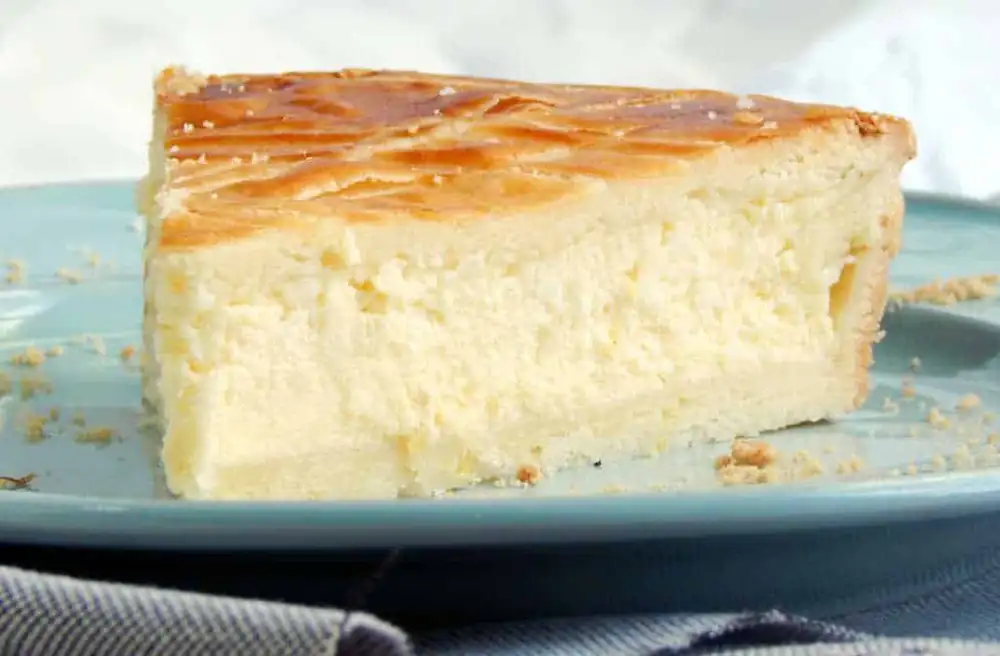
Eating it with a spoon is pure bliss. The melt-in-your-mouth pastry, the perfect balance of sweet, tangy, and dairy flavors—pure pleasure.
Of course, there isn't just one recipe for ricotta tart, but the final result is what truly matters to determine its quality. There's the classic ricotta tart, pure softness and good humor. And then there are the others, well, let's just say they're not great. If the ricotta tart has crusts that have separated from the filling and the ricotta looks solid and dry (they added too much cornstarch), what a disappointment! To avoid such a bitter feeling, you need to learn the perfect recipe. Follow these tips; they never fail.
Frolla, la masa para la tarta de ricota clásica
Like pastafrola (if you're tempted, you can check out this post we wrote a while back), ricotta tart is made with a crumbly pastry, meaning it crumbles easily. To achieve this texture, you combine the ingredients without kneading: rub the butter into the flour with a spatula until it resembles coarse breadcrumbs, then rub it in. What?
Milling and milling. Once you've achieved the sanding, comes milling. It's a pastry technique that consists of flattening the dough with the base of your thumb (twice, for example) and joining it together to form a block.
Why shouldn't you knead it? To prevent the gluten in the flour from developing. Also, by combining the liquids first, they get trapped in the butter and don't hydrate the flour. All this technical stuff is the key to achieving that divine bite where the dough melts in your mouth. In other words, don't mess with it; this isn't bread.
Butter vs. margarine. Are they the same? No. Margarine changes the flavor of the dough and makes it stiffer; it's the kind of dough that falls apart. Got margarine? Go for it. Butter is better than butter.
Ricotta. For the tart, it's best if it's full-fat and has a moist consistency, but not runny. If it's too runny, strain it first. If it's too firm, you can blend it slightly. Light or rich. The ricotta filling also includes cream cheese. But if you want it richer, you can use heavy cream (wink).
Other options are also possible. Some bakers add two stiffly beaten egg whites to the filling to give it "air." Others only use egg yolks in the pastry and whites in the filling (to keep it pure white). The choice is yours.
Endless possibilities! If you want to add dulce de leche, the best way is to line the pan with the pastry and spread the dulce de leche layer before adding the ricotta filling (tip: use a piping bag so you don't tear the pastry, and warm the dulce de leche slightly so it spreads more easily). You can also add raisins, chocolate chips, berries, orange instead of lemon, ginger. Whatever you like.
The authentic ricotta tart recipe
Beat 200g of softened butter with 150g of sugar until light and fluffy.
Add the zest of 1/2 lemon, 1 tbsp of vanilla essence and two eggs one at a time.
Sift 400g of flour with 10g of baking powder and a pinch of salt.
Make a well in the center of the flour on the counter and pour the butter mixture into the center. Using two spatulas, work the mixture until combined. Once the mixture has a crumbly texture, gently press it together with the palm of your hand (without kneading, combining the ingredients in a few simple movements).
Form a block, wrap in film and refrigerate for at least one hour (it can be overnight).
For the ricotta tart filling: Combine 600g of whole ricotta cheese with 200g of cream cheese and 5 egg whites. Add 150g of sugar and the zest of half a lemon.
Make an easy ricotta tart
To assemble the tart, remove the dough from the refrigerator and break it up so you can roll it out. Divide it into thirds for the top; two-thirds for the base and sides of the pan. Roll it out to a thickness of 5 mm (or less if you prefer it thinner). Lift the dough with the rolling pin and line a greased 24 cm tart tin, making sure the edges are well covered without tearing the dough.
Fill the tart shell. Brush the edges with beaten egg so the top crust sticks. Cover, press the edges together, and trim off any excess dough with a rolling pin (use the scraps for cookies). Prick the top with a fork to allow steam to escape during baking. Bake at 170°C (340°F) for 35 to 40 minutes. Make it today, let it cool in the refrigerator, and eat it tomorrow. Turn it out onto a baking sheet and dust with powdered sugar.
Easy no-bake version. Line a 24cm tart tin with sponge cake or the classic mixture of 300g of cookies and 100g of melted butter (chill for at least an hour). For the filling, mix 600g of ricotta cheese, the zest of 1 lemon, 200g of sugar, and 200ml of whipped cream (no egg needed since it's not baked). Fill the tart and refrigerate for about 5 hours. No top needed. Ready to go, time to get the coffee ready!