Comfort with contrast: the taste of autumn 2026 in professional catering
Autumn has always been the season of comfort food. But this year it demands something more: customers want to be reassured and surprised in the same bite.
What is “comfort with contrast”?
On one side, there's a consumer who, between pressured purchasing power and the return to routine after the summer, seeks comforting dishes: baked pasta, risotto, braised meats, and desserts from the pantry. On the other, there's the same consumer, more knowledgeable and more exposed to food content on social media, who is bored by flat sweetness and lackluster softness. The formula for autumn 2026 combines these two souls: a recognizable base—the structure of comfort—and a driving force. There are six levers: • roasting and caramelization: Maillard reaction, hazelnut butter, dried fruit; • acidity of dark fruits and vinegars; • umami: mushrooms, concentrates, aged cheeses, garum, and colatura; • sweet spiciness (the so-called "sweet heat"); • smokiness and open fire; • fermentation, from kimchi to the house's acidic giardiniera. A single, well-calibrated contrast per dish is enough to transform a classic into a signature.
Beyond Pumpkin Spice: The New Sweet-Toasty Grammar
Pumpkin spice has exhausted its novelty: it remains a symbol of autumn, but is evolving in a more culinary direction. The new protagonists are hazelnut butter, pecan, maple, chai, apple cider, speculoos, and chestnut: a toasted and buttery register that speaks the language of baked goods, not synthetic flavoring. How to bring it to the menu
In the cafe: a seasonal cappuccino or latte with hazelnut butter or chai, preferably with homemade syrup—high margin and immediate differentiation from the generalist café.
In the pastry shop: a weekend leavened product (pecan-maple swirl, chestnut Venetian) as a promo product to promote on social media.
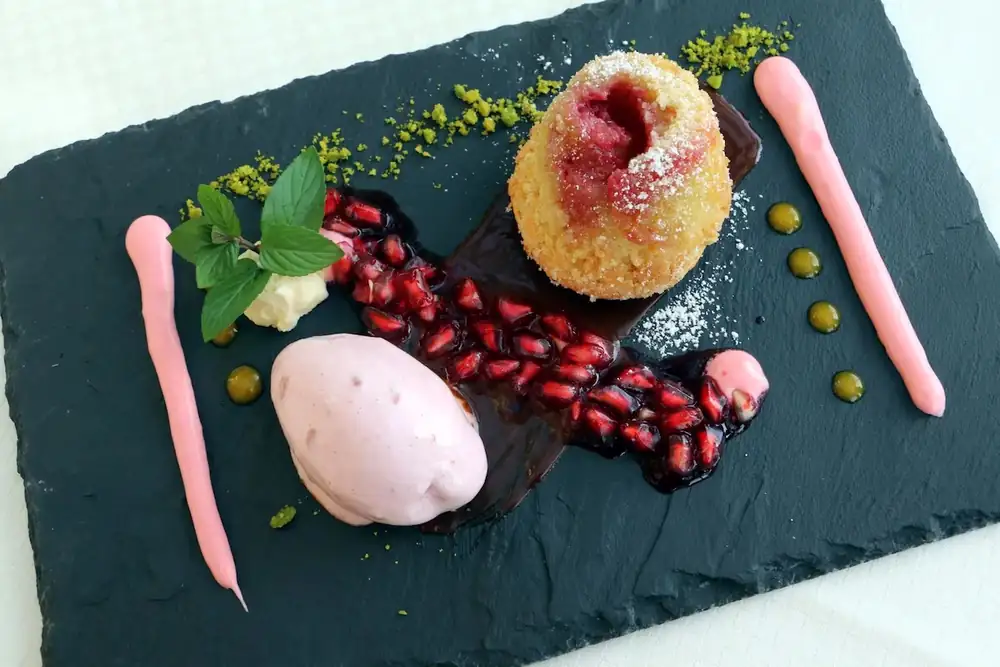
In the restaurant: a plated dessert that combines a toasted base and the acidity of dark fruit—see next point.
The fruit changes register: from citrus yellow to deep red
With September, the transition is clear: grapefruit, yuzu, and summer citrus fruits give way to plum, black cherry, blackberry, and pomegranate, with fig, pear, and blackcurrant completing the palette. It's a "jewel-tone" fruit: intense color, true acidity, and a great narrative. Its applications are transversal: • desserts: tarts, semifreddos, and contrasting coulis on buttery and toasted bases; • glazes and sweet and sour sauces for duck, pork, game, and roast meats; • mixology, where dark fruits replace citrus fruits in spritzers, sours, and non-alcoholic twists. This is good news for food costs: much of this fruit is seasonal, local, and canned, with better margins than imported exotic fruits.
Live fire, fermented foods, and mushrooms are the stars of comfort food in autumn 2026.
The Michelin Guide also lists fermented and preserved flavors, open-fire cooking, and the return of table service among its 2026 guidelines, with mushrooms promoted from garnish to star of the dish. This is a perfect boost for Italian restaurants: the September and October calendar features porcini and chanterelle mushrooms, truffles, pumpkins, and chestnuts—and the grape harvest, which for those working in wine regions means wine tourism, vineyard dinners, and special menus that can fill weekdays. How it translates into practice: A "fire menu" of 3-4 courses: grilled vegetables, skewers, whole fish, with the grill in full view as a spectacular feature. A house fermented dish (cabbage, sour pickled vegetables, fermented chili honey) to share with the dining room. Mushrooms are the main course: grilled porcini caps, cardoncelli mushrooms "tagliata," mixed mushroom ragù for the vegetarian option. Sweet heat with an Italian twist: honey and nduja, mustard and chili pepper, maple and gochujang for the more contemporary formats.
Vegetables become technical: brassicas, fibres, textures
Kale, Savoy cabbage, cauliflower, and cabbage: brassicas are moving away from their role as side dishes and taking center stage: roasted whole, glazed, chargrilled, or fermented. Along with legumes and whole grains, they capture the growing attention to fiber and prebiotic foods, an increasingly popular menu item among health-conscious consumers. The competitive advantage is twofold: low food cost and high storytelling. A whole roasted cauliflower with brown butter and a dark fruit sauce is inexpensive, beautifully photographed, and encapsulates the entire season's trend in a single dish.
Global comfort food: fusion that works
Comfort doesn't just speak Italian. The winning combination of 2026 is understandable: smashed burgers with Neapolitan ragù, bao with pulled pork in tomato sauce, tacos with octopus Luciana-style. Instant formats, highly shared on social media, perfect for reaching young audiences and tourists without distorting the restaurant's identity. The rule remains the same: start with global techniques and fill them with Italian ingredients, never the other way around.
Beverage: No/low alcohol arrives before the holidays
When it comes to the glass, the category to focus on immediately is alcohol-free wines, alcohol-free spirits, and structured mocktails. Fall is the perfect time to add them to the menu: rotations and suppliers are tested before the holidays, when business dinners and family lunches bring a surge in non-drinkers or less-drinkers, who now expect an alternative as carefully curated as the wine list. Dark fruits are also useful here: a non-alcoholic pomegranate spritz or a black cherry sour with alcohol-free bitters have seasonality, color, and edge. And they connect with the harvest season much better than any citrus fruit.
What it means for professional catering
Seasonal menu engineering: build new offerings around low-cost autumn ingredients and powerful storytelling (pumpkin, cabbage, mushrooms, chestnuts, dark fruit). A "limited edition" approach: rotating specials every 4-6 weeks are better than a fixed menu until Christmas; they keep communication alive and protect food costs. One or two social-magnet dishes with strong visual contrasts (the fire, the ruby color, the table setting) to generate spontaneous guest feedback. Dining room training: fermented, dealcoholized, and dark fruit must be showcased; contrast is sold with words even before it is with the palate. For suppliers and partners: the season opens up opportunities for dark fruit purees and semi-finished products, toasted syrups for the cafeteria, no-/low-alcohol products, and grilling and fermentation equipment. Fall 2026 doesn't require choosing between reassuring and surprising: it requires doing both on the same plate. Those who know how to balance the contrast with acidity, embers, and fermentation will transform the most “comfortable” season of the year into the most interesting from a financial perspective.