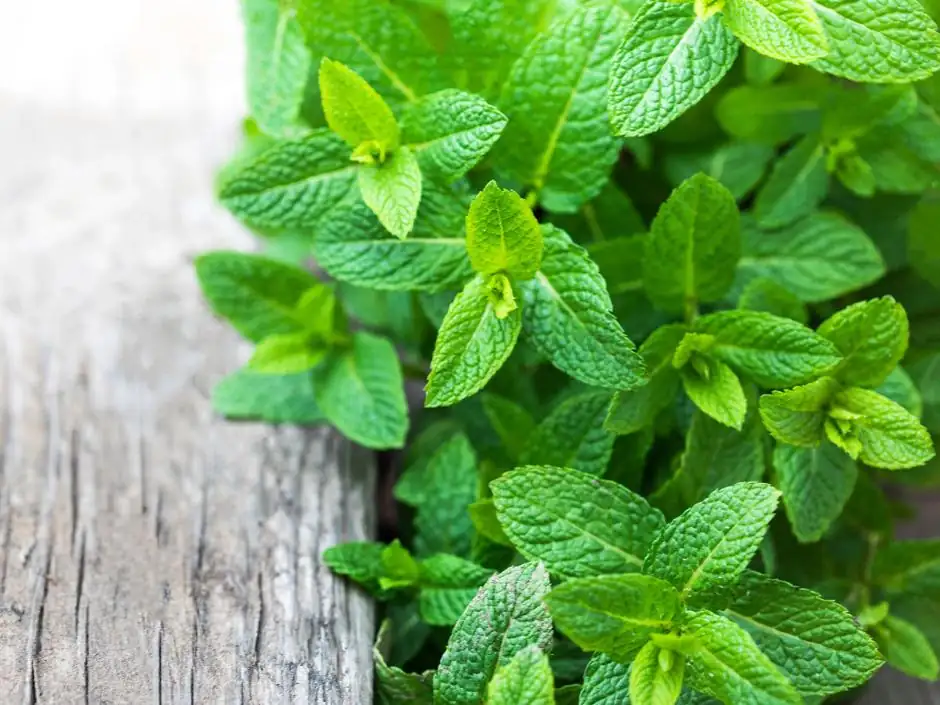
mint
There are hundreds of different types of mint that differ in appearance, aroma, and fragrance.
"Green mint" and "curly mint" are the most widespread mint varieties in our region.
Although its importance in the kitchen is rather small in this country, it is highly sought after, especially for its medicinal effects.
Nevertheless, you can find one or two dishes featuring the refreshing mint.
Peppermint is a cross between spearmint and water mint and has a high menthol content and a peppery aroma.
Ginger mint, orange mint, lemon mint, etc., have also been created through crossbreeding.
Origin & Season
- It is believed that mint was originally cultivated in the Far East.
- Meanwhile, the spice is also very widespread in Europe – it is particularly popular in Great Britain.
- Mint cultivation requires a temperate climate.
- Harvesting is possible between May and October from open-field cultivation; greenhouse-grown produce is offered for the rest of the year.
- Mint grows well in tubs or pots and is therefore ideal for balconies.
- The plant is very adaptable, requires a semi-shaded location, is winter-hardy and lasts for about 3 years.
- They should be pruned once after flowering in summer.
The taste
Mint contains menthol, which provides a refreshing taste in the mouth.
It is very spicy and can even burn in the mouth if eaten on its own.
Use in the kitchen
Mint plays hardly any role in our local cuisine.
It is all the more well-known in England, where peppermint is used in many dishes.
Mint is also a common ingredient in cooking in Turkey and Iran.
Here you can enjoy refined mint sauces, soft drinks and meat dishes.
Mint is often combined with chocolate.
Those who don't like the refreshing taste of mint in their food can also use the small leaves as decoration.
Mint goes well with the herbs:
- Basil
- Chili
- cardamom
- Coriander
- Parsley
Mint goes perfectly with:
- Yogurt
- Legumes
- Salad
- Vegetables
- Lamm
- minced meat
- potatoes
- Fruit
- Chocolate
- Etc.
Familiar and beloved salad dressings can be rediscovered time and again by adding mint.
Of course, mint is also found in many cocktails. The most famous is certainly the Mojito, but mint is also an indispensable ingredient in many non-alcoholic drinks and teas.
Never cook fresh mint, as it will lose its aroma; add it to the dish just before serving.
Dried mint, on the other hand, can also be cooked with the other ingredients.
Effect
Mint is one of the most important medicinal plants.
- Mint can have a soothing effect on cramps in the stomach and intestines or other digestive problems.
- Mint can also help with women's health problems.
- It has antibacterial properties, stimulates bile production, and can relieve cramps.
- Colds with coughs can be effectively treated with peppermint oil.
- Mint is also often used for tension headaches, itching, or irritable bowel syndrome.
However, peppermint oil can also cause heartburn if you are a little sensitive to it.
Peppermint oil should also be avoided by people who have problems with their gallbladder or liver.