From Italy to over 200 countries: this Italian food is increasingly loved (and spread)
The world puts Italy on the table: pasta arrives in over 200 countries.
Italian agri-food exports exceeded €72 billion in 2025, a new record. In the United States, tariffs slowed wine and olive oil, but not pasta, which continued to grow.
- Italian agri-food exports have exceeded 72 billion euros, supported by Made in Italy products and pasta, which is present in over two hundred markets.
- In the United States, tariffs have slowed down oil, wines and sauces, while pasta, coffee, mineral water and baked goods have continued to grow.
- The picture remains complex because imports are also rising, driven by cocoa, coffee, and other key raw materials for flagship products.
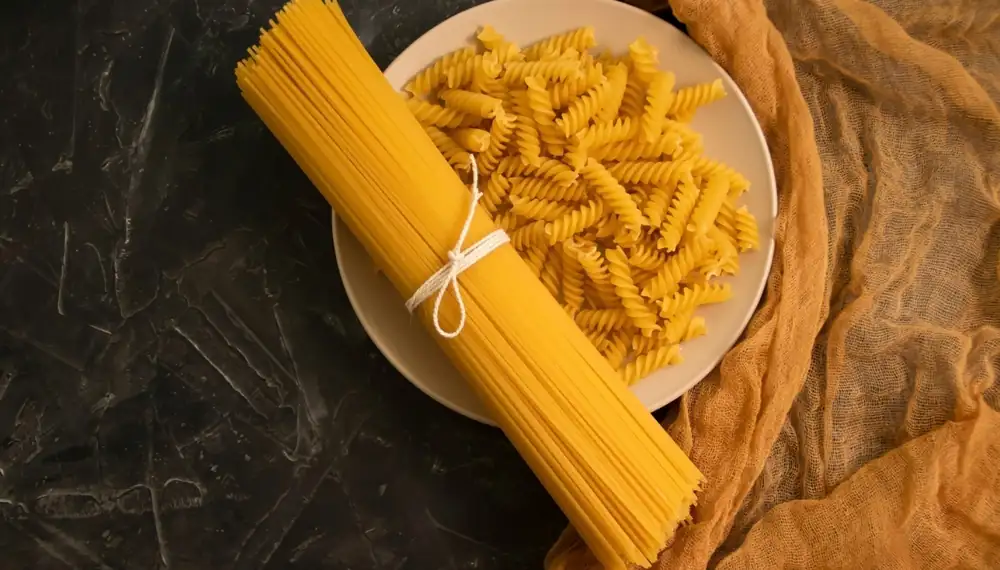
From Berlin supermarkets to New Jersey kitchens, there's one product that reaches practically everywhere: Italian pasta is present in over two hundred markets worldwide. Germany, France, the United Kingdom, and the United States remain the most loyal, but the map is expanding every year. It's the most visible symbol of an industry that just closed a record year.
According to the Report on Foreign Trade in Agri-Food Products, edited by the CREA Research Center for Policies and Bioeconomy, in 2025 Italian agri-food exports exceeded 72 billion euros, up 5.6% compared to the previous year.
A record in a difficult year
The result comes in a far from favorable environment, marked by geopolitical tensions, new trade barriers, and sharp fluctuations in commodity prices. The driving force is the so-called Made in Italy agri-food sector, i.e., products recognized abroad as typically Italian: they are worth €52.2 billion, nearly three-quarters of total exports, with growth of 3.7%. The remainder are raw materials and products that, despite originating in Italy, do not carry the label of tradition. The first five months of 2026 also confirm this stability: exports are holding up, while imports are slowing.
Pasta, the only one that doesn't fear tariffs
Europe remains the country's top customer, but the most interesting development concerns the United States. In 2025, Italian exports to the American market fell by 4.2%, to €7.55 billion. The report also attributes the slowdown to Washington's shift in trade policy and the increase in tariffs in the second half of the year.
The worst hit were extra virgin olive oil, DOP wines, liqueurs, sauces, and condiments. Yet, some products went in the opposite direction, continuing to grow despite the tariffs: pasta, mineral water, roasted coffee, and baked goods. This is the strongest sign of how Italian pasta has become part of Americans' daily habits. It's no longer an occasional purchase that's postponed when prices rise: it's a staple food, and as such, it's holding up.
Who runs and who slows down
Behind the overall record, the individual products tell very different stories.
- Cocoa-based sweets: up 21.4% in value.
- Roasted coffee: up 23.6%.
- Fresh fruit: up 14.6%.
- Cheeses: up 13.4%, with Grana Padano and Parmigiano Reggiano on the rise.
- Baked goods: up 6.5%.
However, a clarification is needed, which the report itself emphasizes. For chocolate and coffee, much of the increase is due to the rising prices of imported raw materials, cocoa and green coffee, which are reflected in sales prices abroad. Sales are higher, but not necessarily higher.
The opposite is true for extra virgin olive oil, the most curious case in the entire report. In 2025, the value of exports fell by 17.2%, but volumes grew by 18.2%. Essentially, we sold much more oil and earned much less, because international prices fell after the increases of previous years. Canned tomatoes and some wine categories also declined.
The paradox: we buy almost as much as we sell
Finally, there's the figure least likely to lend itself to triumphant headlines, and perhaps the most revealing. In 2025, Italian agri-food imports reached €72.45 billion, an increase of 10.1%. The sector's trade balance is therefore essentially balanced.
Here too, rising raw material prices are weighing heavily, especially coffee and cocoa. On the other hand, the picture depicts a country that, to produce its flagship products, increasingly relies on imported ingredients. We saw this with Spanish olive oil, and the same is true for durum wheat, coffee, and cocoa.
Italian food is conquering the world, then, but it's also doing so thanks to the world. And this doesn't detract from the record: it simply shows that the added value that transforms a raw material into a universally desired product remains the true heritage worth protecting.