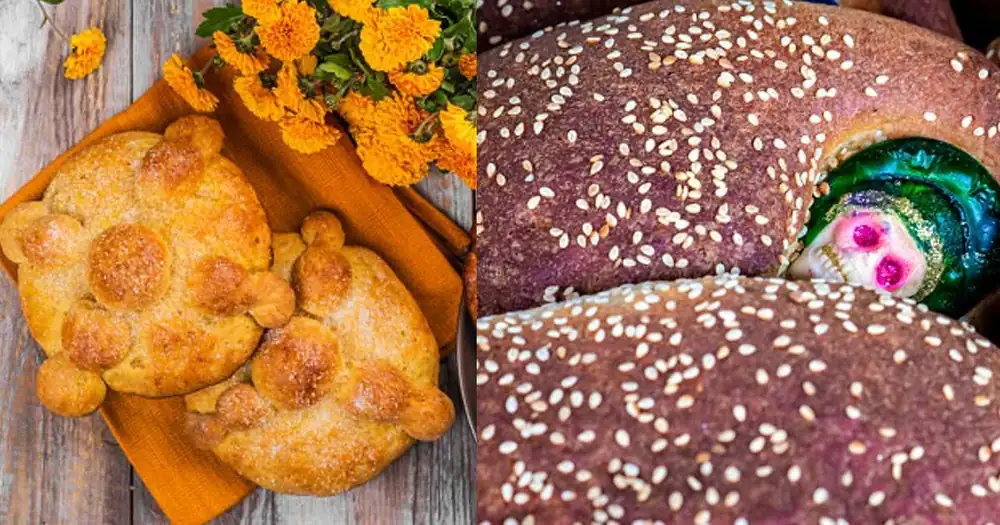
It's not just the bread with bones! 9 types of Day of the Dead bread in Mexico and where they come from
Pan de muerto is one of the most anticipated foods of the year. However, while everyone recognizes the puff pastry or bread with little bones, there's much more to it. Learn about the different types of pan de muerto in Mexico and where they come from.
CLICK ON "VIEW GALLERY" IN THE MAIN IMAGE AND LEARN ABOUT THE DIFFERENT TYPES OF PAN DE MUERTO AND WHERE TO EAT THEM.
Although times have changed and it appears earlier and earlier in bakeries, October is the month when most of us rush to our favorite places for the delicious pan de muerto, almost an addiction for bread lovers.
And while the name might frighten some foreigners, pan de muerto (bread of the dead) contains no ashes or any ingredients related to the deceased. Its name comes from the fact that, throughout history, it has been used to honor those who have passed away.
As the National Institute of Indigenous Peoples explains, this bread as we know it today was not the first version… but how did the Day of the Dead bread originate?
Its origin is linked to the offerings made by pre-Hispanic cultures for the dead. These offerings included breads in various shapes, such as butterflies or lightning bolts, made from amaranth, as well as unleavened bread, a type of dry, toasted corn bread.
According to historians, something more similar to what we know today is the huitlatamalli, a type of tamale. However, the version made with wheat flour is a result of the arrival of the Spanish, who not only introduced new ingredients but also attempted to change pre-Hispanic celebrations.
Thus came the circular bread, like the "body of Christ," with a cross. From the mixture of symbols emerged what we know today: a circle representing the cycle of life and death, crowned with a "skull" and bones in the shape of a cross.
However, this bread, which is also known as hojaldra and is very popular in central Mexico, although it is present in Aguascalientes, Baja California, Colima and other states, sometimes sprinkled with pink sugar, is not the only one.