Crispy Bang Bang tofu with creamy spicy sauce
Few ingredients divide opinions as much as tofu. This soy product often has a reputation for being bland or boring. However, the secret to successful preparation lies simply in the right technique and robust seasoning.
- 450 g firm Natural Tofu
- a neutral vegetable oil
- 60 ml plant-based milk (unsweetened, e.g. soy or rice milk)
- 1 tsp apple cider vinegar
- 2 TL Sriracha
- 1 tsp garlic powder
- 1 tsp onion powder
- 1 pinch of salt
- 70 g cornstarch
- 80 g Vegan Mayonnaise
- 2 tbsp sweet chili sauce
- 1-3 tsp Sriracha (to taste)
- 1 spring onion
- Preheat the oven to 220°C (425°F) using conventional oven settings (top and bottom heat). Line a baking sheet with parchment paper.
- Pat the tofu dry and tear it into bite-sized pieces with your hands.
- Put oil, milk, apple cider vinegar, sriracha, garlic powder, onion powder and salt into a large bowl and mix everything thoroughly.
- Place the tofu pieces in the bowl and toss them until they are evenly coated with the marinade.
- Sprinkle the cornstarch onto a plate and turn the marinated tofu in it until all pieces are evenly coated.
- Arrange the tofu pieces on the prepared baking sheet, leaving some space between them. Bake for 25-30 minutes, until golden brown and crispy all over. Turn the pieces over after 15 minutes.
- Meanwhile, mix the mayonnaise, sweet chili sauce and sriracha in a small bowl to form a creamy sauce and adjust the spiciness to your liking.
- Wash the spring onion and cut it into fine rings.
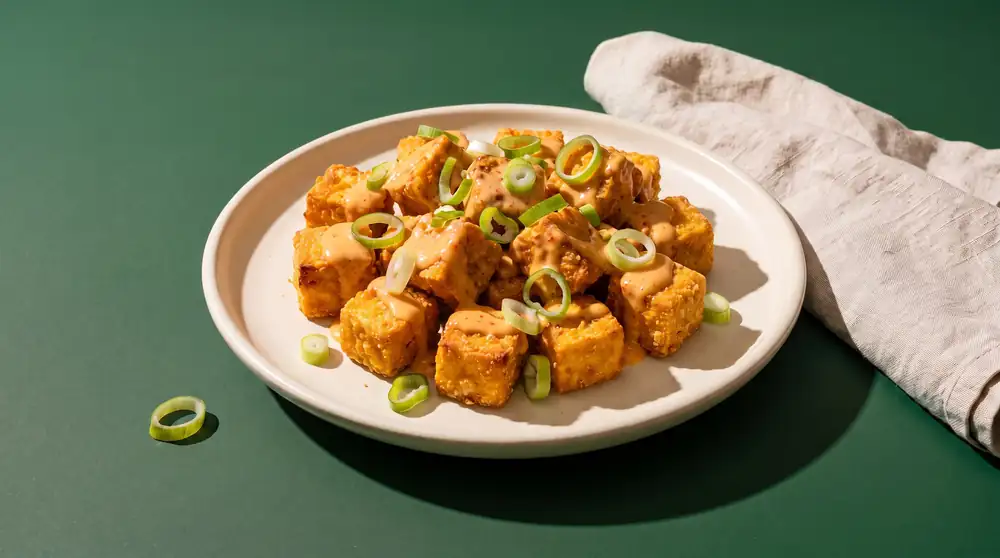
- Serve the tofu on a plate, drizzle it generously with the sauce and sprinkle the spring onion rings over it.
Recipe for Bang Bang Tofu
This dish is a flavor explosion on the plate. Texture plays a crucial role in the mouthfeel. First, you bite into a crispy outer layer, created by coating the cubes in starch and then frying them in a pan. Beneath this lies a soft core that has absorbed the heat beautifully. The whole thing is enveloped in a sauce that combines sweet, spicy, and creamy notes. Usually, a vegan mayonnaise forms the base, blended with hot chili paste and a touch of sweet chili sauce. This mixture adheres perfectly to the rough surface of the fried cubes, ensuring that every bite is intensely flavorful. You've probably seen this particular style of preparation described quite often on menus or in cookbooks recently.
The origin of this term leads us directly to Chinese street food and has a very pragmatic background. Originally, the name referred to a specific technique for preparing meat. To break down the fibers and make the meat more receptive to marinades and sauces, it was worked with a wooden club. It is often assumed that the name imitates the rhythm of these blows. However, another explanation is much more likely. The Chinese word for the club used is bàng. Over time, this traditional tool evolved into a common term for dishes served with a similarly intense sauce.
Today, the term appears in countless variations, regardless of whether a wooden club is actually used in the preparation. The term now represents a specific culinary style. Strong contrasts and robust textures are central to this style. The characteristic sauce combines spiciness with a pleasant sweetness and a rich creaminess.
It practically soaks into the crispy ingredients, binding all the components together into a harmonious whole. This principle works particularly well with the plant-based version made with soy, as the crisply fried cubes absorb the sauce perfectly. The result is a dish that not only arrives quickly on the table but also impressively demonstrates just how versatile and exciting plant-based cuisine can be. Anyone who still had doubts about tofu's adaptability will undoubtedly be convinced after the first taste.
If you want to become a real tofu expert, you should also try glazed honey tofu with soba noodles, sweet and sour tofu, or orange tofu with pak choi.